مقدمة
Effective site drainage is the foundation of safe, compliant, and long-lasting industrial and municipal infrastructure. Standing water, accumulated mud, spilled industrial liquids, and blocked drainage trenches lead to frequent site slipping, equipment corrosion, road damage, and environmental non-compliance issues. For shipyard washing bays, port container yards, petrochemical facilities, power plants, and urban traffic infrastructure, traditional solid drain covers easily clog, retain sewage, and fail to bear frequent vehicle loads, resulting in high maintenance costs and hidden safety hazards.
What Is Trench Grate? Industrial Drainage Infrastructure Definition
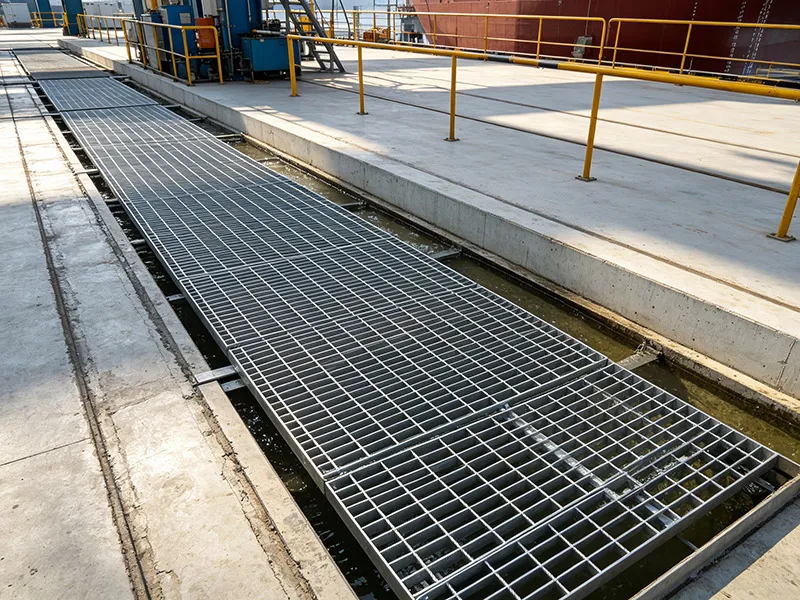
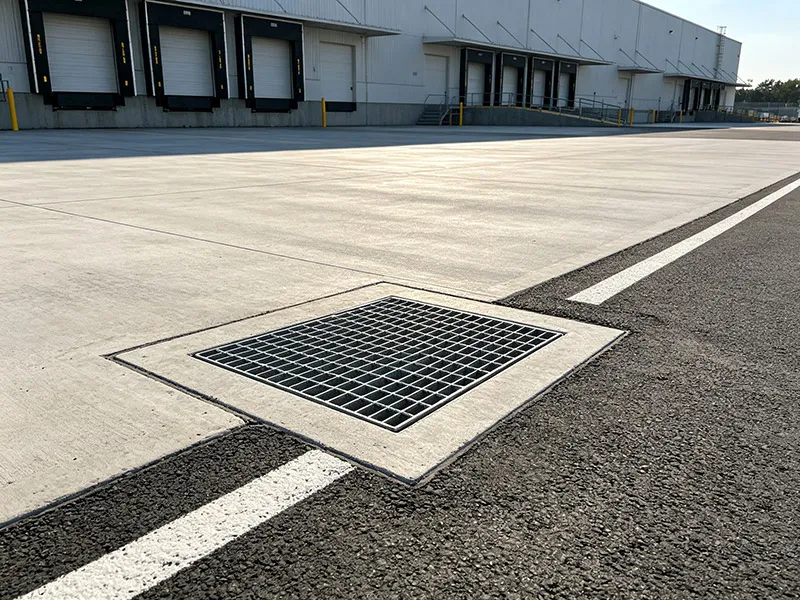
Trench Grate refers to standardized load-bearing grid covers specially manufactured for linear drainage trenches. Unlike traditional solid drain covers that easily trap sediment and block water flow, the open-grid structural design enables rapid penetration and discharge of rainwater, washing sewage, and industrial spilled liquid, while effectively intercepting large debris, mud, and construction waste to prevent trench pipeline blockage.
As a core component of industrial and municipal drainage systems, trench grates are divided into two mainstream material series: galvanized carbon steel for general outdoor and heavy-load scenarios, and stainless steel for highly corrosive wet environments. With standardized modular sizes, stable mechanical structure, and anti-slip surface optimization, they can adapt to pedestrian passage, forklift rolling, and heavy truck load conditions, realizing long-term stable operation of site drainage systems and meeting international industrial safety and environmental compliance standards.
Two Core Materials & Surface Types of Trench Grate
Different material and surface configurations determine the applicable working conditions and service life of trench grates, providing targeted solutions for diverse complex industrial scenarios.
Hot-Dip Galvanized Carbon Steel Trench Grate
Galvanized trench grate is the most cost-effective mainstream type for general industrial and municipal projects. The overall hot-dip galvanizing process forms a dense zinc protective layer on the steel surface, effectively resisting outdoor rain erosion, atmospheric oxidation, and mild dust corrosion. It features high structural strength, strong compression resistance, and excellent heavy-load performance, fully adapting to frequent rolling of forklifts and ordinary trucks. It is widely used in port yards, municipal roads, power plant conventional drainage trenches, and general factory outdoor drainage systems.
SS304 / SS316 Stainless Steel Trench Grate
Stainless steel trench grate is customized for high-corrosion working environments. SS304 stainless steel is suitable for conventional sewage and weak acid-base environments, while SS316 stainless steel provides stronger resistance to seawater salt fog, chemical liquid erosion, and high-temperature humid environments. It has outstanding anti-rust and anti-corrosion performance, no surface coating falling off, and is easy to clean and maintain. It is the preferred choice for shipyard washing trenches, petrochemical spill trenches, sewage treatment plants, and coastal high-salinity areas.
Flat vs Serrated Surface Design Differences
Flat surface trench grates are smooth and neat, suitable for dry pedestrian passages, urban sidewalks, and low-frequency drainage areas, with high cost performance. Serrated anti-slip trench grates have uniform tooth-shaped textures on the surface, which greatly enhance friction resistance, effectively preventing slipping of pedestrians and vehicles in wet, waterlogged, and muddy environments. They are widely used in washing bays, cargo handling areas, and rainy open-air yards.
Core Engineering Advantages of Trench Grate
Compared with traditional cast iron and solid drain covers, standardized trench grates have irreplaceable comprehensive advantages in industrial large-scale projects.
Open-Grid Anti-Clog & Fast Drainage Performance
The penetrating grid structure realizes zero water accumulation and rapid drainage. Rainwater, washing wastewater, and industrial spilled liquid can quickly flow into the trench through the grid gaps, while large impurities such as mud, gravel, and waste residues are intercepted on the surface, avoiding pipeline blockage and drainage system paralysis caused by sediment deposition. This self-cleaning drainage feature is especially suitable for shipyard high-pressure washing and port muddy water discharge scenarios.
Superior Heavy-Duty Load-Bearing Capacity
Integrated pressure welding forming ensures overall structural rigidity and uniform force bearing. Standard trench grates can stably bear long-term rolling of pedestrians, forklifts, and heavy trucks, without deformation, collapse, or fracture. Compared with fragile cast iron covers that are easy to break and lose, steel trench grates have higher structural stability and safety, reducing frequent replacement costs of drainage accessories.
Long-Term Corrosion & Weather Resistance
Galvanized and stainless steel materials adapt to all-weather outdoor operation. The galvanized layer isolates air and moisture to prevent rust; stainless steel resists seawater salt fog, chemical liquid corrosion, and high-humidity mildew. Whether in coastal port environments, humid industrial zones, or chemical pollution areas, trench grates can maintain stable performance for a long time.
Anti-Slip Safety & Site Compliance
Serrated trench grates effectively solve the slipping hazard of wet ground in washing areas and open-air yards, protecting pedestrian and vehicle passage safety. The neat and standardized installation effect meets the site safety and environmental assessment standards of large industrial parks, helping projects pass engineering acceptance and safety audits smoothly.
Easy Installation & Low Maintenance
Modular standardized design enables direct matching with various linear trenches, with simple on-site assembly and short construction cycle. The grid structure is easy to clean and flush, no frequent dredging is required, greatly reducing the daily operation and maintenance pressure of industrial site drainage systems.
Large-Scale Industrial Project Application Scenarios
Trench grates cover almost all industrial and municipal drainage scenarios, forming high-intent Google SEO application scenes with strong engineering practicability.
Shipyard & Marine Engineering Projects
Ship repair and shipbuilding workshops have long-term high-pressure water washing operations, producing a large amount of washing sewage, paint residues, and rust sediment. Stainless steel serrated trench grates are mainly used for workshop cleaning trenches, which are anti-corrosion, anti-slip, and not easy to accumulate dirt. They ensure smooth discharge of washing wastewater and keep the workshop ground clean and compliant, becoming the standard supporting facility for shipyard drainage systems.
Port & Logistics Yard Projects
Container terminals, bulk cargo yards, and bonded logistics parks have large traffic flow and frequent rainfall. Heavy-duty galvanized trench grates are installed in roadside drainage trenches and cargo handling areas. They can bear long-term rolling of container trucks and forklifts, quickly discharge rainwater and muddy water, avoid yard waterlogging, and adapt to coastal salt fog and wind and rain erosion environments.
Petrochemical & Hazardous Chemical Industrial Parks
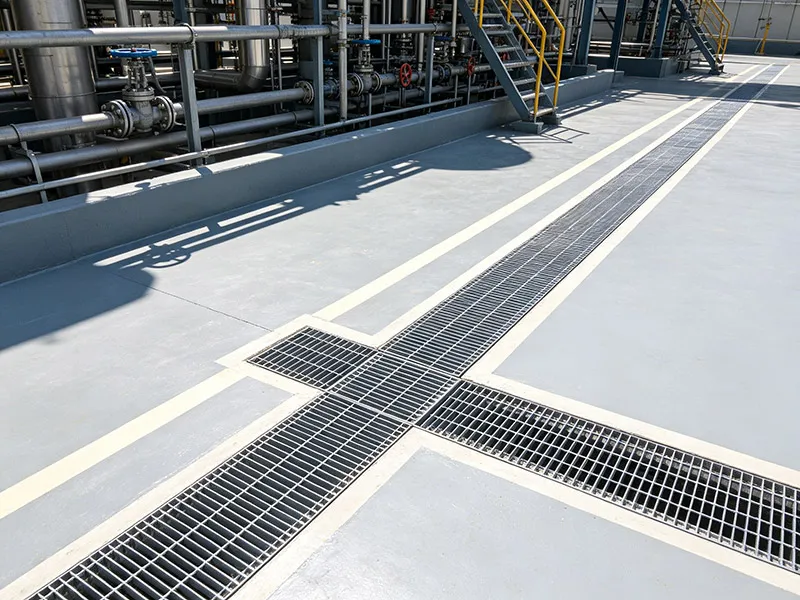
Refining plants, chemical storage areas, and oil loading platforms have risks of oil liquid leakage and acid-base liquid splashing. Stainless steel trench grates are used for spill containment trenches and equipment peripheral drainage, which can resist chemical corrosion and avoid liquid accumulation and diffusion. Galvanized trench grates are applied in conventional outdoor rainwater trenches to realize classified drainage and safe control of pollutants.
Power Plant & New Energy Base Projects
Thermal power plants, garbage incineration plants, and photovoltaic wind farms produce a large amount of dust and circulating water. Galvanized anti-clog trench grates are used for cooling tower peripheral trenches, coal conveyor corridor drainage, and ash yard rainwater collection ditches, intercepting coal ash and sediment to prevent pipeline blockage and ensure long-term stable operation of power plant drainage systems.
Municipal Infrastructure & Traffic Projects
Urban roads, tunnels, bridges, airport terminals, and high-speed railway stations adopt standardized trench grates for linear drainage systems. Heavy-duty models are used for motor vehicle lanes, and light-duty anti-slip models are matched for sidewalks and squares, meeting municipal engineering load standards and urban flood drainage requirements.
Environmental Protection & Water Treatment Projects
Sewage treatment plants, sludge disposal workshops, and seawater desalination projects have humid and highly corrosive working conditions. Stainless steel trench grates are used for workshop flushing trenches and pool peripheral drainage ditches to resist sludge erosion and seawater corrosion, ensuring the neat and safe operation of environmental protection facilities.
Scientific Working Condition Selection Guide
Accurate selection can balance engineering safety and project cost, avoiding performance surplus or functional mismatch.
Hot-Dip Galvanized Trench Grate: Ideal for municipal roads, port yards, power plants, ordinary factory outdoor trenches, and all heavy-load non-strong corrosion scenarios. Serrated type is preferred for wet handling areas.
SS304 Stainless Steel Trench Grate: Suitable for conventional sewage plants, food processing workshops, and general humid industrial washing areas with weak corrosion.
SS316 Stainless Steel Trench Grate: Exclusive for shipyard washing trenches, coastal seawater environments, and petrochemical acid-base liquid contact areas with strong corrosion resistance requirements.
Flat vs Serrated Surface: Flat for dry pedestrian areas; serrated for wet, muddy, vehicle rolling, and high-slip-risk areas.
Installation & Long-Term Maintenance Guidelines
Standardized installation and simple maintenance can maximize the service life and drainage efficiency of trench grates.
During installation, ensure the trench foundation is flat and the grate is closely fitted with the trench frame without shaking or height difference. For heavy-load road sections, reinforced fixed installation is required to prevent displacement under vehicle rolling. Daily maintenance only needs regular water flushing of grid gaps to remove accumulated sediment and impurities and keep drainage unobstructed. Regularly check the surface anti-corrosion layer; repair local rust and damage in time to avoid accelerated corrosion expansion.
الخلاصة
Trench Grate is an indispensable core component of modern industrial and municipal linear drainage systems. With diversified material configurations of galvanized carbon steel and stainless steel, plus anti-slip surface optimization, it perfectly solves the pain points of easy blockage, poor load-bearing, weak corrosion resistance, and frequent damage of traditional drain covers.
Widely applicable to shipyard washing trenches, port logistics yards, petrochemical plants, energy power bases, municipal traffic infrastructure, and environmental protection water treatment projects, trench grates provide stable, low-maintenance, and compliant drainage safety guarantees for global large-scale engineering construction and facility renovation.