Welded Steel Grating vs. Press-Locked Grating: Which Is Right for Your Project?
Stahlgitterrost looks much the same at a glance — a grid of load-bearing flat bars crossed by thinner cross bars. But the way those bars are joined decides how much load the panel can carry, how it looks, what it costs, and where it can safely be used. For buyers comparing welded steel grating and press-locked steel grating, the choice usually comes down to load, appearance and budget. This guide breaks down both manufacturing processes and helps you specify the right type the first time.
Was ist ein geschweißtes Stahlgitter?
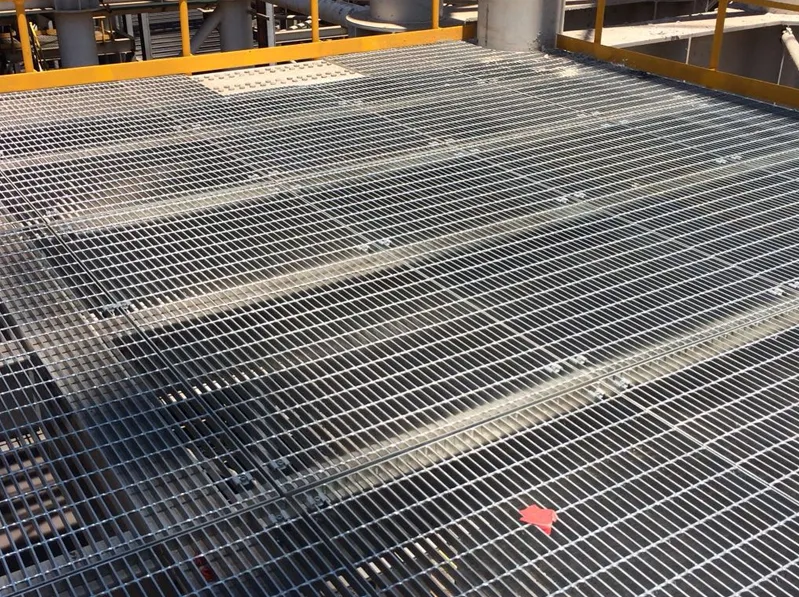
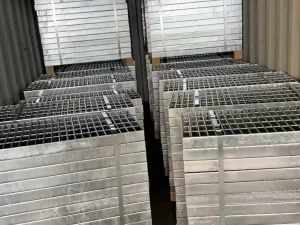
Welded steel grating — also called resistance-welded or bar grating — is made by arranging load-bearing flat steels at fixed intervals and welding cross bars to every junction with high-voltage resistance welding machines. The joint is a true metallurgical bond with no filler material, which gives the panel its strength. After welding, raw panels are cut, notched, punched or hemmed to fit the project, then almost always hot-dip galvanized: the panel is immersed in molten zinc to form a dense zinc-iron alloy layer that protects the steel for decades.
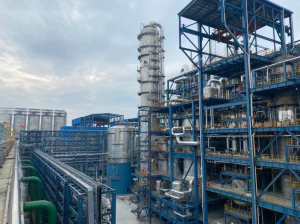
Because every intersection is permanently fused, welded grating is the strongest and stiffest option in the steel grating family. It handles heavy point loads, spans large openings without flexing, and can be fabricated as large one-piece panels. This is why heavy industrial sites — power plants, refineries, steel mills, mining platforms — overwhelmingly specify welded steel grating.
Strengths: highest load capacity · large panel sizes · proven in heavy industry · strong welded joint that resists loosening
What Is Press-Locked Steel Grating?
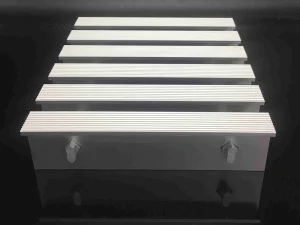
Press-locked steel grating — also known as plug-in grating — uses a mechanical joint instead of a weld. Grooves are cut into the load-bearing flat steel, and the cross bar flat steel is pressed into those grooves under high pressure until the two lock together. No welding heat is applied to the joint, so the bearing bar keeps its full section and the surface stays smooth and nearly flush.
That smoothness is the main reason press-locked grating is chosen. Without weld beads or heat distortion, panels look clean and uniform, which suits stair treads, indoor mezzanines, cable trench covers and architectural installations. The process also allows thinner bearing bars, so press-locked panels are lighter and often more economical for light-to-medium duty. It is available in ordinary, integral and sunshade types (with bearing bars slotted at 30° or 45° for light filtering), and can be made in carbon steel, stainless steel or aluminum. Panel length is typically limited to around 2000 mm.
Strengths: smooth, clean surface · lighter panels · economical for light and medium loads · stainless and aluminum options · no heat-affected zone
Welded vs. Press-Locked Steel Grating: Key Differences
| Factor | Geschweißtes Stahlgitter | Press-Locked Steel Grating |
|---|---|---|
| Joining method | Resistance weld at every bar junction | Cross bar pressed into machined groove |
| Load capacity | Highest — heavy and point loads | Good for light to medium loads |
| Surface finish | Visible weld beads, industrial look | Smooth, clean, nearly flush |
| Bearing bar options | Thick, heavy bars for maximum strength | Thinner bars possible, lighter panels |
| Panel size | Large one-piece panels | Typically up to about 2000 mm long |
| Cost | Higher steel content and cost | More economical for light duty |
| Materials | Carbon steel, stainless steel | Carbon steel, stainless steel, aluminum |
| Typical finish | Hot-dip galvanized, powder coated | Hot-dip galvanized, powder coated |
How to Choose Between Welded and Press-Locked Grating
Work through these six questions before ordering:
- What load will it carry? Forklifts, machinery, stored materials or anything above light foot traffic → welded. For heavy duty steel grating requirements such as vehicle crossings, specify thicker bearing bars and check the load table.
- What is the span? Large openings need the stiffness of a welded joint. Press-locked panels are best on short spans with continuous support.
- Does appearance matter? For visible, architectural or indoor areas, the smooth finish of press-locked grating is usually preferred.
- What is the environment? Both types can be hot-dip galvanized for outdoor corrosion resistance. For chemical, marine or food areas, consider stainless steel — press-locked stainless grating is a common choice where hygiene and looks matter.
- What panel sizes do you need? If the design calls for one large piece without intermediate supports, welded is the practical option.
- What is the budget? For light-duty walkways and treads, press-locked often meets the requirement at a lower cost per square meter — but never cut load capacity to save money.
When in doubt, a steel grating manufacturer should be able to recommend a type from your load, span, environment and access requirements — send them the numbers, not just a drawing.
Common Applications at a Glance
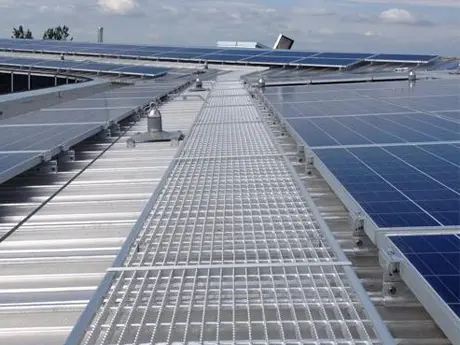
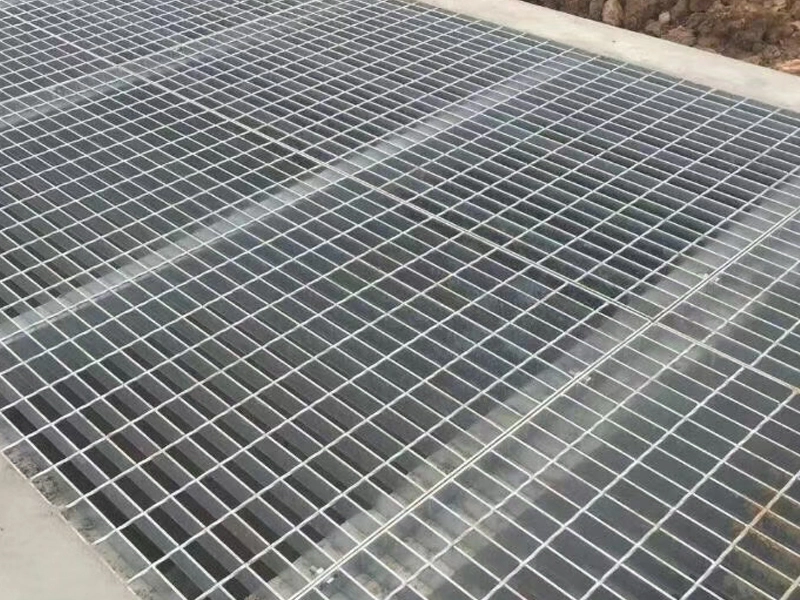
Welded steel grating — plant platforms and walkways, equipment access floors, heavy trench covers, offshore decks, mining grizzlies, conveyor walkways, boiler rooms and any area with constant or point loads.
Press-locked steel grating — stair treads, mezzanine flooring, cable trench covers, subway and rail station platforms, tunnel vents, docks and ports, sewage treatment plants, and architectural or decorative grating in stainless steel and aluminum.
Frequently Asked Questions
Is welded steel grating stronger than press-locked? Yes. The welded joint fuses bearing bar and cross bar into one piece, so welded grating carries higher loads and deflects less under heavy or point loads. Press-locked grating is designed for light to medium duty.
Is press-locked steel grating cheaper? Generally yes for equivalent light-duty specifications — it uses less steel and a simpler process. The gap narrows once heavy bearing bars are required, where welded becomes the value choice.
Can press-locked steel grating be hot-dip galvanized? Yes. Press-locked panels can be hot-dip galvanized, powder coated or supplied in stainless steel, depending on the environment.
What is the maximum panel size for press-locked grating? In practice, press-locked panels are typically held to around 2000 mm in length. If you need larger panels, welded steel grating is the standard solution.
Which type is better for stair treads? Both work. Press-locked treads give a cleaner look and lighter weight; welded treads are stronger and more economical where the tread is welded directly to the supporting structure. See our stair grating tread page for the two installation styles.
Final Recommendation
Use welded steel grating when load and span dominate: heavy equipment, plant platforms, large openings, long service life under constant traffic. Use press-locked steel grating when the job is light to medium duty and finish, weight or budget matters more: walkways, stair treads, trench covers, indoor and architectural areas.
Both products share one rule: specify the real load, span and environment, and confirm the choice against a load table. If you are still deciding, send your project details to Sino Grating — with more than 20 years in the grating industry, we will recommend the right type, size and coating for your application.