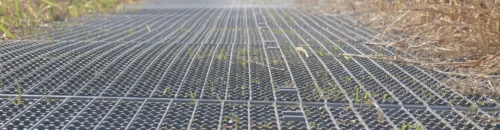
What Are China Metal Grating Bars Used For? Applications & Benefits
octubre 15, 2026
Blog
If you’ve walked across an industrial platform, driven over a drainage channel, or stepped on a metal stair tread, you’ve almost certainly walked on a surface built from metal grating bars. What you may not know is that the vast majority of these products — for projects across Europe, the Middle East, Southeast Asia, and the Americas — are manufactured in China.
China metal grating bars are the load-bearing longitudinal components that form the grid structure of rejilla de acero panels. While they might look like simple steel strips, they’re engineered to support specific loads, resist corrosion, and perform reliably for decades. This guide explains exactly what they’re used for, the key benefits they deliver, and why Chinese-made grating bars have become the global standard.
What Are Metal Grating Bars?
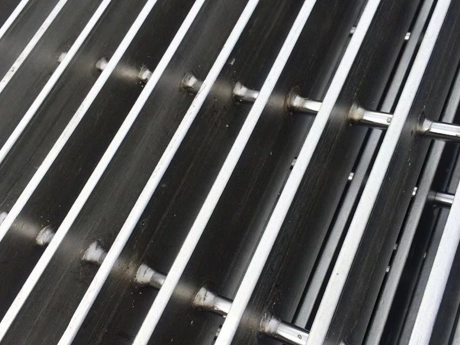
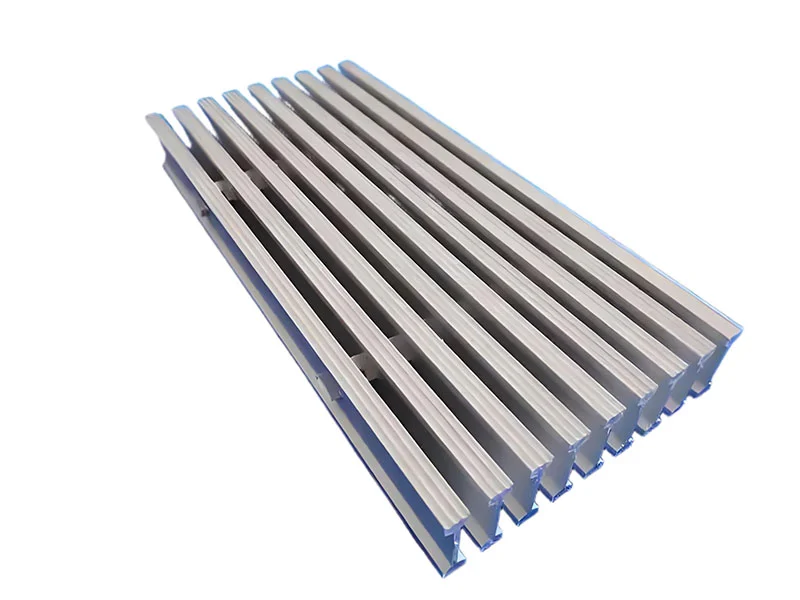
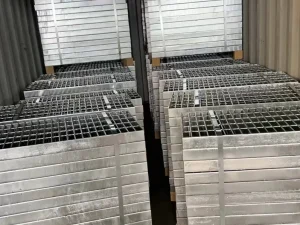
At their most basic, metal grating bars are flat steel profiles — typically mild steel — that run parallel to each other at fixed intervals. They’re welded or mechanically locked to transverse cross rods (usually twisted square bars) that hold the grid together. The assembled grid becomes the china metal grating sheet panels that ship to project sites worldwide.
The quality of the grating bar itself determines everything that matters in the finished panel:
- Load capacity: Deeper and thicker bars support heavier loads
- Deflection resistance: Stiffer bars flex less under weight
- Corrosion performance: The surface treatment (usually hot-dip galvanising) protects the bar from rust
- Service life: A well-coated, properly specified bar lasts 20 to 30 years
Chinese manufacturers produce these bars from hot-rolled steel coil, slit to width, straightened, and then processed into welded or press-locked grating panels before galvanising.
Where Are China Metal Grating Bars Used?
The applications for grating bars span virtually every industry that requires flooring, drainage, or barrier solutions. Here are the most important ones.
Industrial Platforms and Walkways
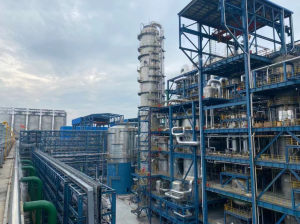
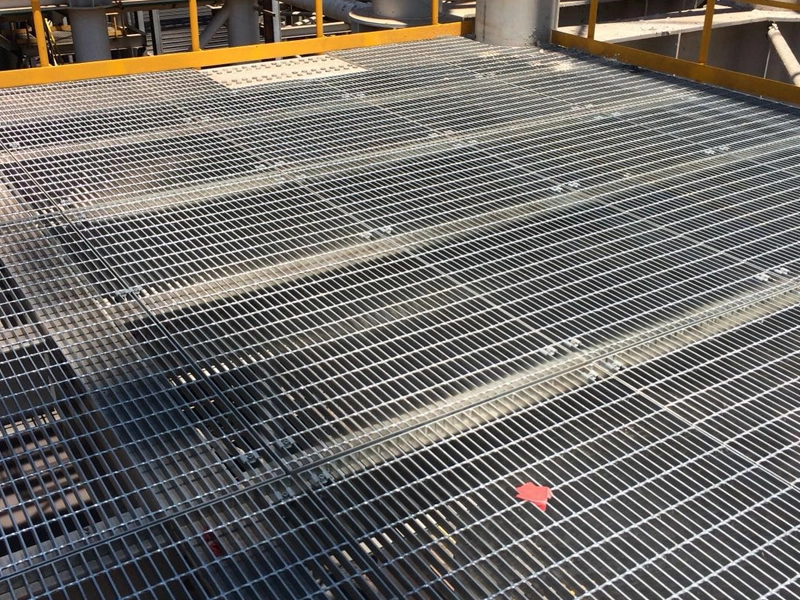
This is the largest single use case for china metal grating bar products. Refineries, chemical plants, power stations, steel mills, and manufacturing facilities use kilometres of grating bars to build access platforms, maintenance catwalks, and equipment walkways.
The open grid design allows air circulation, lets light through, and prevents debris accumulation — critical for industrial environments where safety and accessibility are paramount. Galvanised mild steel grating bars resist the moisture, chemicals, and humid air typical of plant environments.
Drainage Covers and Trench Gratings
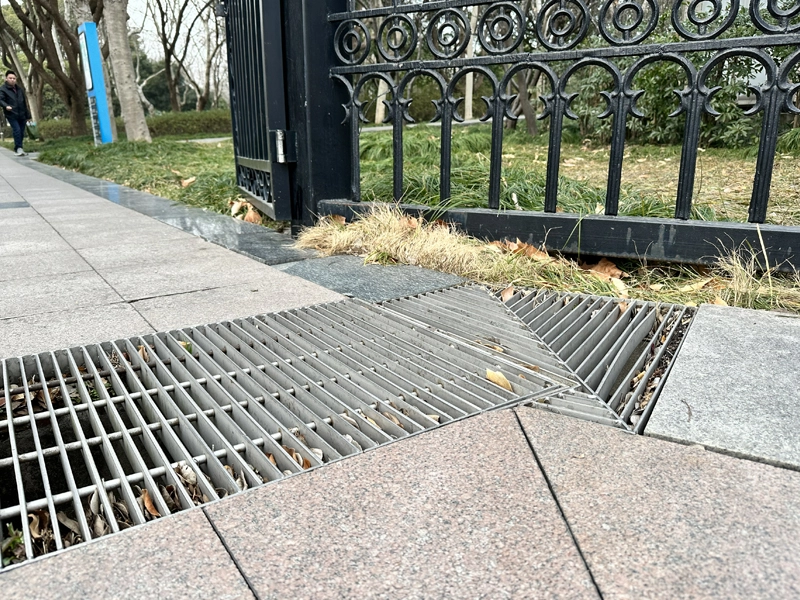
Every drainage channel, floor trench, and pit opening needs a cover that protects against falls while allowing water to enter. Galvanized steel grating cover panels — built from standard grating bars set into angle steel frames — are the default solution.
Roadside drainage, factory floor trenches, parking garage drainage, and municipal stormwater channels all rely on grating bar covers. The open grid handles high flow rates better than solid covers, and the galvanised coating withstands years of exposure to rain, road spray, and chemicals.
Stair Treads
Industrial stairs, fire escape stairs, and outdoor walkway stairs use grating bars as tread surfaces. Serrated (toothed) bar profiles provide anti-slip traction, while the open grid prevents water, ice, or debris from accumulating on the step surface.
Angle steel nosing along the front edge provides a defined step edge and supports mounting of handrail brackets. Galvanised grating stair treads are standard in factories, warehouses, and external building access stairs.
Bridge Sidewalks and Pedestrian Walkways
Pedestrian bridges, highway bridge sidewalks, and boardwalks use grating bars for their lightweight, non-slip, and low-maintenance properties. Because grating bars are significantly lighter than solid concrete or steel plate decking, they reduce dead load on the bridge structure — meaning smaller supporting beams and lower overall construction cost.
The open grid also allows snow and rain to fall through, eliminating the need for continuous drainage systems on the walkway surface.
Fencing and Machine Guards
Grating bars are used as infill panels in security fencing, boundary barriers, and machine safety guards. The rigid grid structure prevents passage while maintaining visibility and wind permeability.
In industrial settings, grating machine guards protect workers from moving equipment while allowing operators to see through to monitor processes. Galvanised bars resist corrosion in wash-down areas and outdoor locations.
Agricultural and Livestock Facilities
Dairy parlours, livestock handling areas, and farm buildings use grating bar flooring. The open grid drains moisture and waste, keeping animal feet dry and clean. Galvanised bars resist corrosion from ammonia, animal waste, and cleaning chemicals.
Architectural and Decorative Applications
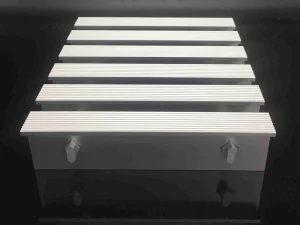
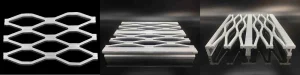
For building facades, sunscreens, balustrade infill, and decorative screens, grating bars in press-locked configuration offer a clean, modern aesthetic. Aluminium or rejilla de acero inoxidable bars are used where appearance is important — the uniform grid pattern becomes part of the building’s design language.
Offshore and Marine Environments
Offshore oil rigs, ship decks, and port terminals use grating bars for walkways and flooring. Aluminium or 316 stainless steel bars are specified in splash zones where saltwater corrosion is aggressive. The open grid allows sea spray to drain through rather than pooling on walking surfaces.
Key Benefits of China Metal Grating Bars
So why do engineers and procurement teams specify grating bars — and specifically Chinese-made ones — instead of solid plate, wood, concrete, or plastic alternatives?
Unmatched Drainage and Ventilation Performance
The open grid structure is the fundamental advantage. Water, air, light, and debris pass through freely, which means:
- No standing water on walking surfaces (reducing slip hazards)
- Better air circulation in industrial platforms (important in hot or chemical environments)
- No debris accumulation that would require regular cleaning
- Natural light transmission in underground or semi-enclosed spaces
No solid flooring material matches this combination of coverage and permeability.
High Load Capacity at Low Weight
Grating bars are engineered to be strong where it matters — in the vertical direction where loads are applied — while removing material from areas that don’t contribute to strength. This produces a flooring solution that supports substantial loads at a fraction of the weight of solid steel plate.
A 30 mm deep galvanised grating panel weighs roughly 15 to 20 kg per square meter, yet handles pedestrian traffic comfortably. Heavy-duty 75 mm press-locked panels support forklift and truck traffic while remaining lighter than equivalent solid steel plate.
Long Service Life with Minimal Maintenance
Hot-dip galvanised grating bars last 20 to 30 years in outdoor environments with zero maintenance. No painting, no coating, no rust treatment required. The zinc coating self-heals small scratches, so even installation damage doesn’t spread into corrosion.
Compare this to painted steel, which needs repainting every 3 to 5 years, or wood, which needs staining and sealing every 1 to 2 years. Over the lifecycle of a project, grating bars cost far less to maintain.
Safety: Anti-Slip and Non-Combustible
Grating bars are inherently safe:
- Anti-slip: Water drains away immediately, leaving the walking surface dry. Serrated bar profiles add extra grip in wet or oily conditions.
- Non-combustible: Steel doesn’t burn, doesn’t emit toxic fumes, and doesn’t lose structural strength in a fire — critical for fire escape routes and industrial safety.
- Visible: The open grid allows workers below to see hazards above, and vice versa.
Cost Efficiency
Chinese grating bars offer significant cost advantages:
- Lower material and production costs translate to 30 to 50 percent savings compared to Western manufacturers
- Lightweight panels reduce shipping and installation costs
- Long service life means lower total cost of ownership
- Modular panels can be cut to size on site, reducing fabrication waste
Design Flexibility
Grating bars come in a wide range of profiles, depths, and spacings. You can specify exactly what you need:
- Bar depth from 20 mm (pedestrian) to 75 mm (heavy vehicle)
- Bar spacing from 15 mm (anti-slip, small-part protection) to 40 mm (economy)
- Surface options: smooth, serrated, galvanised, stainless, aluminium
- Frame options for covers, stair treads, and custom panels
This flexibility means you never over-specify — you pay for exactly the performance you need.
Sustainability
Steel is one of the most recycled materials on the planet. At the end of its service life, grating bars can be recycled indefinitely without loss of quality. Hot-dip galvanising is also a highly efficient process with minimal waste — excess zinc is recovered and reused.
Why China for Grating Bars?
Given the global demand for grating bars, why do so many projects source them from China? The answer combines scale, cost, and quality:
- Scale: Chinese steel production capacity means raw material costs are competitive
- Mature manufacturing: Decades of grating production have built specialized factories with consistent quality
- Export experience: Chinese manufacturers are experienced in meeting international standards (BS, ASTM, ISO) and shipping worldwide
- Flexibility: Chinese factories readily handle custom specifications, small trial orders, and large-volume production
The result is a global supply chain where buyers can get high-quality grating bars at competitive prices, delivered to ports worldwide.
Conclusión
China metal grating bars are far more than simple steel strips — they’re engineered structural components that form the backbone of industrial flooring, drainage systems, walkways, stairs, and barriers across the world. Their unique combination of drainage performance, load capacity, corrosion resistance, low maintenance, and cost efficiency makes them the default choice for engineers and specifiers across industries.
Whether you need standard galvanised mild steel grating bars for a factory walkway, heavy-duty press-locked panels for a port terminal, or stainless bars for a food processing facility, Chinese manufacturers can deliver to your exact specification — with the quality, documentation, and logistics support that international projects demand.
For project-specific quotations or engineering support on your grating bar requirements, contact Sino Grating today. Share your load requirements, application environment, and dimensions — our team will recommend the right configuration and provide a detailed quotation for your project.