China Metal Grating Sheet for Industrial Flooring: A Practical Review
octobre 15, 2026
Blog
Industrial flooring isn’t just a surface to walk on. In factories, warehouses, refineries, and processing plants, it has to handle forklift traffic, chemical spills, wash-down water, extreme temperatures, and decades of use — all while keeping workers safe and operations running.
Among the flooring options available, china metal grating sheet is one of the most practical and underrated choices. Built from parallel china metal grating bar elements welded into a grid, it’s not the right answer for every factory floor, but for the areas where it fits — walkways, platforms, drainage trenches, equipment access zones — it outperforms almost any alternative on durability, drainage, and lifecycle cost.
This practical review breaks down what industrial flooring from Chinese grating manufacturers actually delivers in real-world conditions: where it excels, where it falls short, what specs matter, and how it compares to other flooring types.
Why Choose Grating for Industrial Flooring?
Most industrial floors are concrete, epoxy, or tile. Those work well for production areas where a solid, smooth walking surface is required. But they have limitations that grating solves perfectly.
Concrete floors crack under heavy point loads, epoxy coatings peel under chemical exposure, and neither one handles drainage — water, oil, or cleaning fluid just sits on top and needs to be swept or mopped away.
Grating sheet flooring works differently. The open grid lets liquids drain through immediately, while the structure métallique supports loads from above. This makes it the ideal flooring choice for:
- Walkways and maintenance access routes
- Areas around equipment that regularly needs wash-down
- Platforms above drainage trenches or utility ducts
- Zones where spill containment and fast drainage are safety requirements
- Outdoor or semi-outdoor industrial areas exposed to rain and moisture
In these applications, galvanised mild caillebotis en acier offers a combination of drainage performance, load capacity, and maintenance-free service that solid flooring can’t match.
What Industrial Grating Sheet Actually Looks Like in Practice
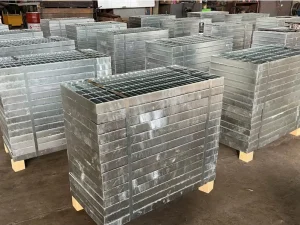
To understand how it performs, it helps to picture a typical installation. A standard industrial walkway uses 30×3 mm welded grating bars, spaced at 30 mm centres, with cross bars every 100 mm. The whole panel is hot-dip galvanised after welding.
Under foot, it feels solid — not springy or flexing. You can walk across it without noticing the grid pattern, except that water on the surface disappears through the openings immediately. In a wet industrial area, this means no puddles, no slippery patches, and no need for daily mopping.
Under a forklift, the same panel (when upgraded to 40×5 mm bars) handles repeated wheel loads without permanent deflection. The galvanised coating resists oil, coolant, and the occasional chemical splash. Workers walk across it year-round without anti-slip shoe modifications.
This is the everyday reality of well-specified industrial grating: it’s so reliable that people stop noticing it — which is the highest compliment for industrial flooring.
Performance Breakdown by Industrial Use Case
Not all industrial flooring needs are the same. Here’s how china metal grating sheet performs across the most common industrial environments.
Manufacturing Plant Walkways
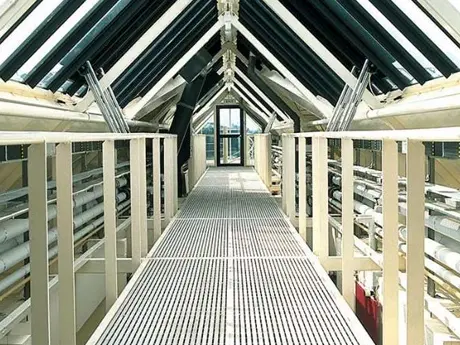
In machine shops, assembly lines, and fabrication plants, walkways need to handle foot traffic, occasional cart movement, and spilled coolant or oil. Standard 30×3 mm galvanised welded grating handles this well. The open grid drains coolant drips, and the galvanised surface resists oil staining.
Practical verdict: Excellent. Low cost, zero maintenance, and solves the drainage problem that plagues solid walkway surfaces.
Chemical and Petrochemical Plants
In refineries and chemical processing areas, flooring faces corrosive atmospheres, chemical fumes, and occasional spills. Galvanised mild steel grating performs well in moderate chemical exposure zones. For areas with direct contact with strong acids or solvents, 316 caillebotis en acier inoxydable is the upgrade.
Practical verdict: Good for general plant areas; upgrade to stainless for high-corrosion zones.
Food and Beverage Processing
Food plants need flooring that drains rapidly, resists cleaning chemicals, and doesn’t harbour bacteria. While direct food-contact areas typically use stainless steel for hygiene, back-of-house walkways, drainage trenches, and equipment access zones use galvanised or stainless grating.
Practical verdict: Excellent for utility areas; stainless steel required for direct food contact zones.
Warehouse and Logistics Flooring
Warehouse aisles are usually concrete or epoxy for forklift efficiency. But mezzanine platforms, loading dock edges, and walkways between racking rows benefit from grating. The open grid allows light and air circulation through multi-level storage systems.
Practical verdict: Best for platforms and mezzanines, not for main forklift aisles.
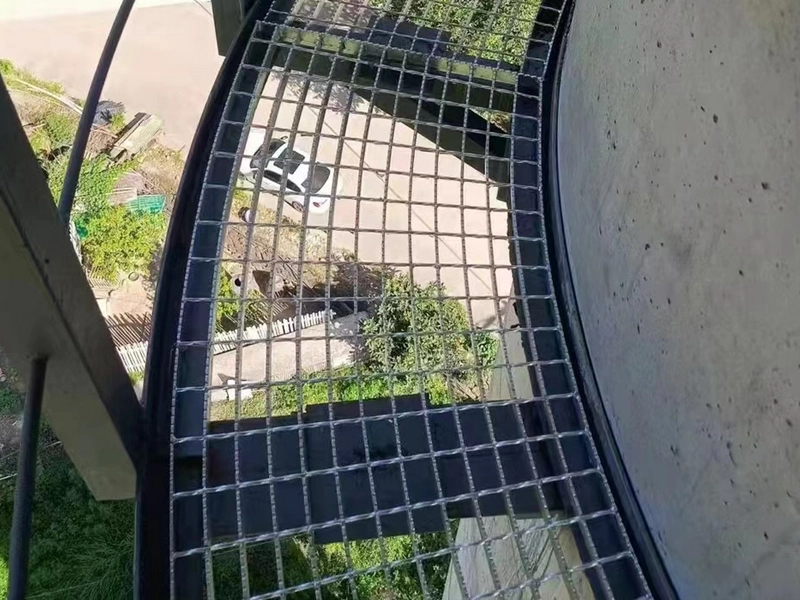
Outdoor and Semi-Outdoor Industrial Areas
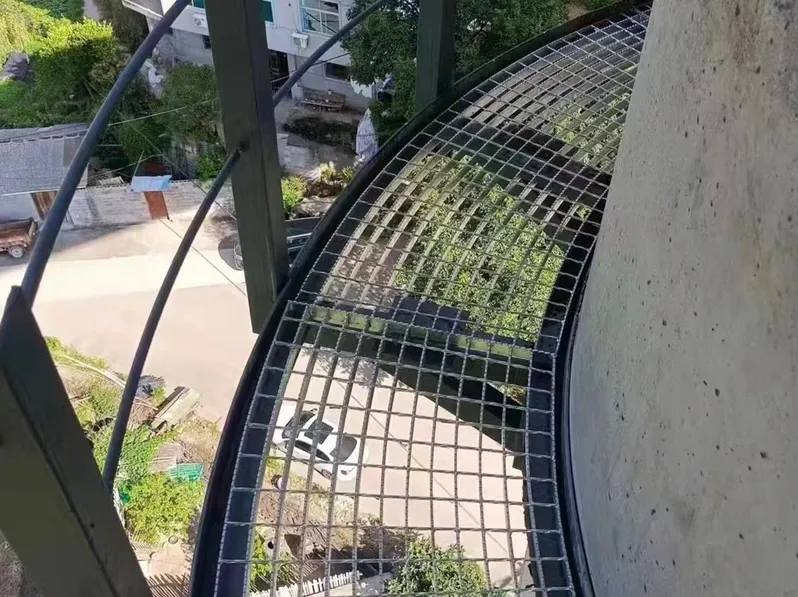
Yards, loading bays, external walkways, and equipment pads exposed to rain are ideal grating applications. The open grid prevents puddles, and hot-dip galvanising handles decades of weather exposure without repainting.
Practical verdict: Ideal. Outperforms painted steel or concrete on both drainage and maintenance.
Power and Energy Facilities
Power stations, substations, and renewable energy installations use grating for access platforms, cable trench covers, and equipment walkways. The non-combustible steel construction meets fire safety requirements, and the open grid allows inspection of cables and pipes below.
Practical verdict: Standard industry choice for good reason.
Key Specifications That Determine Real-World Performance
When specifying china metal grating sheet for industrial use, these are the parameters that actually matter on the factory floor.
Bar Depth and Load Rating
The depth of the grating bar is the single most important specification. It determines how much weight the floor can support:
- 25–30 mm deep bars: Pedestrian walkways, light cart traffic
- 40–50 mm deep bars: Forklift traffic, medium-duty equipment movement
- 65–75 mm deep bars: Heavy forklift, pallet truck, and vehicular traffic
Under-specifying bar depth means visible deflection under load — an immediate safety concern. Over-specifying wastes money on unnecessary steel.
Welded vs. Press-Locked
Welded grating is the standard for most industrial walkways — cost-effective and durable. Press-locked grating is worth the premium in areas with heavy dynamic loads, impact, or where the joint integrity is safety-critical (such as around equipment that vibrates).
Surface Treatment
Hot-dip galvanised after fabrication is the default for industrial grating. The zinc coating handles moisture, oil, and moderate chemicals. For corrosive environments, stainless steel 304 or 316 is the upgrade.
Serrated vs. Smooth Bars
Serrated (toothed) bars add anti-slip grip in wet, oily, or dusty conditions. In industrial areas where spills are common, serrated bars are worth the small additional cost — they dramatically reduce slip-and-fall risks.
Frame and Edge Detailing
For covers and trench crossings, angle steel edge frames are essential. They create a smooth transition between the galvanized steel grating cover panel and the surrounding floor, eliminate sharp edges, and provide a bearing surface on the trench walls.
How Industrial Grating Compares to Other Flooring Types
To put grating’s value in context, here’s how it stacks up against the most common alternatives.
vs. Epoxy Coating
Epoxy floors are smooth, seamless, and easy to clean — but they’re slippery when wet, peel under chemical attack, and offer no drainage. Grating wins on drainage and chemical resistance; epoxy wins on smoothness for forklift aisles.
vs. Concrete Flooring
Concrete is cheap and solid, but cracks under heavy point loads, doesn’t drain, and requires joint sealing and repair over time. Grating handles drainage and point loads better, but costs more upfront.
vs. FRP (Fibreglass) Grating
FRP grating is non-corrosive and lightweight, but degrades under UV exposure, has lower load capacity, and costs more than galvanised steel. For outdoor industrial use, steel outlasts FRP.
vs. Steel Plate Flooring
Solid steel plate is extremely strong but offers zero drainage and becomes slippery when wet. Grating provides equivalent load capacity with built-in drainage.
Common Pitfalls to Avoid
Based on real-world installations, these are the most common mistakes when specifying grating for industrial flooring.
Under-specifying bar depth: The most frequent error. Buyers save money on thinner bars, then face deflection and safety concerns. Always size bars for the actual maximum load, not average load.
Skipping the galvanising step: Some suppliers offer “pre-galvanised” grating at lower cost — meaning the steel strip was galvanised before fabrication, leaving weld points unprotected. Always specify hot-dip galvanised after welding.
Ignoring edge frames: Unframed grating panels have sharp cut edges and no bearing surface. Framed panels are safer and last longer.
No pre-shipment inspection: Especially with first-time suppliers, third-party inspection catches bar thickness discrepancies, weld defects, and galvanising gaps before the container ships.
Cost Perspective
For budget planning, here’s what industrial china metal grating sheet typically costs (FOB China, 2026):
- 30×3 mm welded galvanised (pedestrian): $35–$55 per square meter
- 40×5 mm welded galvanised (medium duty): $55–$75 per square meter
- 50×5 mm press-locked galvanised (heavy duty): $70–$100 per square meter
When you factor in zero maintenance, 20–30 year service life, and no drainage infrastructure needed, the per-year cost is lower than almost any alternative industrial flooring.
Conclusion
China metal grating sheet is a practical, proven industrial flooring solution for the areas where drainage, durability, and low maintenance matter most. It’s not a universal floor — you wouldn’t specify it for a cleanroom or a precision assembly area — but for walkways, platforms, drainage trenches, equipment access zones, and outdoor industrial areas, it delivers performance that’s hard to beat.
The key to success lies in correct specification: matching bar depth to actual loads, choosing welded vs. press-locked based on usage, insisting on proper hot-dip galvanising, and working with a manufacturer who understands industrial requirements.
For project-specific recommendations on industrial grating flooring, or to request samples and quotations, contact Sino Grating today. Our engineering team can help you specify the right grating configuration for your facility’s load requirements, environment, and budget.