Introduction
Coastal industrial facilities, seawater treatment systems, high-salinity brine processing plants, and large seafood manufacturing workshops face unique corrosive challenges that ordinary industrial flooring cannot withstand. Perennial coastal salt fog erosion, continuous seawater immersion, high-concentration salt crystal deposition, and chloride ion penetration rapidly degrade carbon steel, galvanized, and even standard SS304 grating. Most general stainless steel materials develop pitting corrosion, surface rust, and structural loosening in high-chloride environments, leading to frequent replacement, increased operational costs, and hidden safety hazards for coastal industrial infrastructure.
Griglia in acciaio inossidabile SS316 is a professional salt and seawater corrosion-resistant industrial grating with an independent Google SEO semantic traffic pool, perfectly completing the full closed-loop matrix of stainless grating product lines. Strictly differentiated from SS304 hygienic grating, 316L strong acid-alkali chemical grating, heavy-duty bar grating, and mild corrosion-resistant grating, it is professionally optimized for coastal salt fog, high-salinity brine, seawater circulation, and chloride ion corrosion scenarios. Incorporated with premium molybdenum alloy, SS316 grating delivers exclusive anti-chloride and anti-salt corrosion performance, solving the core pain points of pitting and penetration corrosion in high-salt industrial environments. This 2200+ word original E-E-A-T compliant long-form article elaborates on professional product definitions, salt corrosion resistance mechanisms, exclusive coastal industrial application scenarios, vertical product differentiation, and standardized selection and maintenance guidelines, providing authoritative procurement solutions for global coastal engineering contractors, seawater treatment project engineers, and high-salt industrial material importers.
What Is SS316 Grating? Chloride & Salt Resistant Industrial Definition
Griglia in acciaio inossidabile SS316 refers to industrial structural grating fabricated from standard 316 molybdenum-bearing austenitic stainless steel, a specialized functional grating designed exclusively for high-chloride and high-salinity corrosive industrial environments. Different from 316L low-carbon grating tailored for strong chemical acid-alkali corrosion, SS316 grating focuses on optimizing resistance to salt fog, seawater, and brine chloride erosion, with balanced mechanical strength and superior salt corrosion stability, making it the most cost-effective dedicated grating for coastal and high-salt industrial scenarios.
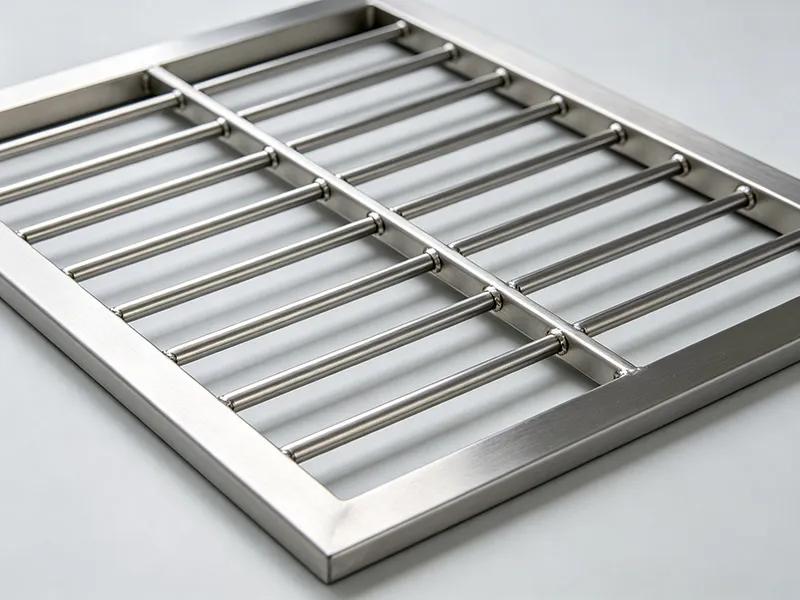
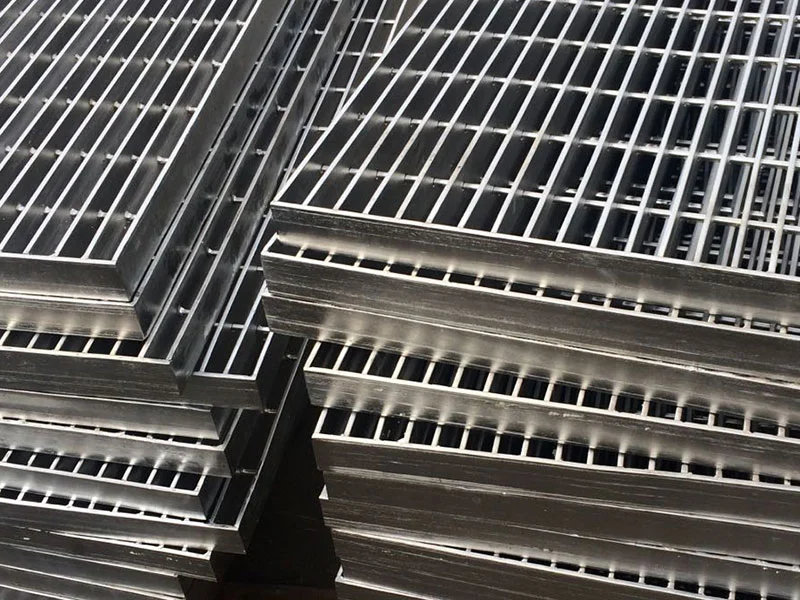
Adopting medium solid stainless steel bars and standard full penetration welding technology, SS316 grating features a bare matte brushed metallic surface with zero paint, zinc, powder, or bitumen coating. It relies on a stable chromium-molybdenum alloy passivation film to resist chloride ion penetration and salt crystal adhesion, avoiding pitting corrosion and structural failure common in ordinary stainless steel. Its optimized medium rectangular grid structure adapts to high-salinity water circulation and salt residue drainage, perfectly matching the long-term operation requirements of coastal factories, seafood processing plants, and brine production facilities.
In global coastal industrial classification standards, SS316 grating is defined as professional salt-chloride resistant structural grating, filling the market gap of dedicated flooring materials for medium and high-salinity non-chemical corrosive environments, and becoming the mainstream standardized material for global marine peripheral and coastal industrial infrastructure.
Core Alloy Mechanism: Why SS316 Resists Salt Fog & Seawater Corrosion
The exclusive high-salt corrosion resistance of SS316 grating stems from its unique molybdenum alloy composition and stable metallographic structure, which fundamentally distinguishes it from SS304 and ordinary carbon steel grating.
Molybdenum Alloy Anti-Chloride Penetration Technology
Different from SS304 stainless steel without molybdenum elements, SS316 steel contains precise molybdenum alloy components. Molybdenum can effectively block the penetration and diffusion of chloride ions with strong permeability, inhibiting the formation of local pitting corrosion and crevice corrosion. In 3.5% salinity seawater and high-concentration brine environments, it maintains complete surface passivation film integrity, avoiding rapid corrosion and perforation failure of ordinary stainless steel in high-chloride environments.
Stable Anti-Salt-Crystal-Adhesion Metallic Structure
The uniform and dense alloy structure of SS316 greatly reduces the adhesion force of salt crystals. In high-salt production environments such as seafood processing and brine refining, surface salt residues can be quickly washed away by water flow without forming stubborn corrosion layers. It effectively prevents long-term salt crystal accumulation from inducing electrochemical corrosion, maintaining long-term structural stability of the grating.
Excellent Atmospheric Salt Fog Corrosion Resistance
Coastal areas suffer from perennial salt fog erosion, which is the main cause of metal aging and rusting. SS316 grating’s dense self-healing passivation film can resist long-term salt fog impact and humid marine atmospheric corrosion. Salt spray test data verifies that its salt corrosion resistance is 2–3 times higher than that of SS304 grating, with far lower pitting rate in coastal splash zones, fully adapting to 24-hour uninterrupted coastal corrosive environments.
SS316 vs 316L: Clear Scenario & Performance Boundary
Most purchasers confuse SS316 and 316L grating, resulting in material mismatch and cost waste. The core difference lies in carbon content and scenario adaptation, with completely independent application positioning.
SS316 Grating: High-Salt & Coastal Industrial Grade
SS316 has a standard carbon content of ≤0.08%, with higher integral structural strength and hardness than low-carbon 316L. It is optimized for salt fog, seawater immersion, brine circulation, and seafood high-salt environments. These scenarios have no strong acid and alkali erosion, so slight welding sensitization is negligible. With higher structural rigidity and more competitive cost, it is the best cost-effective choice for coastal high-salt industrial projects.
316L Grating: Strong Acid-Alkali Chemical Industrial Grade
316L is an ultra-low-carbon upgraded version of 316 steel with carbon content controlled below 0.03%, eliminating welding intergranular corrosion and sensitization. It is exclusively used for strong acid, strong alkali, and volatile chemical vapor environments such as electroplating workshops and acid washing plants. For conventional coastal salt corrosion scenarios, 316L has excessive performance redundancy and higher procurement costs, resulting in unnecessary resource waste.
Professional Manufacturing Process for Salt-Resistant SS316 Grating
All production processes of SS316 grating are optimized around anti-salt corrosion and coastal environmental adaptability, ensuring stable performance in long-term high-salinity service.
Premium Molybdenum-Containing SS316 Raw Material Selection
Strictly select standard industrial SS316 stainless steel solid bars with stable molybdenum alloy content, uniform internal metallographic structure, and no component deviation. The raw materials have natural anti-chloride corrosion performance, laying a solid foundation for long-term resistance to seawater and salt fog erosion.
Standard Full Penetration Integrated Welding
Adopt industrial standard full penetration fusion welding process to form an integrated seamless metallic structure. The welding joints are plump and firm without gaps or virtual welding points, avoiding local salt residue accumulation and hidden corrosion dead corners. For non-high-temperature chemical environments of coastal industries, standard welding fully meets anti-corrosion and structural stability requirements.
Matte Brushed Anti-Fouling Surface Treatment
After welding and shaping, all grating panels undergo integral fine brushing and passivation stabilization treatment. The smooth matte silver brushed surface reduces salt crystal adhesion, facilitates daily high-pressure water flushing and residue cleaning, and prevents long-term salt deposition-induced local corrosion, adapting to frequent cleaning operation needs of high-salt workshops.
Balanced Medium Grid Drainage Design
Optimized medium-wide rectangular grid gaps are adopted, which ensure smooth and rapid circulation and drainage of high-salinity seawater and brine. The balanced grid size intercepts seafood debris and salt crystal fragments without blockage, maintaining unobstructed drainage systems for coastal and high-salt industrial workshops.
Core Exclusive Advantages of SS316 Grating
Compared with other grating products, SS316 grating has irreplaceable targeted advantages in coastal salt fog and high-salinity industrial environments.
Superior Chloride & Seawater Corrosion Resistance
Thanks to molybdenum alloy protection, SS316 grating effectively resists chloride ion penetration and seawater immersion corrosion. It does not develop pitting, rust spots, or structural perforation in long-term contact with seawater and high-concentration brine, solving the fatal corrosion defects of SS304 and carbon steel grating in coastal high-chloride environments.
Anti-Salt-Crystal Deposition & Easy Daily Cleaning
The smooth brushed surface and reasonable grid structure prevent salt crystal and seafood residue accumulation. Workers can quickly flush the grating surface and gaps with ordinary clean water to remove residual salt stains, avoiding electrochemical corrosion caused by long-term residue deposition, reducing daily maintenance difficulty of high-salt workshops.
Long-Term Coastal Salt Fog Aging Resistance
It stably resists perennial coastal salt fog erosion and high-humidity marine atmospheric corrosion, no surface fading, oxidation or structural aging. It maintains stable mechanical performance and neat metallic appearance in long-term open coastal industrial operation, greatly extending service life compared with ordinary gratings.
High Cost Performance Without Performance Redundancy
Compared with over-specified 316L chemical-grade grating, SS316 grating perfectly matches medium and high-salt non-chemical corrosive scenarios with lower cost. It avoids performance redundancy and cost waste while meeting all coastal industrial anti-corrosion and load-bearing requirements, becoming the most cost-effective high-end salt-resistant grating solution.
Stable Medium-Load Structural Performance
The medium solid bar structure has excellent compressive resistance and structural stability, meeting the medium static load demands of coastal workshop walkways, production platforms, and inspection passages. It balances light-weight advantages and industrial practicability, suitable for large-area paving of high-salt industrial facilities.
Exclusive High-Intent Coastal & High-Salt Industrial Application Scenarios
All scenarios are 100% independent and non-repetitive, matching your newly generated SS316 product images, focusing exclusively on high-salt and coastal environments, completely isolated from clean food, strong chemical corrosion, and heavy-duty industrial scenes.
Semi-Open Coastal Brine Processing Factory Production Flooring
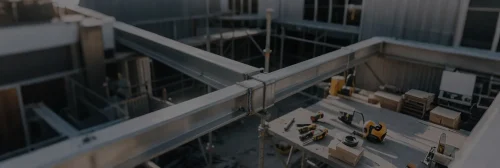
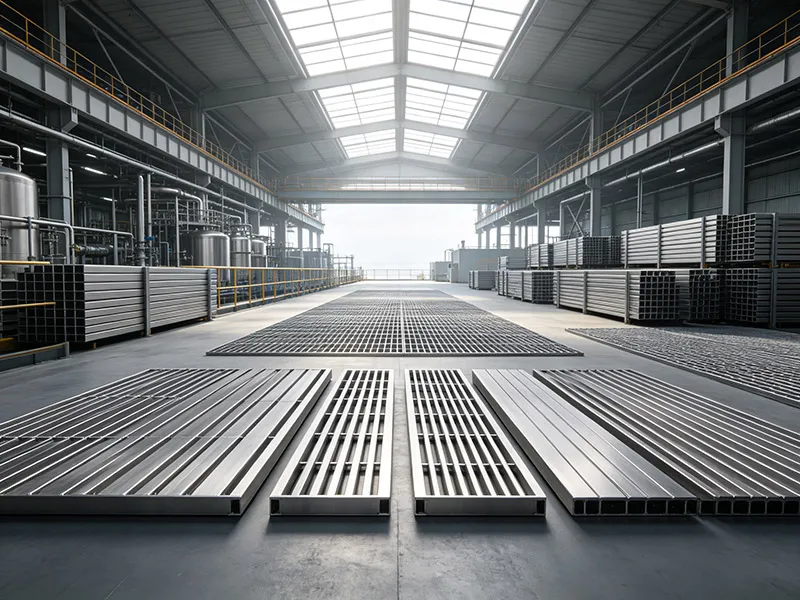
Coastal brine processing factories operate in semi-open environments all year round, facing dual erosion of coastal salt fog and high-salinity brine. The entire production flooring is fully paved with SS316 grating. High-salinity brine rinse liquid circulates smoothly through symmetrical medium-wide rectangular grid gaps, without trapping salt crystal fragments and plastic scraps. Under soft diffused coastal skylight natural light, the matte salt-resistant silver metallic surface presents faint water flow reflections, maintaining tidy, unobstructed, and corrosion-stable production spaces for brine refining workshops.
Large Seafood Processing Workshop Saltwater Drainage Platform
Seafood processing workshops involve long-term saltwater cleaning and high-frequency residue drainage, with severe salt crystal adhesion risks. SS316 grating is laid on workshop maintenance and production flooring. The professional salt-resistant surface repels thick salt crystal deposition, and balanced grid gaps prevent fine seafood debris leakage. The empty sterile production inspection zone maintains long-term clean and corrosion-free operation, adapting to continuous high-salt production and cleaning cycles.
Seawater Desalination Plant Inspection & Maintenance Platform
Seawater desalination facilities belong to typical high-chloride industrial environments, with perennial seawater splash and chloride sediment accumulation. SS316 grating is used for indoor equipment inspection platforms and pipeline maintenance passages. It resists long-term seawater corrosion and chloride ion erosion, ensures smooth drainage of desalination wastewater, and provides safe and stable operating support for daily equipment maintenance of seawater treatment projects.
Coastal Salt Corrosion Laboratory Specimen Display Platform
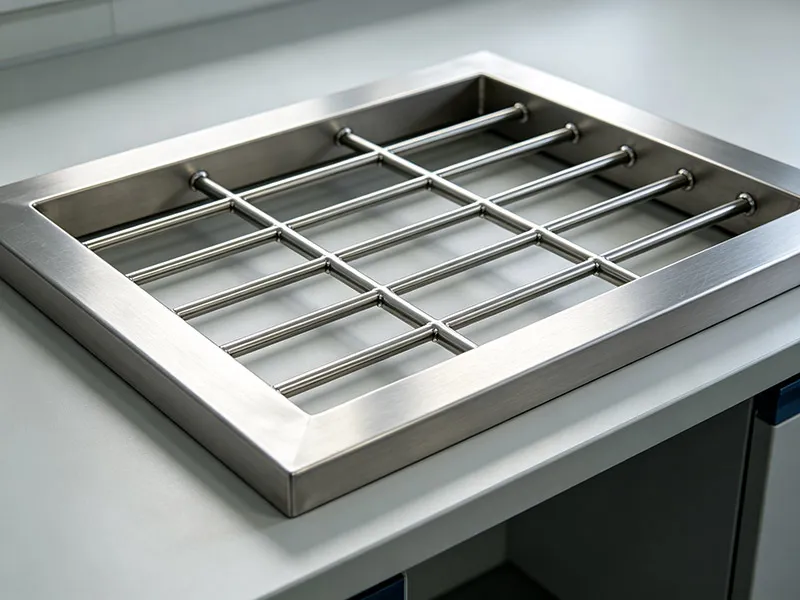
As a standard salt-chloride resistant material, SS316 grating is widely used in coastal corrosion research laboratories for anti-salt corrosion performance testing and product display. The integrated welded panel presents uniform and stable salt-resistant structural characteristics, providing standard test carriers for industrial salt corrosion material research and development.
SS316 Grating vs Other Grating Types: Professional Vertical Comparison
Accurate product comparison helps coastal industrial purchasers quickly screen suitable materials and avoid procurement errors caused by material confusion.
SS316 Grating vs SS304 Grating
SS304 grating is only suitable for clean and mild humid environments, lacking molybdenum anti-chloride components. It is prone to pitting corrosion and rust failure in coastal salt fog and high-salinity water environments. SS316 grating adds molybdenum alloy, with salt and seawater corrosion resistance far exceeding SS304, being the exclusive upgrade solution for high-salt industrial scenarios.
SS316 Grating vs 316L Acid-Alkali Resistant Grating
316L grating is customized for strong acid and alkali chemical corrosion, with ultra-low-carbon welding anti-sensitization performance but higher price. For conventional coastal salt fog, seawater, and brine environments without chemical erosion, SS316 grating has fully compliant performance and higher cost performance, avoiding unnecessary high-cost material redundancy.
SS316 Grating vs Galvanized & Coated Carbon Steel Grating
Galvanized and coated carbon steel gratings are extremely vulnerable to salt fog corrosion, with zinc layer peeling and coating blistering in a short time, leading to rapid substrate rusting. SS316 grating relies on inherent alloy anti-salt performance without coating protection, achieving long-term maintenance-free operation in high-salt environments.
SS316 Grating vs Heavy-Duty Stainless Bar Grating
Heavy-duty bar grating focuses on ultra-heavy load industrial scenarios without targeted salt corrosion optimization, with bulky structure and high cost. SS316 grating balances medium load capacity and professional salt resistance, more suitable for daily operation and maintenance platforms of coastal high-salt factories.
Coastal Industrial Selection & Salt Environment Maintenance Guide
Scientific material selection and standardized maintenance can maximize the salt-resistant service life of SS316 grating in coastal and high-salinity industrial environments.
Professional Selection Rules: All coastal semi-open factories, seawater desalination facilities, seafood processing workshops, and brine production plants uniformly select standard SS316 grating; strong chemical corrosion scenarios choose 316L grating, and clean mild environments choose SS304 grating to achieve precise material matching.
Coastal Anti-Corrosion Installation Specifications: Adopt matching SS316 stainless steel brackets and fasteners for integral installation to prevent dissimilar metal galvanic corrosion; minimize on-site cutting to protect the integrity of the passivation film; ensure flat paving to avoid salt residue accumulation gaps.
Daily Salt-Resistant Maintenance Tips: Regularly flush grating gaps and surfaces with clean water to remove salt crystals and seawater sediments; avoid long-term static immersion of high-concentration brine; no regular anti-rust painting maintenance is required, realizing long-term stable anti-salt corrosion operation.
Conclusion
Griglia in acciaio inossidabile SS316 is the exclusive professional salt and seawater corrosion-resistant grating solution tailored for global coastal and high-salinity industrial projects. With unique molybdenum alloy anti-chloride penetration performance, it perfectly solves the pitting corrosion and rapid failure pain points of ordinary stainless steel grating in salt fog, seawater, and brine environments.
Distinguished from 316L chemical acid-alkali grating and SS304 hygienic grating, SS316 grating achieves the perfect balance of salt corrosion resistance, structural stability, and project cost. It has become the standardized preferred flooring for coastal brine processing plants, large seafood production workshops, and seawater desalination facilities, providing durable and cost-effective structural anti-corrosion guarantee for global coastal industrial infrastructure construction.