7 Dimensions You Must Specify When Ordering Steel Grating
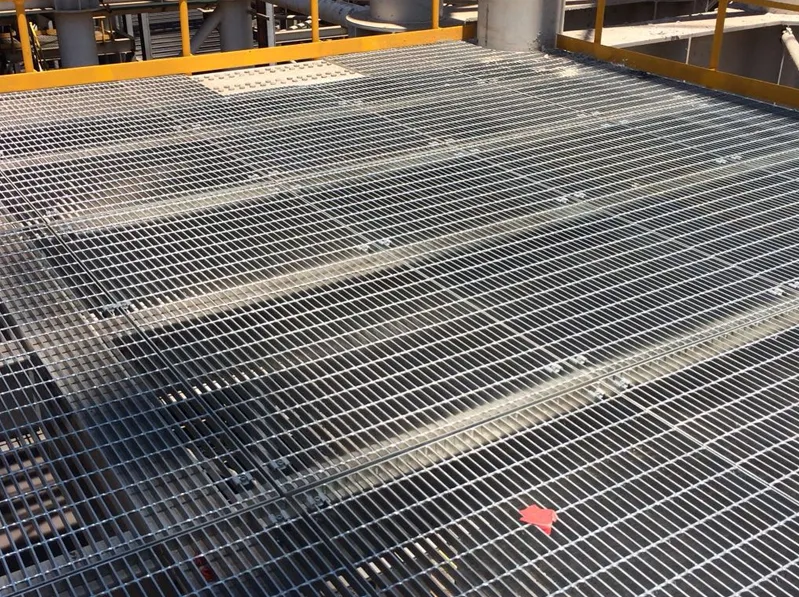
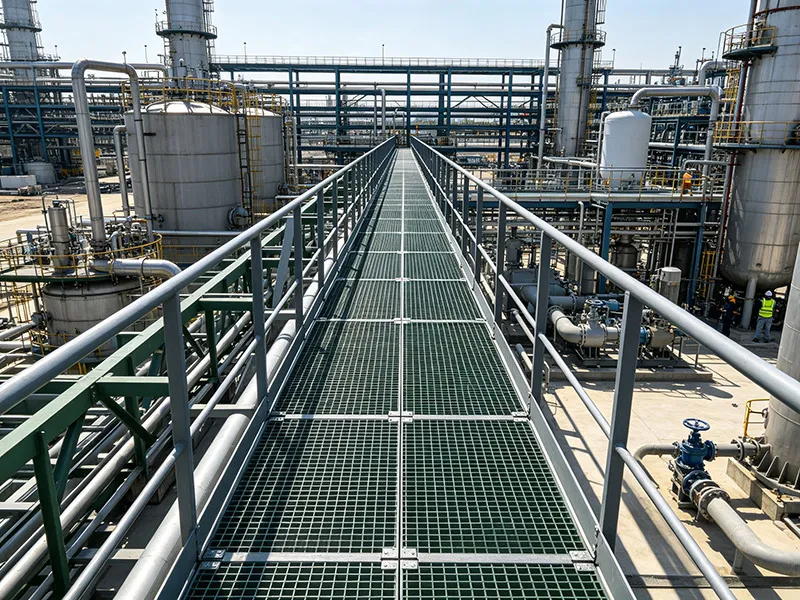
A スチールグレーチング panel looks simple: load-bearing flat bars, cross bars, open spaces in between. Yet most ordering mistakes happen because one dimension was missing from the inquiry. Miss a bar pitch or a coating, and the supplier will quote the closest standard panel — which may be heavier and pricier than you need, or not strong enough for the load. Before you request a quote, make sure all 7 dimensions below are on your specification sheet. Getting them right the first time saves weeks of rework and freight costs.
1. Bearing Bar Size (Width × Thickness)
The bearing bars are the skeleton of the panel, and they are specified as width × thickness — for example 25 × 3 mm, 32 × 5 mm, 40 × 5 mm, 50 × 5 mm or 75 × 6 mm. The width is the vertical dimension of the bar after installation, and it is the same as the panel thickness.
Common sizes range from light 25 × 3 mm bars up to heavy duty 75 × 6 mm or thicker. The rule is simple: bigger bars carry more load. If you do not specify the bar size, the factory will assume its standard grade — often heavier than needed for light walkways, which wastes money.
2. Bearing Bar Pitch
Bearing bar pitch is the center-to-center distance between adjacent bearing bars. The most common values are 30 mm, 40 mm and 60 mm, with 75 mm and 100 mm used for special light applications.
- 30 mm pitch — more bearing bars per panel, higher load capacity, smaller openings.
- 40 mm pitch — the most common balance for industrial platforms.
- 60 mm pitch — lighter and more economical, suitable for light foot traffic.
Pitch also affects safety: wider openings can catch heels or drop small tools. If the application is above pedestrian areas, check the opening size against local safety requirements.
3. Cross Bar Pitch
Cross bars run perpendicular to the bearing bars and lock them together. Cross bar pitch is their center-to-center spacing along the panel — 50 mm, 100 mm and 200 mm are the standard options, with 100 mm being the industry default.
Smaller cross bar pitch means a stiffer panel and better load distribution; 200 mm pitch is used where weight and cost matter more than stiffness. Again, do not leave this to assumption — two otherwise identical panels with different cross bar pitches are not interchangeable.
4. Overall Panel Length, Width and Bearing Bar Direction
This sounds obvious, but it is the most common missing item on inquiry sheets: the full panel dimensions, and which direction the bearing bars run.
State the panel as length × width and note which dimension runs along the bearing bars. The panel is much stronger in the bearing bar direction, and structural supports must sit under the bearing bars, not across them. Also confirm the required bearing on each supporting edge — typically at least 25–50 mm per end, depending on the design standard. If you need panels cut, notched, hemmed or punched for clamps, describe those edge details in the same document, because they change the finished panel size.
5. Serrated or Plain Bearing Bars
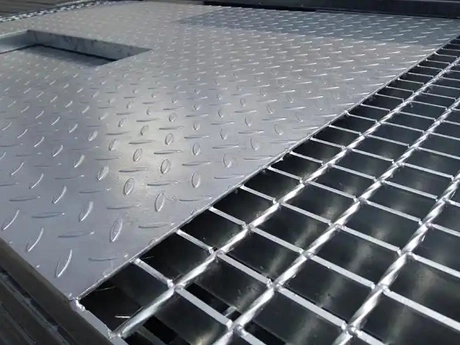
Standard grating has a plain flat top edge. Serrated steel grating has small notches cut into the top of the bearing bars, creating a rough, slip-resistant walking surface.
Specify serrated bars for wet, greasy, inclined or outdoor walkways — plant decks, washdown areas, ramps, offshore platforms. Specify plain bars where cleanliness and flatness matter more, such as indoor mezzanines. Serration slightly raises cost, but retrofitting anti-slip material later is far more expensive.

6. Material Grade
Steel grating is available in carbon steel, stainless steel and aluminum, and the grade must be explicit:
- Carbon steel Q235B — the default; economical, strong, normally hot-dip galvanized for outdoor use.
- Stainless steel 304 — corrosion resistant, for food, pharmaceutical and mild marine environments.
- Stainless steel 316L — higher resistance to chlorides and chemicals, for coastal and chemical plants.
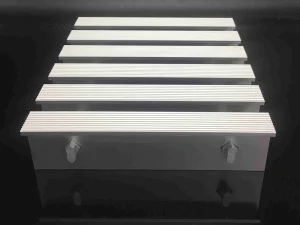
- アルミニウム — lightweight and corrosion resistant, for architectural and low-load applications.
Write the exact grade on the spec sheet: “304” and “316L” are not the same product, and the price difference is significant. See our stainless steel grating range for grade options.
7. Surface Treatment and Coating Thickness
The surface treatment decides how long the panel survives outdoors:
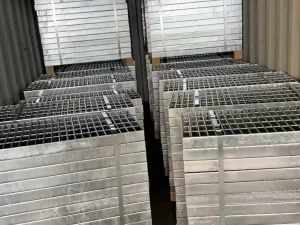
- Hot-dip galvanized — the standard for carbon steel: the panel is dipped in molten zinc, forming a dense zinc-iron alloy layer. For aggressive environments, specify the coating thickness (commonly 65–85 μm average per ISO 1461).
- Powder coating — colored finish for architectural and indoor use.
- Mill finish / bare steel — will corrode outdoors; only for temporary or indoor dry use.
- Stainless steel polished — for hygiene and appearance-critical areas.
Coating thickness is a real specification, not a marketing term. If your site is coastal or chemical, ask for a galvanized thickness above the minimum.
Steel Grating Ordering Checklist
| # | Dimension | What to specify | Common values |
|---|---|---|---|
| 1 | Bearing bar size | Width × thickness in mm | 25×3, 32×5, 40×5, 50×6, 75×6 |
| 2 | Bearing bar pitch | Center-to-center spacing | 30, 40, 60 mm |
| 3 | Cross bar pitch | Center-to-center spacing | 50, 100, 200 mm |
| 4 | Panel dimensions | Length × width + bearing bar direction | Per drawing |
| 5 | Serration | Plain or serrated bearing bars | Serrated for anti-slip |
| 6 | Material grade | Steel grade by environment | Q235B, 304, 316L, aluminum |
| 7 | Surface treatment | Coating type + thickness | HDG 65–85 μm, powder coat |
Frequently Asked Questions
What does “25 × 3 steel grating” mean? It means the bearing bars are 25 mm wide (high, once installed) and 3 mm thick. The full spec then adds bearing bar pitch, cross bar pitch, panel size and coating.
What is the standard cross bar pitch for steel grating? 100 mm is the industry standard, with 50 mm and 200 mm used for stiffer or lighter panels.
Can steel grating be cut to size after production? Yes. Panels can be cut, notched, hemmed and punched to fit supports and fixings — welded steel grating is finished this way before galvanizing. State these details in your drawing so the finished size is correct.
Should I use serrated bars for outdoor walkways? Generally yes. Serrated bearing bars give a slip-resistant surface in wet and greasy conditions and are a common specification for plant platforms and ramps.
What is the minimum zinc coating thickness for outdoor steel grating? Hot-dip galvanized steel grating is typically specified at 65–85 μm average coating thickness. For coastal or chemical environments, request a higher minimum.
How much bearing must the panel have on supports? Typically at least 25–50 mm on each supporting edge, with the support under the bearing bars. Confirm the exact value against the design standard for your project.
Final Advice
The cheapest way to buy steel grating is to send a complete specification once. Include these 7 dimensions on every inquiry, and your supplier can quote an accurate price, confirm the load capacity and deliver the right panels on the first shipment.
Need a quote for your project? Send your 7-point specification to Sino Grating — a steel grating manufacturer with more than 20 years in the industry — and we will confirm the best bar size, pitch, material and coating for your load and environment.