Galvanized Steel Grating Cover: Applications and Advantages Explained
10월 15, 2026
블로그
When you need to cover a trench, drain, or pit without blocking water flow or ventilation, a galvanized 강철 격자판 cover is usually the most practical and long-lasting solution. It combines the open-grid drainage of standard grating with a reinforced frame that sits flush with the surrounding floor — providing a safe walking surface while allowing water, debris, and light to pass through.
But not every grating cover is built the same. The difference between a cover that lasts 25 years and one that rusts through in five often comes down to how it’s manufactured, how it’s galvanised, and whether it’s specified for the actual load it will carry.
This guide covers the most common applications of galvanized steel grating cover products, the key advantages that make them the preferred choice over plastic, cast iron, or solid steel covers, and the specifications engineers and procurement teams should confirm before ordering.
What Is a Galvanized Steel Grating Cover?
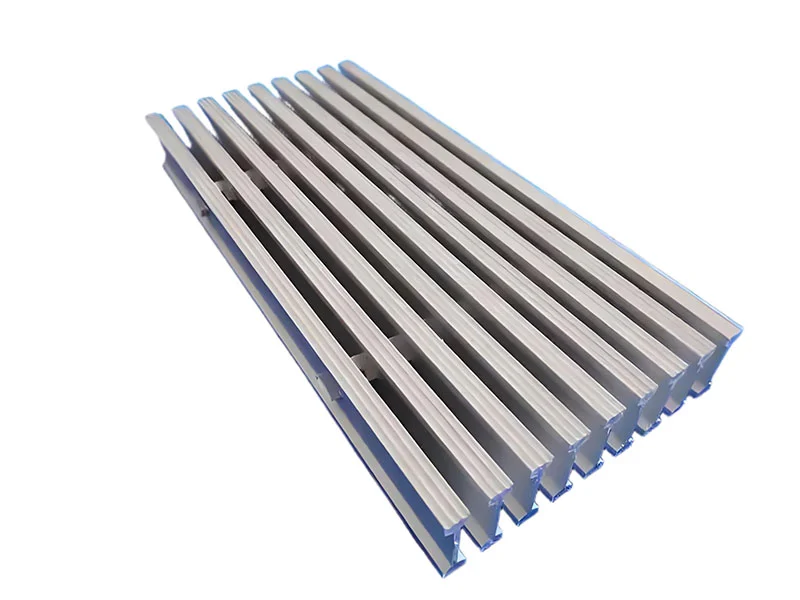
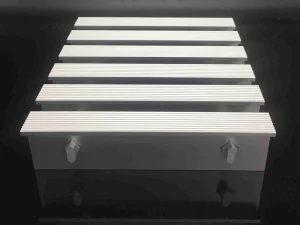
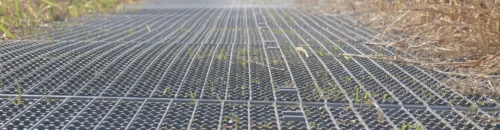
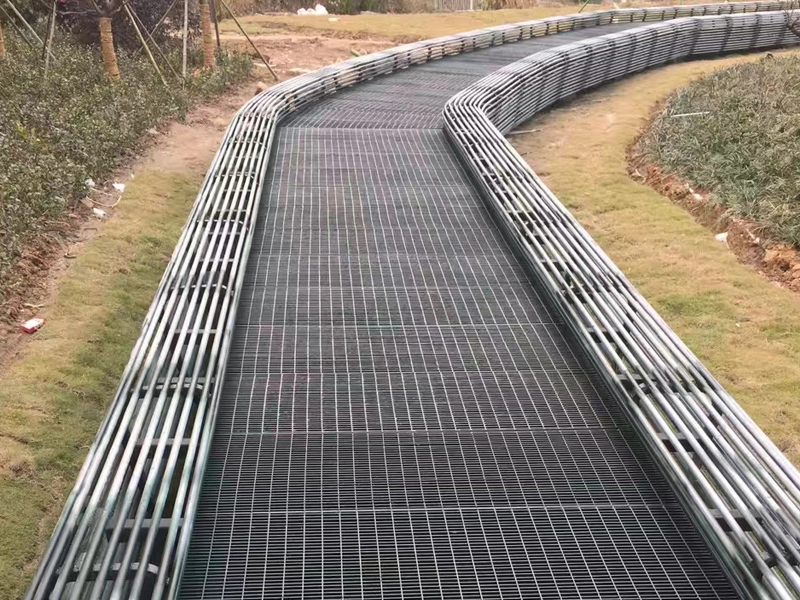
A grating cover is a prefabricated panel designed to fit over trenches, drainage channels, pits, or openings in floors and walkways. Unlike a solid cover plate, the grating grid structure — made from parallel china metal grating bar elements welded to cross rods — allows liquid and small debris to pass through while still supporting foot traffic, vehicle wheels, or equipment loads.
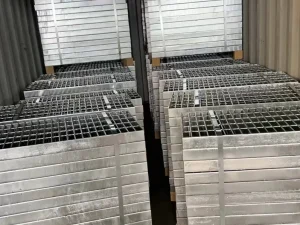
The “galvanized” specification means the entire cover — grating bars, cross rods, and edge frame — is hot-dip galvanised after fabrication. This zinc coating protects the underlying mild steel from corrosion, making the cover suitable for outdoor, wet, and corrosive environments where painted or bare steel would fail quickly.
Most covers are built from welded steel grating panels set inside an angle steel frame. The frame provides a rigid perimeter that rests on the trench walls, eliminates sharp edges, and can be fitted with hinges, lifting handles, or lock-down bolts for security and ease of access.
Primary Applications
Galvanized steel grating cover products are used across a wide range of industries. Here are the most common applications where they’re specified.
Municipal and Road Drainage
In urban infrastructure, galvanized steel grating covers line roadside drainage channels, stormwater inlets, and pedestrian walkway drainage. They allow rainwater to enter the drainage system while creating a flat walking surface for pedestrians.
Compared to cast iron covers, steel grating covers are lighter, easier to remove for maintenance, and less attractive to metal thieves — a significant practical advantage in many cities.
Industrial Floor Trenches
Factories, warehouses, and processing plants use floor trenches for cable routing, coolant collection, drainage, and utility lines. Grating covers provide safe access across these trenches while allowing spills and wash-down water to drain through.
In manufacturing facilities where forklifts and pallet trucks operate, heavy-duty covers with deeper bar profiles are specified to withstand repeated wheel loads. These covers are essentially heavy-duty china metal grating sheet panels set into reinforced frames, engineered for impact resistance and long-term fatigue performance.
Parking Garages and Basement Drainage
Underground parking structures rely on perimeter drainage channels to collect water from ramps and vehicular entrances. Galvanized steel grating covers are ideal here because they handle both pedestrian foot traffic and light vehicle tire loads, while their open design prevents standing water on driving surfaces.
Sewage and Wastewater Treatment Plants
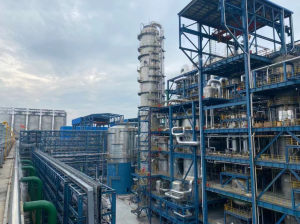
Wastewater facilities are inherently corrosive environments. Hot-dip galvanised grating covers resist moisture, chemical fumes, and humid air conditions that would quickly degrade unprotected steel. They’re used for walkway covers over access channels, floor trenches, and tank perimeter drainage.
Food and Beverage Processing
In food processing plants, floors require frequent wash-down. Grating covers over floor drains allow water and cleaning chemicals to drain rapidly while providing a non-slip walking surface. While stainless steel is preferred for direct food contact areas, galvanised covers are commonly used in back-of-house utility areas and external drainage.
Airport and Port Facilities
Airport aprons, cargo handling areas, and port terminals use grating covers for drainage channels that must withstand heavy vehicle and aircraft traffic. Heavy-duty press-locked covers with deep bar profiles are engineered for these high-load applications.
Commercial Building Basements and Roof Terraces
Commercial buildings use drainage trench covers in basement levels, loading docks, and roof terraces. Galvanized construction ensures long-term performance in outdoor or semi-outdoor conditions without the maintenance requirements of painted covers.
Key Advantages Over Alternative Cover Types
Why do engineers specify galvanized steel grating covers instead of other options? The advantages fall into several clear categories.
Superior Drainage Performance
A solid steel or plastic cover blocks water completely, forcing drainage to rely on inlets spaced along the trench. Grating covers allow water to enter along the entire length of the channel, dramatically increasing drainage capacity and reducing ponding on the surrounding surface. This is especially valuable in heavy rain events where rapid stormwater management is critical.
Long Service Life with Low Maintenance
Hot-dip galvanised steel covers have a typical service life of 20 to 30 years in outdoor environments with no painting, coating, or regular maintenance required. The zinc coating self-heals small scratches and abrasions, so even if the cover is scuffed during installation, it continues to corrode protection. This compares favourably with painted steel covers that require repainting every 3 to 5 years, or plastic covers that degrade under UV exposure.
High Load Capacity-to-Weight Ratio
Grating covers are remarkably strong relative to their weight. An optimally designed 30 mm deep galvanised cover supports pedestrian loads easily, while 75 mm deep heavy-duty variants handle forklift and truck traffic. Because they’re lighter than solid steel plates or cast iron covers, they’re easier to install, transport, and lift during maintenance.
Anti-Slip Safety
Standard grating surfaces provide natural traction because water drains away immediately, leaving the walking surface dry. For additional grip, serrated grating bars can be specified — the serrated edges bite into shoe soles or tire treads even in wet or oily conditions. This makes grating covers a safer choice than smooth solid plates, which become slippery when wet.
Ventilation and Light Transmission
In underground or semi-enclosed spaces, grating covers allow air circulation and natural light to pass through. This is a critical advantage for basement drainage, underground garage drainage, and utility trenches where ventilation helps prevent moisture buildup and gas accumulation.
Cost-Effective Over the Lifecycle
While the upfront cost of a galvanized grating cover may be higher than a basic plastic or painted cover, the total cost of ownership is lower. No maintenance, no repainting, and multi-decade service life means the per-year cost is significantly cheaper than alternatives that need replacement every few years.
Tamper and Theft Resistance
Unlike cast iron covers, which are frequently stolen for scrap metal, steel grating covers have lower scrap value and are less likely to be targeted. They can also be bolted or locked into the frame for added security in public areas.
Galvanised Mild Steel Grating Cover vs. Other Materials
Understanding how galvanized steel covers compare to alternatives helps in selecting the right product for each application.
vs. Plastic (FRP/GRP) Covers
Plastic composite covers are lightweight and non-corrosive, but they degrade under UV exposure, have lower load capacity, and can become brittle over time. They work well for light pedestrian loads in low-traffic areas, but for vehicle traffic or long-term outdoor use, galvanised steel outperforms plastic on both durability and structural performance.
vs. Cast Iron Covers
Cast iron covers are extremely heavy and very strong, but they’re expensive, prone to cracking under impact, and a major target for metal theft. Grating covers offer equivalent load capacity for most applications at a fraction of the weight and cost, with the added benefit of drainage.
vs. Solid Steel Plate Covers
Solid steel plates block all water flow and require additional drainage inlets. They also become slippery when wet. Grating covers solve both problems — drainage through the grid and natural traction from the open surface.
vs. Stainless Steel Grating Covers
Stainless steel offers better corrosion resistance than galvanised mild steel grating, especially in chemical or coastal environments. However, it costs 4 to 5 times more. For most drainage and trench cover applications, galvanised mild steel grating provides more than adequate corrosion protection at a much lower price point.
Key Specifications to Confirm
When ordering galvanized steel grating cover products, these are the non-negotiable parameters to specify:
Load Class
Define what the cover will support: pedestrian only, light vehicle (cars, vans), heavy vehicle (forklifts, trucks), or extreme loads (aircraft, container handlers). Load class determines bar depth, bar thickness, and spacing.
Bar Profile and Depth
Pedestrian covers typically use 20×3 mm or 30×3 mm flat bars. Vehicle-rated covers require 40×5 mm to 75×8 mm bars. Serrated bars should be specified for wet or oily environments.
Frame Dimensions
The angle steel frame that surrounds the grating should match the trench opening precisely. Standard frame sizes use equal-angle steel (e.g., 30×30×3 mm or 50×50×5 mm). The frame must be wide enough to bear on both sides of the trench wall.
Galvanising Standard
Specify hot-dip galvanised after fabrication, with a minimum zinc coating thickness of 55 μm per ISO 1461. Request a galvanising test report or MTC for the batch.
Access Features
Decide whether the cover needs:
- A hinge for easy lifting
- A lifting handle or eye bolt
- Bolt-down anchors for security
- A watertight seal (for applications where water intrusion must be minimised)
Installation and Maintenance Tips
Proper installation ensures maximum service life for galvanized grating covers:
- Ensure trench walls are level and uniform. Uneven support causes point loading that can warp or crack the cover over time.
- Use bedding or mortar strips along the support edges to distribute the load evenly.
- For hinged covers, confirm the hinge hardware is also galvanised or stainless steel to avoid corrosion at the pivot point.
- Clean debris from the grid periodically to maintain drainage efficiency.
- Inspect the zinc coating every few years. If bare spots appear due to impact damage, touch up with zinc-rich paint to prevent rust spread.
결론
Galvanized steel grating cover products solve a specific engineering problem elegantly: they cover openings safely while allowing drainage, ventilation, and light transmission. Their combination of load capacity, corrosion resistance, low maintenance, and cost-effectiveness makes them the default choice for drainage, trench, and pit cover applications across municipal, industrial, and commercial projects.
Whether you’re specifying covers for a road drainage project, factory floor trenches, parking garage drainage, or wastewater treatment facilities, working with an experienced Chinese manufacturer ensures you get the right load rating, proper galvanising, and a cover built to last for decades.
For project-specific quotations or engineering support on your grating cover requirements, contact Sino Grating today. Provide your trench dimensions, load requirements, and application details — our team will recommend the optimal galvanized steel grating cover configuration and provide a detailed FOB or CIF quote for your project.