Introduction
Precision manufacturing, sterile medical workshops, vertical agricultural systems, and dry food processing facilities have one critical requirement in common: industrial grating must deliver reliable structural stability while preventing micro-object falling, medium leakage, and residual dirt accumulation. Traditional standard bar grating features wide grid apertures that easily allow tiny components, planting substrates, food particles, and medical hardware to drop through, causing equipment damage, material loss, and hidden sanitary risks. Ordinary flush and riveted grating solves surface flatness issues but lacks targeted tight-mesh anti-drop performance, failing to meet high-standard precision and sanitary safety specifications. Close-Mesh Bar Grating is a professional tight-aperture dense-grid industrial grating engineered exclusively for anti-drop, anti-leakage, and high-cleanliness scenarios, filling the technical gap of standard wide-mesh grating in precision industrial and modern agricultural projects.
As the final core product of the full grating product matrix, close-mesh bar grating is completely differentiated from heavy-duty riveted grating for mining, standard riveted bar grating for general industry, flush clinched rivet grating for hygiene, and lightweight municipal riveted metal grating. Its core technical advantage lies in ultra-narrow uniform bar spacing and dense compact grid structure, focusing on anti-drop safety, precise drainage control, and zero micro-debris leakage.
What Is Close-Mesh Bar Grating?
Close-Mesh Bar Grating is a high-precision dense-grid industrial bar grating defined by ultra-tight uniform bearing bar spacing and minimized grid apertures. Different from standard bar grating with wide gaps, close-mesh bar grating adopts precision narrow-bar dense arrangement technology, with all grid gaps strictly controlled within ultra-small dimensions, forming a compact, uniform, and orderly dense grid structure. It integrates hidden flush locking technology, flat smooth surface, and precise aperture control, achieving dual core functions of industrial load-bearing and micro-object anti-drop protection.
The core design logic of close-mesh bar grating is safety precision control. Standard grating prioritizes ventilation and drainage efficiency with loose grid layout, while close-mesh grating balances ventilation, drainage, and anti-leakage performance. It effectively blocks tiny precision parts, planting medium particles, food debris, and fine dust from falling through the grid, completely solving the material loss and equipment failure risks caused by excessive grating gaps in precision production and modern agricultural scenarios.
In industrial engineering classification, close-mesh bar grating belongs to precision safety-grade functional grating. It is not designed for ultra-heavy load industrial scenarios, but professionally optimized for light-to-medium load environments requiring high safety, high cleanliness, and precise medium control, widely applicable to sterile medical workshops, precision electronic factories, vertical hydroponic farms, and dry food processing facilities.
Manufacturing Process & Precision Structural Principle
The excellent anti-drop performance, flatness stability, and sanitary durability of close-mesh bar grating stem from exclusive precision manufacturing technology and optimized dense-grid structural design, ensuring consistent aperture accuracy and zero structural dead corners for each panel.
Precision Narrow-Bar Material Blanking & Calibration
Select high-tensile stainless steel, galvanized carbon steel, or lightweight aluminum alloy raw materials, and perform customized narrow-gauge bar blanking according to precision aperture standards. All narrow metal bars undergo secondary flattening and stress relief calibration to ensure consistent bar thickness and flatness, avoiding grid deformation and uneven gaps caused by material tension deviation, and laying a foundation for uniform dense-grid assembly.
CNC Ultra-Precision Aperture Positioning & Grooving
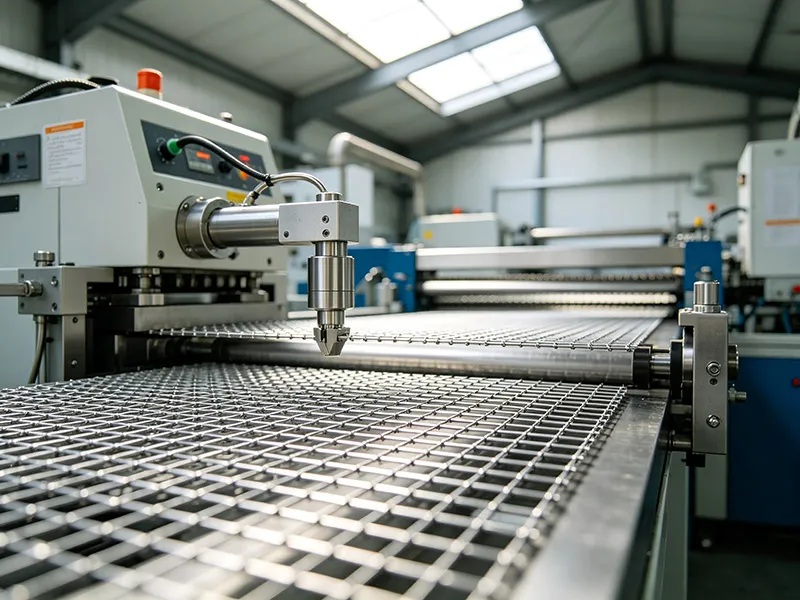
Adopt advanced full-automatic CNC precision processing equipment to realize millimeter-level accurate positioning of bearing bars and cross bars. Strictly control the spacing of each grid gap to ensure zero deviation of overall aperture, avoiding local oversized gaps that affect anti-drop effect. Standardized grooving treatment is performed at bar intersections to prepare for subsequent integrated locking.
Hidden Flush Integrated Locking Assembly
Consistent with high-standard sanitary grating technology, close-mesh bar grating adopts internal hidden locking structure without exposed protruding rivets or welding bumps. Through hydraulic cold pressing and embedded interlocking technology, narrow bars are tightly fixed into an integrated dense grid, ensuring firm structural connection while maintaining a completely flat and smooth surface, without any raised fasteners or assembly gaps that trap debris.
Sanitary Polishing & Anti-Corrosion Finishing
All finished dense-grid panels undergo fine deburring and mirror matte polishing treatment to remove tiny burrs and processing marks. Different anti-corrosion processes are adopted according to application scenarios: stainless steel models pass sanitary passivation treatment, galvanized models adopt thick hot-dip galvanizing, and aluminum models undergo oxidation anti-corrosion treatment, adapting to humid, sterile, and corrosive working environments.
Precision Anti-Drop Structural Working Principle
The ultra-narrow dense grid layout forms a uniform barrier protection system. Under normal ventilation and drainage conditions, it ensures smooth circulation of air and liquid, while completely blocking tiny solid particles from passing through the gaps. The integrated hidden locking structure makes the dense grid force uniform, avoiding local gap deformation under load pressure, and maintaining long-term stable anti-drop and anti-leakage performance. The flat seamless surface eliminates dirt accumulation dead corners, realizing long-term sanitary and safe operation.
Main Types of Close-Mesh Bar Grating
Classified by material and surface function, covering medical sanitation, precision electronics, modern agriculture, and light industry scenarios, meeting differentiated precision safety and environmental adaptation needs.
Stainless Steel Close-Mesh Bar Grating
Made of food and medical-grade 304/316 stainless steel, this model features ultra-high sanitary performance, corrosion resistance, and easy cleaning characteristics. The dense flat grid prevents tiny medical implants and electronic components from falling through, and supports high-pressure water flushing and steam disinfection without residual dirt and bacteria. It is the standard configuration for medical sterile workshops, precision electronic cleanrooms, and high-standard food processing factories.
Galvanized Close-Mesh Bar Grating
With economical hot-dip galvanized surface treatment, this light-duty dense-grid grating has reliable rust and oxidation resistance. It retains all core advantages of tight-aperture anti-drop and flat sanitary performance, suitable for general precision machinery workshops, ordinary industrial anti-drop platforms, and indoor ventilation and drainage safety passage systems, with high cost performance.
Aluminum Close-Mesh Bar Grating
Ultra-lightweight aluminum alloy material features natural oxidation resistance, humid corrosion resistance, and no fertilizer chemical corrosion. The dense grid structure effectively prevents planting substrates, seed particles, and nutrient solution medium from leaking and losing, perfectly adapting to vertical farms, indoor hydroponic planting bases, and commercial nursery humid maintenance passages.
Serrated Anti-Slip Close-Mesh Bar Grating
Fine micro anti-slip serrations are pressed on the surface of narrow dense bars without destroying the flat overall structure and precise aperture. It greatly improves surface friction coefficient, solves pedestrian slipping risks in long-term wet environments such as nutrient solution workshops and wet food processing workshops, and realizes dual functions of anti-drop safety and anti-slip protection.
Exclusive Core Advantages of Close-Mesh Bar Grating
Compared with all conventional wide-mesh gratings and ordinary sanitary gratings, close-mesh bar grating has irreplaceable exclusive advantages in precision safety and medium control, targeting the core pain points of particle falling, material leakage, and difficult fine cleaning in high-precision industrial and modern agricultural projects.
Ultra-Tight Uniform Aperture, Zero Micro-Particle Drop-Through
The core exclusive advantage of close-mesh bar grating is ultra-narrow dense grid gaps. It completely blocks tiny precision components, medical hardware, planting substrates, food particles, and fine dust from falling through the grid, avoiding equipment damage, production material loss, and pipeline blockage caused by particle leakage, and greatly improving operational safety of precision production and agricultural systems.
Anti-Leakage Medium Control, Stable Drainage & Ventilation Balance
Different from fully enclosed solid plates that block ventilation and drainage, close-mesh dense grid structure realizes precise gap control. It ensures smooth circulation of nutrient solution, rainwater, and air, while retaining solid particles, achieving a perfect balance between drainage/ventilation efficiency and anti-leakage safety. It is especially suitable for vertical farm water circulation systems and cleanroom ventilation passages.
Flat Seamless Sanitary Surface, Easy Full-Range Cleaning
Adopting hidden flush locking technology, the surface has no protruding rivets, welding scars, or assembly gaps. The smooth flat dense grid leaves no dead corners for fine dirt, algae, and bacteria to accumulate. It can be thoroughly cleaned by water flushing and disinfection, meeting the ultra-high cleanliness standards of medical sterile workshops and precision electronic cleanrooms.
Humid & Corrosion Resistant, Long-Term Stable Operation
Stainless steel and aluminum close-mesh grating have excellent resistance to humid corrosion, chemical fertilizer corrosion, and salt spray oxidation. They can operate stably in long-term high-humidity planting environments and frequent cleaning sanitary environments, without rusting, deforming, or aperture deviation, ensuring long-term consistent anti-drop performance.
Lightweight & Rigid Structure, Low Engineering Load
The optimized narrow-bar dense-grid design reduces overall weight while ensuring structural rigidity. It will not cause excessive load pressure on building overhead platforms and agricultural support structures, supports flexible cutting and modular rapid installation, reduces construction difficulty and engineering costs, and shortens project cycle.
Neat Uniform Grid, Modern Clean Industrial Aesthetics
The orderly dense grid layout presents a minimalist, tidy, and modern industrial texture, avoiding the messy visual sense of wide-gap grating. It integrates safety functionality and architectural aesthetics, improving the overall cleanliness and grade of clean workshops and modern agricultural spaces.
High-Intent Exclusive Application Scenarios (100% Unique & Non-Repeat)
All application cases are completely independent of other grating products, covering Google high-value long-tail search intent in precision manufacturing, medical sanitation, and modern vertical agriculture fields.
Vertical Farm & Hydroponic Planting Maintenance Flooring
Vertical farms and indoor hydroponic bases require stable water circulation and zero loss of planting substrates. Aluminum and serrated close-mesh bar grating is laid on backstage nutrient solution circulation maintenance flooring. The ultra-tight gaps prevent peat soil, ceramsite substrates, and seed particles from leaking with water flow, ensuring no material loss while keeping the water circulation system unobstructed, adapting to long-term humid planting environments.
Medical Implant Sterile Auxiliary Workshop Passages
Medical implant packaging and sterile testing workshops have extremely strict requirements for anti-drop and anti-pollution. Stainless steel close-mesh bar grating is used for internal maintenance walkways. The dense grid effectively prevents tiny medical implants and precision hardware from falling, and the seamless flat surface avoids bacteria and dust accumulation, fully complying with medical sterile production standards.
Precision Electronic Component Assembly Platforms
Semiconductor packaging and microelectronic component assembly workshops need to avoid tiny circuit fragments and chip accessories falling into equipment gaps. Close-mesh bar grating is applied to elevated inspection platforms and ventilation catwalks, ensuring production safety and workshop cleanliness, and preventing precision equipment failure caused by micro-particle falling.
Dry Food & Pet Food Processing Anti-Loss Trench Covers
Dry snack and pet food production lines often face material loss caused by particle falling through wide-gap grating. Food-grade stainless steel close-mesh bar grating is used for workshop drainage trench covers, blocking food particle leakage while ensuring smooth drainage, reducing production waste, and maintaining workshop sanitation.
Laboratory Micro-Instrument Inspection Catwalks
Scientific research laboratories and precision testing rooms involve a large number of tiny experimental instruments and accessories. Close-mesh dense-grid grating provides safe anti-drop walking passages, avoiding instrument damage and experimental material loss caused by accidental falling, and ensuring stable and orderly laboratory operation.
Indoor Nursery & Greenhouse Irrigation Service Passages
Commercial greenhouses and indoor seedling nurseries need to prevent seed and soil particle loss during irrigation and maintenance. Lightweight aluminum close-mesh bar grating is used for overhead irrigation pipeline maintenance walkways, adapting to humid planting environments, and realizing dual protection of anti-drop safety and convenient cleaning.
Close-Mesh Bar Grating vs Other Steel Grating Types
Accurate vertical product differentiation helps engineers and buyers quickly select grating products according to project precision safety and sanitary requirements, avoiding model mismatch.
Close-Mesh Bar Grating vs Standard Wide-Mesh Bar Grating
Standard wide-mesh bar grating has large grid gaps, focusing on heavy ventilation and drainage, but cannot block micro-particle falling and medium leakage. It is only suitable for ordinary heavy industrial platforms and municipal drainage. Close-mesh bar grating adopts ultra-tight dense aperture design, taking anti-drop and anti-leakage safety as the core, exclusively serving precision industry and modern agricultural high-standard scenarios, making up for the fatal safety defect of wide-mesh grating.
Close-Mesh Bar Grating vs Clinched Rivet Grating
Clinched rivet grating focuses on flush flatness and sanitary cleaning, with ordinary standard gaps and no anti-drop design. It can solve surface sanitary problems but cannot prevent tiny particle leakage. Close-mesh bar grating retains the flush sanitary advantage of clinched grating, and upgrades to ultra-tight dense grid structure, realizing dual advantages of high cleanliness and high anti-drop safety.
Close-Mesh Bar Grating vs Heavy-Duty Riveted Grating
Heavy-duty riveted grating is positioned for ultra-heavy load mining and steel mill scenarios, with thick bulky structure and wide gaps, focusing on impact resistance and load-bearing capacity, without any precision anti-drop and sanitary performance. It is completely incompatible with precision clean scenarios, while close-mesh bar grating is professionally customized for high-precision light-duty safe environments.
Close-Mesh Bar Grating vs Welded Mesh Grating
Welded mesh grating has rough welding joints, uneven surfaces, and easy corrosion and dirt accumulation, failing to meet high sanitary standards. Its mesh aperture accuracy is low, and local oversized gaps are prone to appear. Close-mesh bar grating has precise uniform aperture, flat seamless sanitary surface, and stable structural rigidity, with comprehensive performance far exceeding ordinary welded mesh in precision sanitary projects.
Professional Selection, Installation & Maintenance Guide
Scientific model selection and standardized installation can maximize the precision anti-drop performance and service life of close-mesh bar grating in high-standard projects.
Material Selection Rules: Medical sterile workshops, precision cleanrooms, and dry food processing projects select 304/316 stainless steel close-mesh grating for high sanitation and corrosion resistance; vertical farms and indoor nurseries choose lightweight aluminum models; ordinary precision industrial workshops adopt economical galvanized types.
Surface Selection Standard: Wet nutrient solution workshops, humid greenhouses, and wet food processing passages prioritize serrated anti-slip close-mesh grating to ensure walking safety; dry cleanrooms and laboratory precision platforms choose plain flat surface for optimal sanitary cleaning effect.
Precision Anti-Drop Installation Specifications: Adopt modular integral laying with customized precise brackets to ensure flat panel docking and consistent grid gap. Avoid forced extrusion causing gap deformation, ensure no local oversized gaps, and retain reasonable ventilation and drainage space to balance safety and functionality.
Long-Term Sanitary Maintenance Tips: Close-mesh bar grating has ultra-low maintenance costs. The seamless dense grid has no dirt-trapping dead corners, and daily cleaning only requires conventional water flushing and disinfection. The integrated locking structure will not loosen or deform, no regular reinforcement and anti-rust treatment is needed, ensuring long-term stable anti-drop and sanitary performance.
Conclusion
Close-Mesh Bar Grating is a high-precision safety sanitary dense-grid grating exclusive to precision manufacturing and modern vertical agriculture. With core advantages of ultra-tight uniform aperture, micro-particle anti-drop, anti-leakage medium control, and flush seamless sanitation, it perfectly solves the pain points of material loss, particle falling, and difficult fine cleaning of traditional wide-mesh grating in high-standard clean and precision projects.
Widely applicable to medical sterile workshops, precision electronic cleanrooms, vertical hydroponic farms, dry food processing facilities, and laboratory precision inspection passages, close-mesh bar grating has become the optimal customized solution for global high-precision and high-safety industrial construction. For engineering projects pursuing zero particle leakage, high-standard sanitation, and balanced ventilation & drainage, close-mesh bar grating is the irreplaceable professional choice.