Introduction
Most industrial cleanrooms, food processing facilities, new energy factories, and general chemical plants face a common structural dilemma when selecting elevated walkways. Open mesh grating delivers excellent ventilation and drainage but allows fine dust, tiny particles, and small tools to fall through gaps, contaminating precision production lines and lowering workshop cleanliness. Fully sealed one-piece closed-top grating achieves maximum dust tightness but sacrifices basic ventilation and reserves no maintenance access, making overhauls inconvenient. Removable capped grating supports flexible drainage and maintenance but suffers from loose assembly stability and gap leakage after long-term use. Traditional steel covered grating easily rusts, conducts electricity, and generates friction sparks, bringing continuous safety risks and high maintenance costs.
What Is Covered Composite Grating? Authoritative Industrial Definition
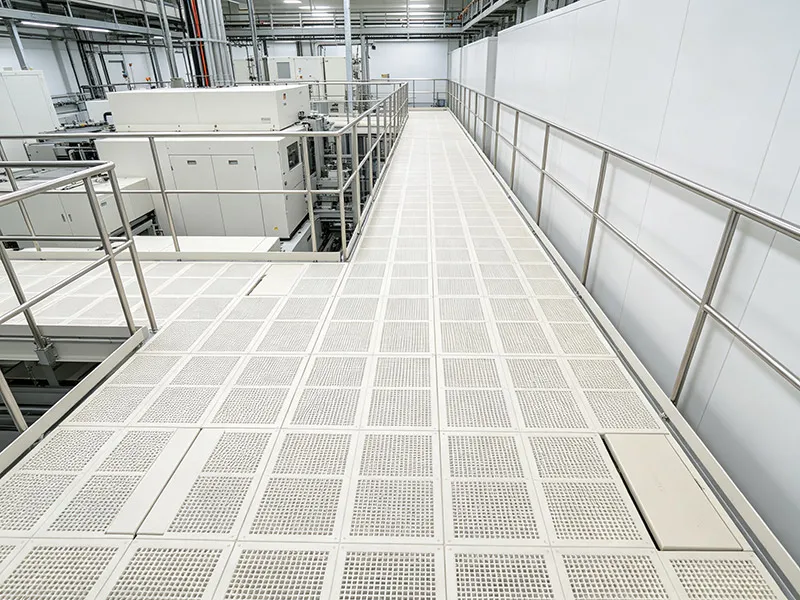
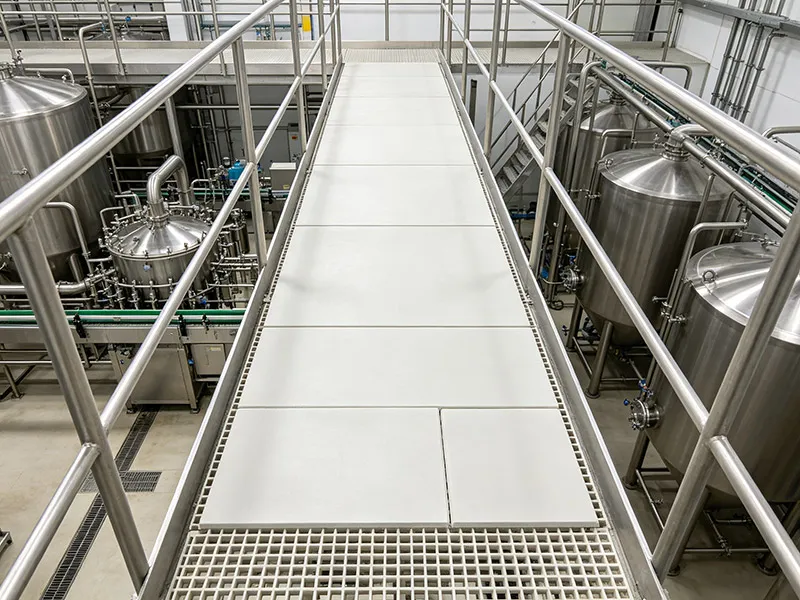
Covered Composite Grating is a high-performance fixed full-coverage fiberglass reinforced plastic (FRP) walkway designed for semi-clean and standard industrial environments. It adopts an integrated structure of load-bearing composite mesh base and permanent fixed cover panel, with reserved small inspection holes for daily under-platform inspection and simple maintenance.
Different from fully sealed closed-top grating and fully removable capped grating, covered composite grating maintains overall full coverage to block dust and falling debris while retaining basic air circulation and partial maintenance accessibility. Inheriting the natural advantages of composite materials, it features corrosion resistance, ultraviolet stability, non-conductive insulation, spark-free safety, and zero rust. It is the most cost-effective and versatile dust-proof walkway solution for semiconductor chip workshops, precision electronic cleanrooms, food and beverage factories, new energy plants, and general chemical industrial facilities worldwide.
Strict Product Differentiation: Covered vs Closed-Top vs Capped vs Solid-Top vs Mesh vs Steel Grating
To avoid Google keyword cannibalization and build professional industrial authority, we clarify the exclusive semantic positioning of Covered Composite Grating and distinguish it from all competing products:
Covered Composite Grating (Exclusive Core: Fixed Full-Cover + Reserved Inspection Holes + Balanced Ventilation)
Fixed non-detachable full-coverage structure with specially reserved small maintenance openings. It provides stable dust-proof and anti-fall performance, retains moderate ventilation to avoid hidden moisture corrosion, and supports daily simple under-platform inspection. It is the optimal universal choice for semi-clean industrial workshops that require both cleanliness and maintainability.
Closed-Top Composite Grating
One-piece fully sealed gap-free structure with zero inspection holes and zero ventilation. It only adapts to ultra-clean, explosion-proof environments such as lithium battery coating workshops and semiconductor ultra-clean rooms, with poor maintainability and narrow application scope.
Capped FRP Grating
Equipped with fully detachable cover panels, supporting complete opening for full drainage and thorough maintenance. However, frequent disassembly leads to loose gaps and reduced stability, suitable only for wet-dry alternating workshops requiring frequent flushing.
Solid-Top FRP Grating
Pure solid flat plate structure without mesh base support. It has weak structural rigidity, poor spanning capacity, and serious water accumulation problems, unable to adapt to long-distance industrial elevated walkways.
Open Mesh Composite Grating
Full hollow mesh design with maximum ventilation and drainage, but completely no dust-proof and anti-fall capability, unable to meet clean workshop production standards.
Steel Covered Grating
Metal covered structure with high load capacity but fatal defects of easy rusting, electrical conductivity, and friction spark generation. It requires regular anti-rust painting and maintenance, with huge potential safety hazards in clean and explosion-proof industrial zones.
Industrial-Grade Covered Composite Grating Types & Working Condition Adaptability
Covered Composite Grating is available in five professional industrial grades to match diversified global industrial environments, ensuring targeted durability, safety, and compliance:
General-Purpose Polyester Covered Composite Grating
Made of high-quality unsaturated polyester resin and high-strength fiberglass reinforcement, this general-grade product delivers stable load-bearing performance, reliable dust-proof capability, and cost advantages. It is widely applicable to ordinary factory walkways, semi-clean workshops, municipal industrial platforms, and indoor general industrial environments without severe chemical corrosion.
Vinyl Ester Corrosion-Resistant Covered Composite Grating
Formulated with premium vinyl ester resin, this corrosion-resistant grade effectively resists acid, alkali vapor, chemical splash, and industrial flue gas erosion. It maintains stable covering and dust-proof performance in fine chemical plants, pharmaceutical workshops, and electroplating production lines, protecting lower pipelines and equipment from chemical contamination.
Flame-Retardant Explosion-Proof Covered Composite Grating
Added with halogen-free low-smoke flame retardant ingredients, this product achieves self-extinguishing and low flame spread characteristics. Its inherent non-conductive and spark-free properties eliminate electric leakage, static discharge, and explosion risks, fully complying with ATEX and OSHA safety standards. It is specially used for lithium battery factories, energy storage stations, petrochemical plants, and all flammable and explosive industrial zones.
Marine UV-Stabilized Covered Composite Grating
Optimized for harsh coastal and offshore open-air environments, this marine-grade grating integrates advanced anti-UV and anti-salt-fog formulas. It resists long-term ultraviolet aging, high-concentration salt spray erosion, and strong wind impact without cracking, discoloration, or performance degradation, suitable for offshore platform walkways, coastal power plants, and seawater desalination facilities.
Food-Grade Hygienic Covered Composite Grating
Produced with EU-certified non-toxic food-grade resin, this hygienic grade has no harmful substance precipitation and no sanitary dead corners. The smooth covered surface supports high-pressure flushing and industrial disinfection, effectively preventing food residue accumulation and cross-contamination. It is the standard choice for fermentation plants, beverage filling workshops, seafood processing, and food deep-processing factories.
Core Engineering & Safety Advantages of Covered Composite Grating
The unique fixed full-coverage semi-closed structure endows Covered Composite Grating with irreplaceable comprehensive advantages for standard clean industrial platforms:
Stable Full-Cover Dust-Proof & Anti-Fall Protection
The permanent fixed cover completely covers the mesh base, effectively blocking industrial dust, production particles, tool debris, and waste materials from falling to lower production lines and precision equipment. It avoids equipment contamination, pipeline blockage, and component damage, greatly reducing factory failure rates and cleaning costs.
Balanced Ventilation & Anti-Corrosion Performance
Different from fully sealed closed-top grating that easily causes hidden moisture accumulation, covered composite grating retains moderate air circulation through reserved gaps and inspection holes. It effectively prevents hidden layer damp corrosion and mildew growth, ensuring long-term structural stability in semi-humid industrial workshops.
Reserved Inspection Openings for Convenient Daily Maintenance
Reasonably designed small maintenance holes meet daily inspection and simple repair needs for lower pipelines, cables, and equipment. There is no need to disassemble the entire grating structure, greatly improving maintenance efficiency and reducing factory downtime and operational costs.
Clean-Grade Flat Working Surface
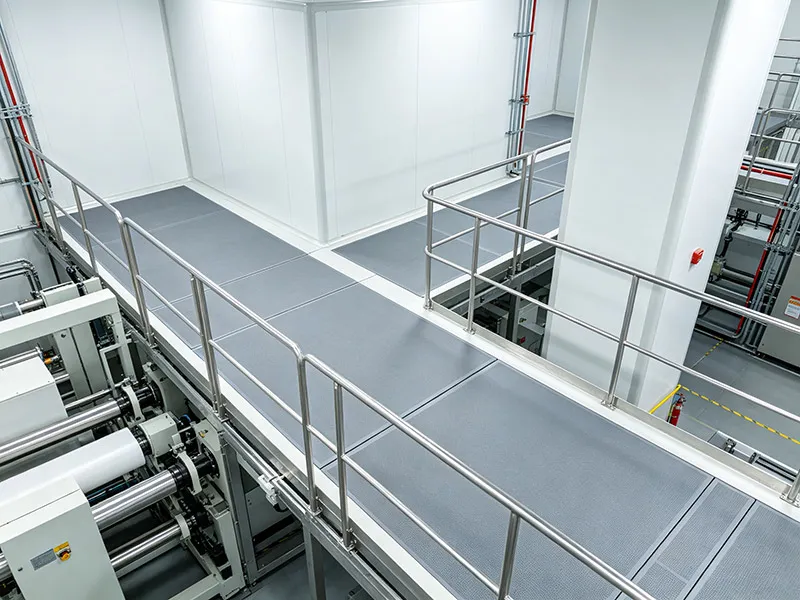
The smooth flat covered surface has no hollow gaps or concave dead corners, supporting personnel walking, equipment placement, and material transfer. It is easy to clean and maintain long-term workshop cleanliness, fully adapting to semi-clean production standards of electronic and food factories.
Non-Conductive & Spark-Free Explosion Safety
The integral composite material has excellent insulation performance, completely isolating current transmission and static accumulation. No friction sparks are generated during personnel walking and equipment operation, eliminating short-circuit and explosion risks in new energy and chemical hazardous zones.
Zero Rust & Low Lifecycle Maintenance
Chemically inert fiberglass composite material never rusts or oxidizes. It stably resists atmospheric corrosion, salt spray, and chemical splash, requiring no regular rust removal, painting, or anti-corrosion maintenance. It achieves long-term stable operation and low comprehensive cost.
Lightweight & Stable Structural Performance
Compared with heavy steel covered grating, composite grating features lightweight design and high specific strength. It reduces the bearing pressure of building structures and supports flexible modular installation, adapting to various complex industrial platform layouts.
Global Industrial Application Scenarios
Covered Composite Grating is widely specified for semi-clean industrial platforms requiring dust-proof protection, moderate ventilation and convenient maintenance, covering semiconductor electronics, food and beverage, new energy, chemical, offshore and environmental protection industries:
Semiconductor & Precision Electronic Cleanroom Walkways (Core Scenario)
General and flame-retardant covered composite grating is the ideal solution for chip manufacturing workshop upper inspection walkways and precision electronic assembly clean platforms. The fixed full-coverage structure blocks fine silicon powder, electronic debris and floating particles from polluting precision production equipment. Reserved ventilation and inspection holes ensure workshop air circulation and convenient daily equipment maintenance, perfectly matching semi-clean electronic production standards.
Food, Beverage & Fermentation Plant Platforms
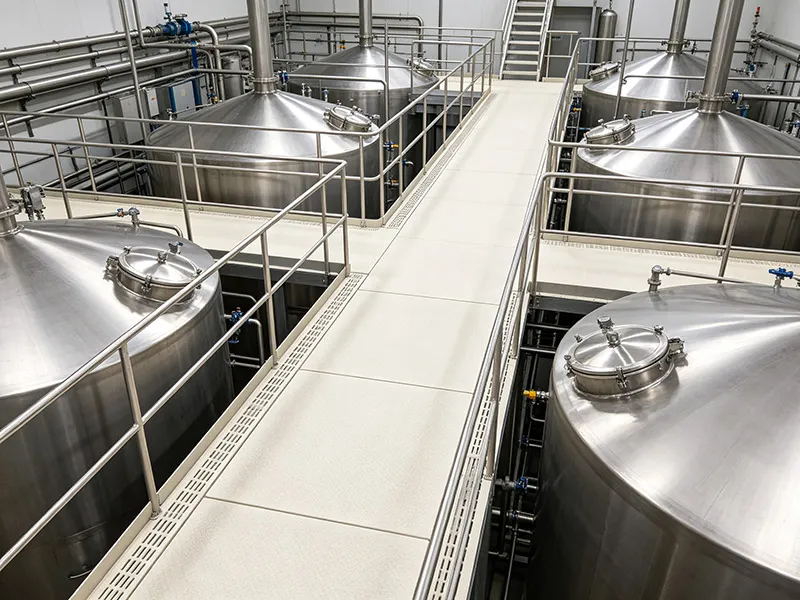
Food-grade covered composite grating is applied for fermentation tank annular walkways, beverage filling workshop upper corridors, and food raw material transfer platforms. It blocks grain residues, fermentation waste and cleaning debris from falling, maintains workshop hygienic conditions, and supports daily equipment inspection and platform cleaning.
Lithium Battery & Energy Storage Factory Walkways
Flame-retardant covered composite grating is used for battery assembly workshops, energy storage station inspection platforms, and electrolyte tank farm corridors. It isolates conductive dust to prevent battery short circuits and thermal runaway, while moderate ventilation avoids damp hidden dangers in closed new energy workshops.
Fine Chemical & Pharmaceutical Industrial Platforms
Vinyl ester corrosion-resistant covered grating adapts to pharmaceutical production workshops, chemical reagent tank farms, and reaction kettle peripheral walkways. It prevents chemical powder and crystal debris from polluting lower pipelines and valves, and resists long-term chemical vapor and splash corrosion.
Offshore & Coastal Industrial Facilities
Marine UV-stabilized covered composite grating is suitable for offshore platform instrument walkways, seawater desalination plant upper platforms, and coastal factory inspection corridors. It resists salt spray and ultraviolet aging, and protects precision offshore equipment from sand and dust pollution.
General Industrial & Environmental Protection Plants
Widely used for ordinary factory elevated walkways, sewage treatment plant inspection platforms, and industrial municipal trench cover systems. It balances cost performance and practicality, meeting daily dust-proof protection and safe walking requirements of general industrial environments.
Professional Engineering Selection Guide
Select targeted grades according to on-site industrial environment and safety requirements:
General-Purpose Grade: Ordinary factories, semi-clean workshops, indoor general industrial platforms, mild atmospheric environments.
Vinyl Ester Corrosion-Resistant Grade: Fine chemical, pharmaceutical, and electroplating workshops with acid-base vapor and splash corrosion.
Flame-Retardant Explosion-Proof Grade: Lithium battery, energy storage, petrochemical, and all flammable explosion-proof industrial zones.
Marine UV-Stabilized Grade: Offshore platforms, coastal salt spray environments, open-air ultraviolet exposure scenarios.
Food-Grade Hygienic Grade: Fermentation, beverage filling, food processing, and aquatic product production workshops.
Core Engineering Selection Rule
Covered Composite Grating = Semi-clean workshops, need dust-proof protection + moderate ventilation + convenient daily maintenance
Closed-Top Grating = Ultra-clean zero-ventilation required explosion-proof workshops
Capped Grating = Wet-dry alternating workshops requiring frequent drainage and full maintenance
Open Mesh Grating = Ventilation and drainage priority, no dust-proof requirement
Installation & Industrial Compliance Standards
Covered Composite Grating adopts modular integrated installation with dedicated anti-corrosion composite fasteners. The fixed cover and mesh base are integrally fixed, with reserved inspection openings precisely positioned to meet industrial maintenance specifications. All products comply with OSHA industrial pedestrian safety standards, ATEX explosion-proof specifications, GMP food hygiene standards, and marine industrial facility codes.
The semi-closed structural design avoids the stability risk of frequent disassembly of capped grating and the poor ventilation defect of fully closed grating. It only requires daily surface cleaning without regular anti-corrosion treatment and structural maintenance, realizing long-term low-cost and high-efficiency operation for industrial facilities.
FAQs for Global Engineers & Industrial Buyers
Q1: What is the difference between Covered Composite Grating and Closed-Top Grating?
A1: Covered composite grating is a semi-closed structure with reserved inspection holes and moderate ventilation, suitable for most semi-clean industrial scenarios. Closed-top grating is fully sealed with zero ventilation, only used for ultra-clean explosion-proof environments with extremely strict dust control.
Q2: Is covered composite grating suitable for semiconductor cleanrooms?
A2: Yes. It provides stable dust-proof performance to protect precision chip production equipment, and retains proper ventilation to avoid workshop damp corrosion, which is the best choice for standard semiconductor and electronic semi-clean workshops.
Q3: Does covered composite grating support under-platform maintenance?
A3: Yes. Reserved small inspection openings support daily inspection and simple maintenance of lower equipment and pipelines without overall disassembly, ensuring operational convenience.
Q4: Is covered composite grating safe for new energy factories?
A4: Absolutely. Flame-retardant covered composite grating is non-conductive, spark-free and dust-proof, effectively preventing conductive dust accumulation and battery safety hazards, fully meeting new energy workshop safety standards.
Conclusion
Covered Composite Grating is the most versatile and cost-effective semi-closed composite walkway solution for modern standard industrial environments. It perfectly integrates the dust-proof advantages of closed grating and the ventilated maintainable advantages of open grating, making up for the single performance defects of traditional grating products.
With fixed full-coverage dust-proof protection, balanced ventilation performance, convenient daily maintenance, clean-grade flat surface, non-conductive explosion-proof safety, and long-term corrosion resistance, covered composite grating has become the preferred specified product for semiconductor chip workshops, precision electronic cleanrooms, food fermentation plants, new energy factories, and general chemical industrial facilities. It provides stable, safe, and economical structural support for global medium and high-standard industrial engineering projects.