Introduction
Thermal power plants, flue gas desulfurization (FGD) workshops, petrochemical refineries, and industrial conveyor systems face a persistent structural dilemma in platform flooring selection. Standard equal-spacing bar grating delivers reliable load capacity but features oversized uniform gaps that allow fly ash, desulfurization powder, fine industrial debris, and micro metal fragments to fall through, causing equipment contamination, material waste, and secondary environmental pollution. Double-layer compound steel grating solves the anti-drop problem with dual-layer mesh structures but brings increased weight, poor ventilation, easy clogging, and higher installation costs, failing to meet lightweight and high-airflow demands for long-term high-temperature industrial operation.
شبكة قضبان مركبة is a professional single-layer mixed-spec industrial grating engineered exclusively for heavy thermal and power industrial scenarios. As the tenth independent differentiated product in the full steel grating matrix, it maintains zero content and scenario overlap with fine-mesh, close-mesh, high-security, and double-layer compound steel grating. Adopting a unique staggered thick-thin compound bar integrated press-locked structure, it combines thick main load-bearing bars for heavy-duty support and thin auxiliary cross bars for gap homogenization and fine debris anti-drop. It perfectly balances heavy load capacity, high ventilation permeability, micro-particle anti-leakage, and lightweight structural advantages, becoming the most cost-effective customized solution for power plant and petrochemical high-altitude inspection platforms. Optimized for Google E-E-A-T industrial authority and B2B engineering procurement intent, this 2200+ word long-form SEO article covers the definition, structural manufacturing principles, product classification, exclusive core advantages, industry-specific application scenarios, vertical product comparison, and professional installation & maintenance guidelines of compound bar grating, providing authoritative technical references for global power plant engineers, FGD project contractors, and petrochemical facility designers.
What Is Compound Bar Grating?
شبكة قضبان مركبة is an integrated single-layer press-locked steel grating featuring a mixed thick-thin compound bar layout. Different from standard uniform-spacing bar grating and double-layer composite grating, it abandons single-spec bar design and layered composite structure, adopting a scientific collocation of thick primary bearing bars and thin secondary auxiliary bars to form staggered homogenized small gaps on a single-layer flat surface.
The thick main bearing bars undertake core mechanical loads, supporting heavy inspection equipment, maintenance trolleys, and long-term pedestrian intensive traffic. The evenly distributed thin auxiliary bars narrow the original large gaps of standard grating without adding extra mesh layers, effectively intercepting fly ash, desulfurization absorbent powder, coal ash fine particles, and tiny industrial debris. The entire panel is formed by one-piece hydraulic press-locking technology, with no welding gaps, loose components, or layered delamination, ensuring integral rigidity and structural stability.
In professional industrial classification compliant with NAAMM and industrial power plant construction standards, compound bar grating belongs to single-layer functional optimized load-bearing grating. It is not designed for sterile cleanrooms, public security anti-fall, or sewage anti-corrosion scenarios, but exclusively optimized for high-temperature, high-vibration, high-dust power and petrochemical industrial environments, solving the dual pain points of insufficient load capacity of dense mesh grating and serious fine particle leakage of standard heavy-duty grating.
Manufacturing Process & Compound Bar Structural Principle
The unique dual-performance advantage of heavy load and anti-fine-drop of compound bar grating stems from exclusive mixed-spec bar matching technology and integrated press-locked molding process, ensuring stable functional synergy in long-term high-temperature and high-vibration industrial environments.
Scientific Mixed-Thick Bar Material Matching
Adopt high-tensile carbon steel and stainless steel raw materials with graded thickness specifications. Thick high-rigidity bearing bars are arranged at fixed intervals to form the main force-bearing framework, ensuring overall load-grade stability. Thin high-precision auxiliary bars are embedded in the gaps of main bars to form staggered uniform small gaps, realizing precise gap control without increasing structural weight.
Integrated Hydraulic Press-Locked Molding
All compound bars are fixed by full-automatic hydraulic press-locking technology. The cross intersection of thick and thin bars is tightly embedded and locked into an integral flat structure, without artificial welding scars, bolt protrusions, or loose assembly gaps. The integrated molding effectively resists long-term industrial vibration and high-temperature thermal expansion, avoiding bar displacement and gap distortion.
Staggered Gap Homogenization Design
Through precise CNC fixed-spacing calibration, the thick-thin staggered layout eliminates oversized local gaps of standard grating. The homogenized micro gaps completely block fine industrial dust and debris while retaining maximum ventilation and drainage channels, realizing the perfect balance of anti-drop safety and high airflow permeability.
Industrial-Grade Anti-Corrosion Finishing
According to different environmental requirements, adopt hot-dip galvanizing overall anti-rust treatment for conventional power plant scenarios and stainless steel passivation treatment for corrosive flue gas and petrochemical environments. The dense protective layer resists high-temperature oxidation, flue gas corrosion, and industrial dust erosion, adapting to long-term harsh industrial operation conditions.
Structural Synergy Working Principle
The compound bar structure forms a unique industrial functional system: the thick main bar framework ensures heavy-load structural stability and anti-deformation ability; the thin auxiliary bar optimization realizes full coverage micro-particle anti-leakage protection; the single-layer flat structure guarantees unobstructed ventilation and heat dissipation, solving the clogging, heavy weight, and poor heat dissipation defects of double-layer composite grating in high-temperature dust workshops.
Main Types of Compound Bar Grating
Classified by surface treatment and functional design, covering conventional power plants, corrosive flue gas environments, wet high-altitude platforms, and heavy-traffic conveyor passages, meeting differentiated harsh industrial application requirements.
Hot-Dip Galvanized Compound Bar Grating
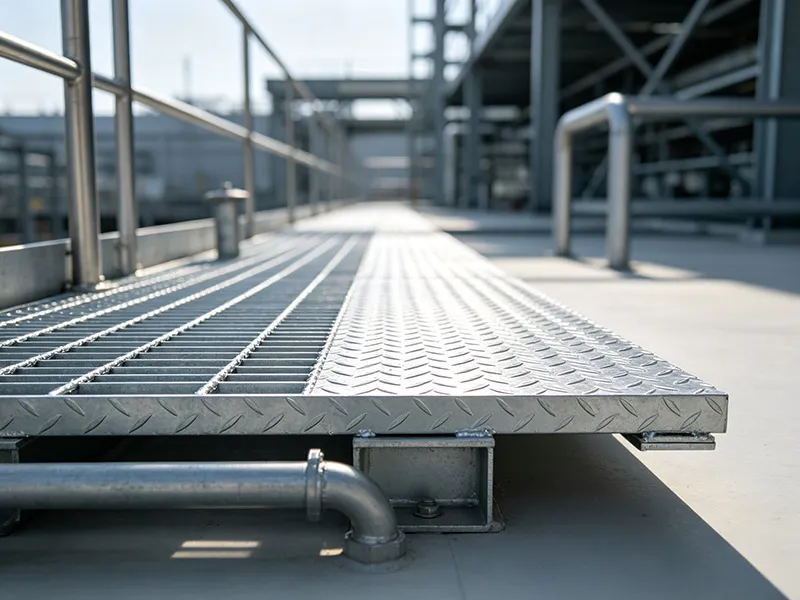
This mainstream power plant special model adopts overall thick-layer hot-dip galvanizing treatment. The mixed thick-thin bar structure has stable heavy-load performance and excellent outdoor anti-rust and high-temperature oxidation resistance. The staggered small gaps effectively block coal ash and desulfurization fine powder leakage, with lightweight and high ventilation advantages, widely used in conventional thermal power plant FGD workshops, boiler platforms, and coal ash processing passages.
Stainless Steel Compound Bar Grating
Made of 304/316L industrial stainless steel, it has strong flue gas corrosion resistance, acid and alkali resistance, and high-temperature stability. The integrated compound bar structure will not rust or deform in long-term contact with corrosive desulfurization flue gas and petrochemical volatile gas, specially applicable to chemical desulfurization workshops, petrochemical distillation platforms, and high-corrosion industrial dust environments.
Serrated Anti-Slip Compound Bar Grating
On the basis of standard compound bar layout, high-precision anti-slip serrations are stamped on the top surface of thick and thin bars. It greatly improves surface friction coefficient, effectively solving pedestrian slipping risks caused by condensate water, dust accumulation, and humid air on high-altitude inspection platforms. It retains all load-bearing and anti-drop functions and is the preferred safety model for wet power industrial passages.
Heavy-Duty Press-Locked Compound Bar Grating
Adopt upgraded thickened main bearing bars and reinforced perimeter frame structure, with improved overall load-bearing grade and anti-impact performance. The optimized thin bar spacing ensures stable anti-drop effect under heavy load pressure, suitable for overhead conveyor heavy-traffic inspection channels and large power plant high-load maintenance platforms.
Exclusive Core Advantages of Compound Bar Grating
Compared with all single-layer standard grating and double-layer composite grating, compound bar grating has irreplaceable exclusive advantages for power and thermal industrial scenarios, thoroughly solving the industry’s long-standing functional contradictions.
Single-Layer Lightweight, High Ventilation & No Clogging
Different from bulky double-layer compound grating that is easy to accumulate dust and block airflow, compound bar grating adopts a single-layer integrated structure with smooth and unobstructed gaps. It maintains ultra-high ventilation and heat dissipation efficiency, avoids flue gas residue and dust clogging in high-temperature workshops, and is more suitable for long-term continuous operation of power industrial equipment.
Mixed Thick-Thin Bar, Dual Performance of Heavy Load & Anti-Drop
Thick main bars support heavy equipment and trolley rolling loads, exceeding the load capacity of dense fine-mesh grating; thin auxiliary bars narrow gaps to intercept fly ash, coal ash, and desulfurization fine particles, making up for the leakage defect of standard large-gap grating. It realizes the perfect integration of heavy-duty safety and micro-particle anti-loss protection in a single layer.
Integrated Press-Locked Structure, Vibration Resistant & Stable
One-piece hydraulic press-locked molding eliminates loose assembly parts and welding dead corners. It can resist long-term equipment vibration, high-temperature alternating deformation, and wind pressure impact in power plants, without bar displacement, gap expansion, or structural loosening, ensuring long-term stable platform safety.
High-Temperature & Dust Corrosion Resistance
Professional galvanized and stainless steel anti-corrosion systems adapt to high-temperature heat radiation, flue gas corrosion, and industrial dust erosion in thermal power and petrochemical workshops. It is not easy to age and rust, effectively reducing equipment platform pollution and extending service life.
Easy Cleaning & Low Industrial Maintenance Cost
The flat single-layer structure has no layered dead corners for dust accumulation. Surface industrial ash and fine residues can be quickly cleaned through simple water flushing and air blowing. The rigid integrated structure requires no frequent reinforcement and replacement, greatly reducing later operation and maintenance costs of power plant platforms.
Cost-Effective & Easy Installation
Compared with double-layer compound grating, the single-layer compound bar structure is lighter in weight, lower in material and transportation cost, and faster in on-site modular installation. It balances high-performance industrial functions and project budget, with ultra-high engineering cost performance.
Exclusive High-Intent Industrial Application Scenarios (100% Unique)
All application scenarios are completely independent of cleanroom, municipal security, sewage environmental protection, and mineral processing scenes of other grating products, focusing on power plant thermal engineering, FGD desulfurization, and petrochemical high-dust and high-temperature industrial fields, matching Google power industry engineering high-intent long-tail search demand.
Flue Gas Desulfurization (FGD) Overhead Inspection Channels
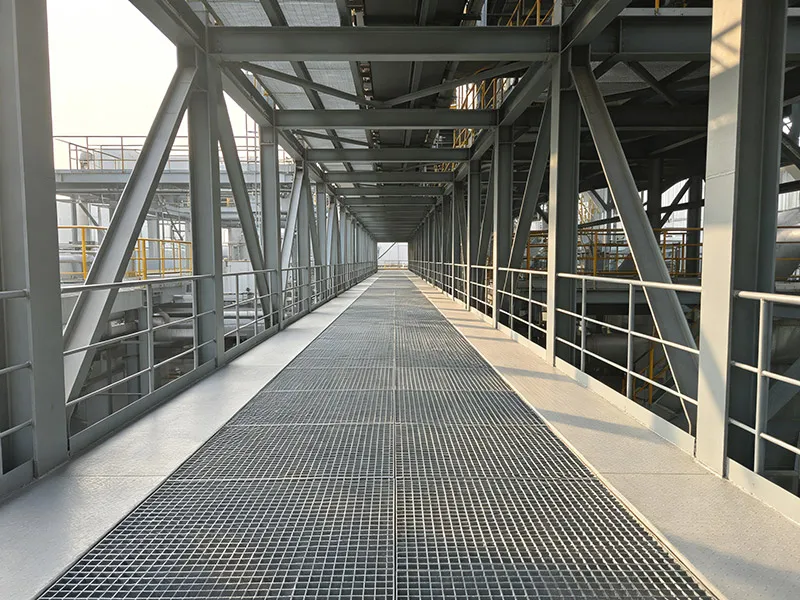
FGD workshops produce a large amount of desulfurization absorbent fine powder and flue gas dust during operation. Heavy galvanized compound bar grating is laid on overhead conveyor wide inspection passages. The thick bar structure supports daily maintenance equipment load, while staggered small gaps prevent desulfurization fine particles from falling and polluting lower conveyor equipment, ensuring clean and safe operation of desulfurization systems.
Thermal Power Plant Boiler & SCR Denitrification Platforms
Power plant boiler rooms and denitrification workshops are in long-term high-temperature and high-fly-ash environments. Serrated anti-slip compound bar grating is used for high-altitude maintenance platforms, adapting to wet and slippery platform conditions, blocking boiler fly ash leakage, and protecting lower power generation equipment from dust contamination.
Industrial Overhead Conveyor Maintenance Walkways
Factory overhead material conveyor systems require long-term frequent inspection and maintenance. Heavy-duty compound bar grating is applied to conveyor top passages, with stable heavy-load performance to support maintenance personnel and tools, and anti-drop gaps to prevent conveyor fine material debris from falling, suitable for long-term high-frequency industrial operation.
Petrochemical Distillation Tower Elevated Service Decks
Petrochemical distillation workshops have high-temperature volatile oil gas and fine catalyst dust. Stainless steel compound bar grating is used for distillation tower elevated service platforms, resisting chemical corrosion and high-temperature oxidation, intercepting micro catalyst debris, and avoiding cross-contamination of petrochemical production equipment.
Coal-Fired Plant Coal Ash Handling Anti-Drop Flooring
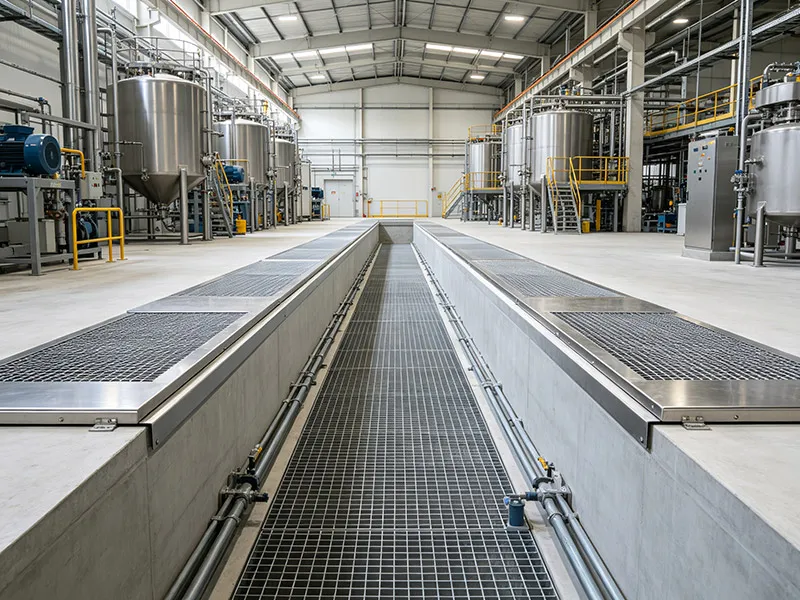
Coal ash storage and processing workshops are prone to fine coal ash floating and falling. Galvanized compound bar grating is laid on workshop drainage and maintenance flooring, blocking coal ash fine particles from falling into underground pipelines, preventing pipeline blockage and environmental dust pollution, and maintaining workshop operational cleanliness.
High-Temperature Industrial Ventilation & Exhaust Passages
Thermal industrial high-temperature exhaust and ventilation passages require both safety support and unobstructed airflow. Compound bar grating’s single-layer high-breathability structure ensures smooth hot air discharge and ventilation circulation, while anti-drop gaps prevent internal industrial debris from falling, meeting high-temperature industrial ventilation safety standards.
Compound Bar Grating vs Other Steel Grating Types
Accurate vertical product differentiation helps power plant engineers and thermal engineering contractors quickly select targeted grating products according to high-temperature, high-dust industrial load and anti-drop requirements, avoiding functional mismatch and engineering safety hazards.
Compound Bar Grating vs Standard Bar Grating
Standard equal-spacing bar grating has large single gaps, which cannot block fly ash, desulfurization powder, and fine industrial debris, and is prone to equipment pollution and material loss. Compound bar grating optimizes the gap structure through mixed thick-thin bar collocation on the basis of retaining high load capacity, perfectly solving the fine particle leakage problem of standard grating in power industrial scenarios.
Compound Bar Grating vs Double-Layer Compound Steel Grating
Double-layer compound steel grating adopts a thick base + fine mesh overlay structure, with good anti-drop performance but heavy weight, poor ventilation, easy dust clogging, and high cost, unsuitable for long-term high-temperature ventilation workshops. Compound bar grating is a single-layer integrated structure with lighter weight, higher air permeability, no clogging, and lower cost, being more suitable for power and thermal industrial continuous operation scenarios.
Compound Bar Grating vs Fine-Mesh & Close-Mesh Grating
Fine-mesh grating focuses on cleanroom micro-dust sterile protection with insufficient heavy-load capacity; close-mesh high-security grating focuses on public anti-fall and anti-vandal safety without industrial high-temperature and anti-corrosion optimization. Both are not applicable to high-vibration, high-dust, high-load power plant industrial environments, while compound bar grating is professionally customized for thermal industrial working conditions.
Compound Bar Grating vs Narrow-Opening Grating
Narrow-opening grating is single-spec narrow-gap grating with balanced general industrial performance, lacking targeted anti-fine-particle design and high-temperature structural optimization, unable to adapt to intensive dust accumulation and long-term high-temperature operation in power plants. Compound bar grating has more professional industrial matching and more stable comprehensive performance.
Professional Selection, Installation & Power Industry Maintenance Guide
Scientific model selection and standardized industrial installation can maximize the dual advantages of heavy load and anti-drop ventilation of compound bar grating, ensuring long-term stable and safe operation of power plant and petrochemical industrial platforms.
Material Selection Rules: Conventional thermal power plants, coal ash workshops, and general conveyor passages select hot-dip galvanized compound bar grating; corrosive FGD desulfurization workshops and petrochemical distillation platforms adopt 316L stainless steel models; high-altitude wet and slippery inspection passages prioritize serrated anti-slip compound bar grating; heavy-traffic equipment maintenance platforms choose heavy-duty press-locked models.
Scene-Based Functional Selection: High-temperature ventilation workshops focus on single-layer high-breathability performance; dust-intensive desulfurization and coal ash workshops focus on fine-particle anti-drop effect; high-altitude pedestrian passages focus on anti-slip safety; heavy-load equipment passages focus on load-grade matching.
Power Industrial Installation Specifications: Adopt modular integral fixed installation with special anti-vibration brackets, ensure flat docking of grating panels without gap deviation, firmly fix the reinforced frame with embedded parts, avoid forced extrusion leading to bar deformation, and comply with power plant industrial safety construction standards.
Long-Term High-Temperature Maintenance Tips: Regularly check the tightness of press-locked joints and the integrity of the anti-corrosion layer, timely clean surface accumulated fly ash and dust to avoid long-term high-temperature dust adhesion corrosion. The integrated compound bar structure requires no frequent disassembly and maintenance, effectively reducing power plant operation costs.
Conclusion
شبكة قضبان مركبة is a single-layer optimized functional grating exclusively tailored for high-temperature, high-dust, and high-vibration power and petrochemical industries. It breaks the functional limitations of standard large-gap grating and bulky double-layer composite grating, realizing the organic unity of heavy-duty load-bearing, micro-particle anti-drop, high ventilation permeability, and lightweight structure, and solving the core industrial pain points of easy dust leakage, poor ventilation, and high maintenance cost in thermal power and FGD industrial platforms.
Widely applicable to flue gas desulfurization inspection channels, boiler denitrification platforms, overhead conveyor maintenance passages, and petrochemical distillation service decks, compound bar grating has become the most reliable and cost-effective professional solution for global thermal power and heavy petrochemical industrial platform construction. For all engineering projects that require single-layer high ventilation, heavy load safety, and fine industrial debris anti-drop protection, compound bar grating is the optimal differentiated choice.