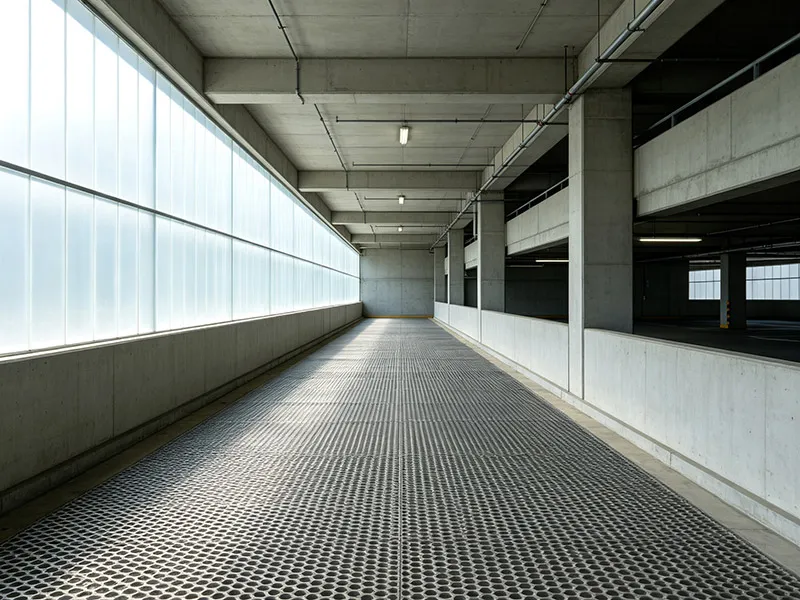
Introduction
For modern infrastructure projects that demand smooth flat surfaces, precise uniform grid geometry, and clean aesthetic finishes, pressure-locked grating stands as a superior weld-free open-grid flooring solution. Unlike traditional welded steel grating that relies on thermal fusion joints and creates uneven weld protrusions, pressure-locked grating adopts a pure hydraulic cold-press mechanical interlocking system. This innovative manufacturing method delivers a completely flat, deformation-free, and seamless panel surface, making it highly favored for marine vessels, sightseeing ships, municipal landscape walkways, commercial buildings, and clean industrial facilities.
Many global B2B buyers and design engineers confuse pressure-locked grating with standard welded grating, Weld-Lok grating, or conventional press-locked grating due to their similar open-grid appearances. However, pressure-locked grating features unique cold-forming technology that eliminates welding scars, thermal distortion, and uneven surface gaps, filling the market gap for high-precision, aesthetic-grade, light-to-medium load grating. This comprehensive Google SEO guide elaborates on the definition, manufacturing process, product types, core advantages, application scenarios, industry comparisons, and professional selection guidelines of pressure-locked grating, providing authoritative procurement references for international engineering projects.
What Is Pressure-Locked Grating?
Pressure-Locked Grating is a high-precision, weld-free open-grid steel structural material manufactured through fully hydraulic pressure interlocking cold-forming technology. The production process precisely slots bearing bars, embeds transverse cross bars into prefabricated grooves, and locks every grid intersection tightly via high-pressure hydraulic extrusion. Without any thermal welding, soldering, or filler materials, the entire panel forms an integrated, rigid mechanical interlock structure with an ultra-flat, seamless surface and consistent grid spacing.
In industrial naming conventions, pressure-locked grating represents the professional technical definition of hydraulic cold-press interlocking grating, emphasizing its high-pressure molding principle. Different from thermally processed grating products, it completely avoids welding heat-affected zones, surface protrusions, and local structural deformation. Its core product positioning focuses on flatness precision, visual uniformity, and clean surface performance, making it the ideal choice for scenarios requiring smooth pedestrian passage, high-standard aesthetics, and hygienic environments, rather than heavy-duty industrial load-bearing applications.
Professional Manufacturing Process of Pressure-Locked Grating
The outstanding flatness, dimensional accuracy, and structural stability of pressure-locked grating stem from standardized full-process cold-forming production. The entire manufacturing process requires no high-temperature treatment, ensuring zero deformation and consistent quality of finished panels.
Precision Raw Material Processing and Grooving
High-quality carbon steel or marine-grade stainless steel is selected as raw materials, with strict flatness calibration and mechanical performance testing to eliminate defective steel components. Professional precision grooving equipment processes fixed-spacing grooves on bearing bars, ensuring accurate embedding positions for cross bars and laying a foundation for uniform grid layout.
High-Pressure Hydraulic Mechanical Interlock Forming
As the core production procedure, cross bars are accurately aligned with the reserved grooves of bearing bars. Industrial high-pressure hydraulic equipment exerts balanced and stable mechanical pressure to tightly embed cross bars into the grooves, forming a permanent mechanical interlock structure at every intersection. The whole cold-press process requires no welding, fundamentally avoiding weld marks, thermal warping, and local stress concentration.
Flatness Calibration and Deburring Finishing
After integral locking forming, all pressure-locked grating panels undergo secondary precision leveling to ensure full-plane flatness without unevenness. Edge burrs and sharp corners are fully polished and removed to meet safety installation and high-standard aesthetic requirements. The finished panel presents a smooth, seamless, and neat overall texture.
Surface Treatment and Strict Quality Inspection
According to application environments, targeted anti-corrosion treatments are implemented: hot-dip galvanizing for carbon steel pressure-locked grating to enhance rust resistance, and passivation treatment for 304/316 stainless steel models to improve salt fog and chemical corrosion resistance. All finished products undergo dimensional inspection, flatness testing, grid spacing verification, and structural stability detection to comply with international municipal and marine engineering standards.
Main Types of Pressure-Locked Grating
Based on material properties, surface design, and functional characteristics, pressure-locked grating is divided into four mainstream types, covering marine, municipal, commercial, and light industrial application scenarios.
Hot-Dip Galvanized Pressure-Locked Grating
This is the most cost-effective universal type of pressure-locked grating. The uniform hot-dip galvanized zinc layer provides excellent oxidation and rust resistance, adapting to conventional indoor and outdoor environments. With ultra-flat surface, neat grid layout, and stable mechanical interlock structure, it is widely used for municipal landscape walkways, commercial building ventilation flooring, and light-duty factory pedestrian passages.
Stainless Steel Pressure-Locked Grating
Made of 304 or 316 marine-grade stainless steel, this product features superior acid and alkali resistance, salt fog corrosion resistance, and high hygienic performance. Without welding gaps and uneven protrusions, its smooth surface is easy to clean and maintain. It is specially suitable for sightseeing ship deck passages, yacht decorative platforms, pharmaceutical clean rooms, and food processing workshops with high environmental requirements.
Serrated Anti-Slip Pressure-Locked Grating
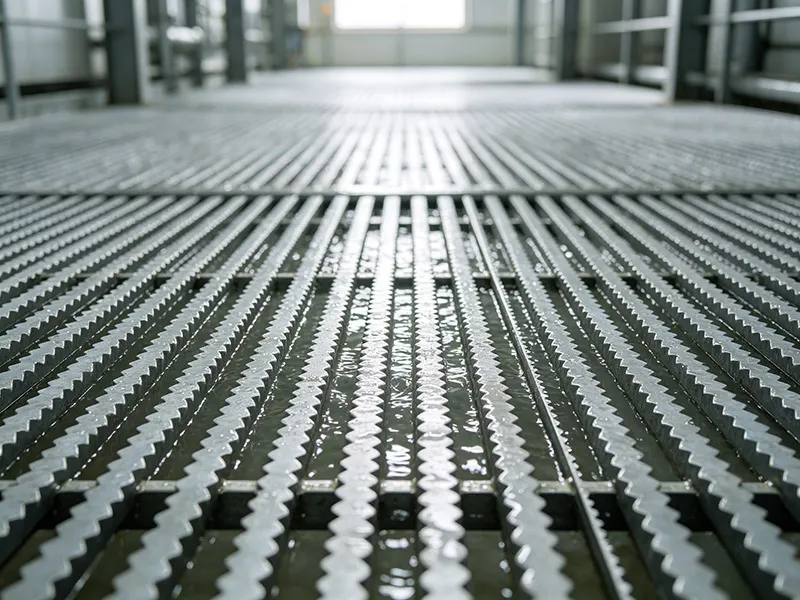
Serrated pressure-locked grating integrates flat aesthetic advantages and anti-slip safety performance. Precision friction serrations are machined on the surface of bearing bars, effectively increasing surface friction coefficient to prevent slipping in wet, rainy, and humid environments. It retains the weld-free flat feature of pressure-locked grating while improving pedestrian safety, ideal for outdoor municipal paths and ship outdoor deck walkways.
Fine Mesh Pressure-Locked Safety Grating
Fine mesh pressure-locked grating adopts dense and precise grid spacing design on the basis of mechanical interlock structure. It achieves anti-falling and anti-clogging functions without damaging the flat and neat appearance, perfectly applicable to public safety passages, municipal anti-drop drainage trench covers, and children-friendly landscape walkways.
Core Unique Advantages of Pressure-Locked Grating
The weld-free hydraulic cold-press interlock structure endows pressure-locked grating with irreplaceable comprehensive advantages, especially suitable for high-precision, high-aesthetic, and high-hygiene engineering projects.
Completely Flat Weld-Free Seamless Surface
Different from welded grating with raised welding joints and uneven surfaces, pressure-locked grating has no weld marks, no thermal bumps, and no structural gaps on the entire panel. The ultra-flat seamless surface ensures smooth pedestrian walking and unobstructed trolley passing, avoiding jolting and dirt accumulation caused by uneven surfaces.
Zero Thermal Deformation with Long-Term Structural Stability
The whole cold-forming process produces no high-temperature thermal stress, so the steel material will not deform or warp due to welding heat. The mechanical interlock structure maintains stable grid spacing and flatness for a long time, effectively avoiding local depression and structural loosening caused by thermal deformation of traditional grating.
High-Precision Grid Uniformity & Architectural Aesthetic Value
Hydraulic precision locking ensures ultra-low error of grid spacing, with regular and orderly open-grid layout. Its neat and unified visual effect is far superior to ordinary welded grating, with strong architectural decoration and ornamental value. It can perfectly match modern commercial buildings, municipal landscapes, and luxury marine facilities.
Excellent Self-Cleaning & Hygienic Performance
The smooth flat surface and gap-free interlock structure will not accumulate dust, silt, and sundries. Rainwater flushing and manual cleaning can quickly remove surface dirt, realizing natural self-cleaning. No residual dirt and mold growth, making it the preferred grating for clean rooms and hygienic industrial scenarios.
Lightweight & Flexible Installation
Pressure-locked grating has an optimized lightweight structure with high strength-to-weight ratio. The flat panel is easy to cut, splice, and install on-site without complicated welding correction and polishing procedures. It greatly shortens construction cycle and reduces engineering installation costs.
Wide Industrial & Commercial Applications of Pressure-Locked Grating
Relying on flat precision, aesthetic advantages, and reliable light-to-medium load performance, pressure-locked grating is widely used in marine facilities, municipal landscapes, commercial architecture, and clean industrial scenarios.
Sightseeing Ship & Marine Vessel Facilities
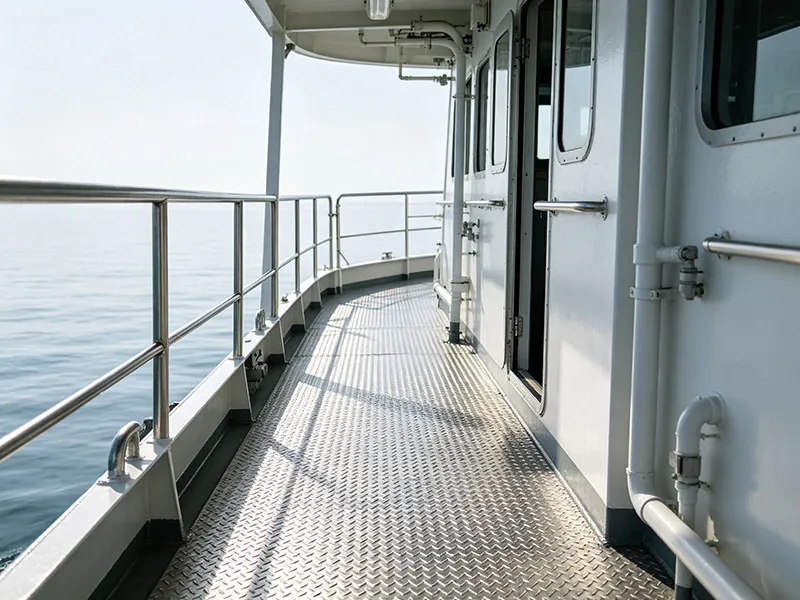
Stainless steel pressure-locked grating is the mainstream material for small sightseeing ship deck passages and yacht walkways. Its weld-free smooth surface ensures safe and comfortable pedestrian passage, while marine-grade corrosion resistance adapts to humid ocean environments and salt fog erosion, maintaining long-term neat appearance of marine facilities.
Municipal Landscape & Public Infrastructure
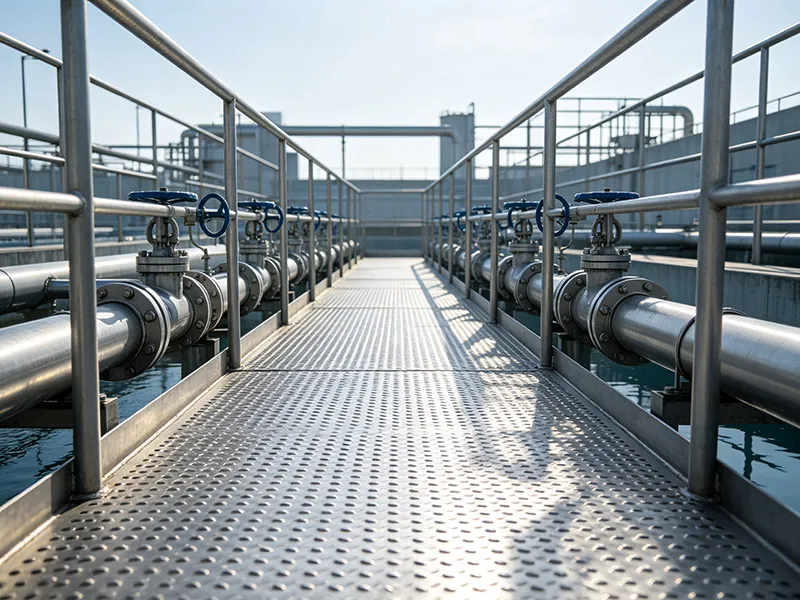
Urban park landscape paths, community pedestrian walkways, and municipal decorative drainage trench covers all adopt pressure-locked grating. The flat and neat grid structure improves urban landscape texture, and the anti-clog open-grid design ensures efficient drainage, balancing beauty and practicality of municipal public facilities.
Commercial Building & Public Space Decoration
Shopping mall ventilation flooring, building exterior wall decorative grating, and public sightseeing corridor passages prefer pressure-locked grating. Its high-precision uniform grid enhances architectural aesthetics, and excellent ventilation and light transmission performance meets the functional design requirements of modern commercial buildings.
Clean Industrial & Light-Duty Factory Scenarios
Pharmaceutical clean rooms, food processing workshops, and light-duty factory maintenance platforms use pressure-locked grating. The seamless flat surface is easy to disinfect and clean, meeting high hygienic standards, and the stable mechanical interlock structure ensures long-term safe operation of light industrial platforms.
Pressure-Locked Grating vs Other Types of Steel Grating
Professional product comparison helps B2B buyers accurately distinguish application differences and select the most suitable grating according to project design requirements.
Pressure-Locked Grating vs Welded Grating
Welded grating adopts thermal fusion welding, with inevitable weld protrusions and thermal deformation on the surface. It focuses on heavy-load bearing and vibration resistance, suitable for industrial heavy-duty platforms. In contrast, pressure-locked grating has a completely flat weld-free surface with higher precision and better aesthetics. Although its extreme load capacity is slightly lower, it is more suitable for pedestrian, decorative, and clean scenarios that pursue flatness and appearance.
Pressure-Locked Grating vs Weld-Lok Grating
Weld-Lok grating is an enhanced welded grating with reinforced fusion locking joints, focusing on ultra-high structural stability and anti-vibration performance, designed for harsh heavy industrial environments. Pressure-locked grating abandons welding technology, prioritizes surface flatness and aesthetic precision, and is positioned in light-to-medium load and high-aesthetic scenarios, forming a clear market differentiation with Weld-Lok heavy-duty industrial grating.
Pressure-Locked Grating vs Dense Welded Grating
Dense welded grating focuses on anti-falling safety with dense grid spacing, but still has welding bumps and uneven surfaces. Pressure-locked grating not only achieves precise grid layout but also completely eliminates welding defects, with smoother surface and better self-cleaning performance, more suitable for high-standard decorative and hygienic projects.
B2B Selection, Installation & Maintenance Guide
Scientific specification selection and standardized maintenance can maximize the service life and comprehensive performance of pressure-locked grating.
Material Selection Rules: Conventional municipal landscape and light industrial projects choose economical hot-dip galvanized pressure-locked grating. Marine vessels, coastal environments, and high-hygiene clean workshops must select 304/316 stainless steel models. Wet outdoor passages prioritize serrated anti-slip types.
Load & Grid Specification Selection: Pure pedestrian decorative passages adopt standard light-duty pressure-locked grating. Slightly loaded light equipment platforms select thickened specifications to ensure safety margin. Public safety anti-drop scenarios choose fine mesh dense grid products.
Installation Tips: Adopt standard matching fasteners for fixed installation to avoid panel displacement. Ensure flat laying without local tilting, giving full play to the flat structural advantages of pressure-locked grating. Avoid forced extrusion during construction to protect mechanical interlock joints.
Daily Maintenance: Pressure-locked grating has low maintenance costs. Regularly clean grid gap debris to ensure unobstructed ventilation and drainage. Regularly check the tightness of mechanical interlock positions and fixing parts to avoid loosening, maintaining long-term flatness and stability.
Conclusion
Pressure-Locked Grating is a high-precision and high-aesthetic weld-free open-grid flooring solution shaped by hydraulic cold-press mechanical interlocking technology. It perfectly solves the pain points of uneven surfaces, welding scars, and thermal deformation of traditional welded grating, with unique advantages of ultra-flat seamless surface, precise uniform grid, excellent self-cleaning and hygienic performance.
Widely applicable to sightseeing ship decks, marine facilities, municipal landscape projects, commercial architectural decoration, and clean industrial workshops, pressure-locked grating has become the preferred material for modern light-to-medium load and high-standard aesthetic infrastructure projects. For global B2B engineering purchasers and design engineers, pressure-locked grating is a cost-effective and high-value choice to balance project safety, beauty, and long-term stability.