
When specifying durable open‑grid flooring for heavy‑industrial, coastal‑marine and municipal projects, forge welded steel grating stands out as a high‑performance structural solution trusted by engineers, contractors and procurement teams worldwide. Built by electro‑forge welding that creates solid metallurgical bonds between bearing bars and cross bars, forge welded steel grating delivers superior joint strength that holds up under heavy loads, continuous vibration and harsh salt‑fog conditions.
Many project stakeholders confuse forge welded steel grating with generic welded bar grating or press‑locked grating. The difference lies in its forge‑weld fusion process, which produces unified, rigid panels without fasteners, solder or welding rods. This article acts as a complete buying and application resource, covering manufacturing principles, main product types, performance benefits, real‑world use cases, side‑by‑side product comparisons and practical selection advice to support informed B2B purchasing decisions.
Forge welded steel grating is an open‑grid industrial flooring material constructed from bearing bars that carry primary loads and transverse cross bars joined at every intersection via electro‑forge welding technology. Instead of surface‑level spot welding or mechanical clamping, the forge‑weld process melts contact surfaces of steel components and fuses them together under hydraulic pressure to form a permanent metallurgical joint.
Each finished forge welded steel grating panel functions as one integrated structural unit. Bars cannot shift or separate under vibration, impact or repeated heavy traffic. This critical characteristic differentiates genuine forge welded steel grating from conventional alternatives. It is widely specified for permanent installations including port wharf walkways, factory overhead platforms, refinery access routes and drainage cover systems, where structural reliability directly impacts site safety and long‑term operational costs.
The reliable performance of forge welded steel grating starts with strict, standardized production workflows. Understanding this workflow helps buyers distinguish premium forge welded products from lower‑grade imitations.
Raw Material Preparation Production begins with inspection of carbon steel or stainless steel blanks. Technicians verify material tensile strength and chemical composition. Bars are straightened, cut‑to‑size and deburred to remove surface defects. Precision cutting guarantees consistent dimensions and flatness across every finished forge welded steel grating panel.
Electro‑Forge Welding as Core Operation Bearing bars and cross bars are positioned in precise spacing inside automated forge‑weld machinery. High‑amplitude electric current flows through bar contact points, generating concentrated heat to melt steel surfaces. Simultaneous hydraulic pressure presses intersecting bars firmly together. Fusion completes within milliseconds, forming solid metallurgical joints with no filler material added. This step defines the core strength advantage of forge welded steel grating.
Finishing and Surface Treatment Once welding is finished, sharp edges and burrs are ground away for safe handling and installation. Panels move to surface‑treatment stations. Hot‑dip galvanizing is applied for carbon‑steel grades to build a protective zinc layer against rust and salt‑fog corrosion. Stainless‑steel forge welded steel grating receives passivation treatment to optimize anti‑corrosion performance.
Quality Assurance and Packaging Every batch of forge welded steel grating undergoes load‑capacity testing, joint‑strength inspection and flatness checks. Defective panels are rejected before shipment. Qualified units are bundled and packaged to avoid scratches and deformation during sea freight and on‑site handling.
Different variants of forge welded steel grating are engineered to match distinct working environments and load requirements.
Hot‑dip galvanized forge welded steel grating represents the most popular, cost‑effective option across global B2B projects. A continuous zinc coating covers all steel surfaces, providing robust defence against oxidation, moisture and moderate salt exposure. It performs well for factory platforms, municipal drainage covers, inland industrial walkways and port infrastructure. For most general‑duty industrial projects, galvanized forge welded steel grating delivers the optimal balance between upfront cost and long service life.
Fabricated from grade 304 or 316 stainless steel, stainless steel forge welded steel grating requires no galvanized coating. It offers excellent resistance to acid, alkali, high humidity and heavy marine salt‑fog. Easy‑to‑clean non‑porous surfaces suit hygiene‑critical locations including food‑processing facilities, pharmaceutical plants and offshore marine installations. Though capital cost is higher, stainless‑steel forge welded steel grating cuts long‑term maintenance expenditure in highly corrosive operating environments.
Serrated anti‑slip forge welded steel grating features machined serrated teeth along bearing‑bar edges. These raised textures boost surface friction dramatically. Even when surfaces become wet, oily or frosty, serrated forge welded steel grating reduces slip‑and‑fall risks. It is frequently selected for industrial stair treads, outdoor overhead walkways, car‑wash flooring and damp‑climate port access paths where workplace safety is a top priority.
Heavy‑duty forge welded steel grating uses thicker bearing bars and optimized forge‑weld joint density. It tolerates heavy‑equipment movement, vehicle rolling and persistent mechanical impact. This grade serves heavy‑use locations: oilfield working platforms, heavy‑equipment factory passages, cargo‑handling zones at seaports and high‑load industrial support floors. Heavy‑duty forge welded steel grating is custom‑built to meet strict project load specifications.
Forge welded steel grating gains widespread adoption because it solves many common pain‑points for industrial flooring systems.
Superior Joint Strength and Vibration Resistance Metallurgically fused forge‑weld connections prevent bar loosening or displacement, even under ongoing mechanical vibration. Unlike mechanically clamped grating, forge welded steel grating maintains structural integrity year after year without fastener failure.
Outstanding Corrosion and Salt‑Fog Resistance With hot‑dip galvanizing or stainless‑steel base material, forge welded steel grating withstands coastal salt‑fog, damp outdoor conditions and many chemical exposures. Properly specified panels can deliver decades‑long service life within marine and industrial sites.
High‑Efficiency Ventilation and Drainage The open‑grid layout creates large free‑area ratios. Water, oil and debris pass freely through gaps. Standing water does not accumulate on walkway surfaces. Ventilation and light transmission are excellent for overhead platforms. The open design also delivers natural self‑cleaning effects, reducing debris buildup.
Optimized Workplace Safety Serrated variants deliver reliable anti‑slip performance for wet or greasy working surfaces. Solid forge‑weld joints eliminate sudden structural failure risks, supporting safe pedestrian and equipment movement across industrial facilities.
Cost‑Efficient Lifecycle Performance Modular forge welded steel grating panels are straightforward to cut and mount on‑site. Its self‑cleaning open structure minimizes routine maintenance work. Although initial purchase cost varies by grade, low repair and upkeep costs make forge welded steel grating economical over full project lifecycles.
Thanks to flexible performance characteristics, forge welded steel grating applies across multiple industry sectors.
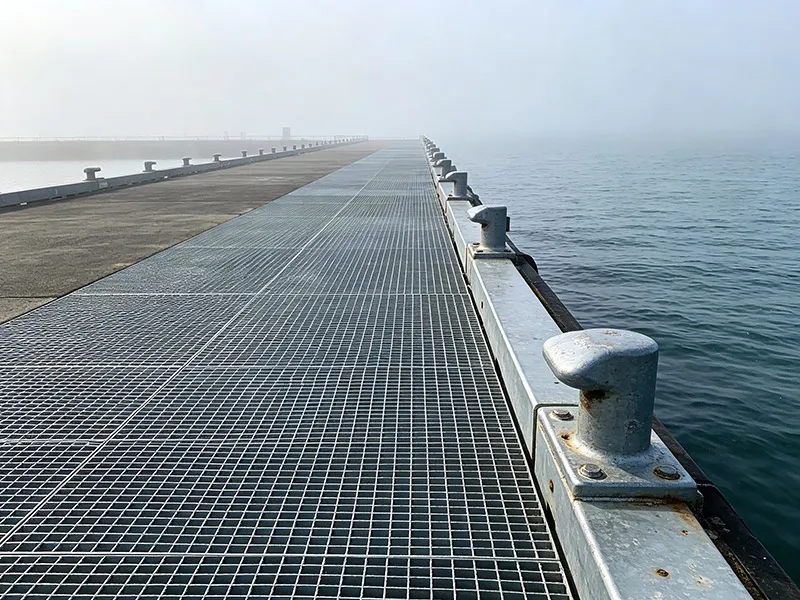
Port, Wharf and Off‑Shore Marine Works Forge welded steel grating is heavily deployed for seaport wharf walkways, dock access routes, mooring‑zone flooring and offshore‑platform walkways. Hot‑dip galvanized or 316 stainless‑steel grades resist salt‑fog damage from constant sea‑air exposure. Open grid gaps allow seawater to drain away rapidly.
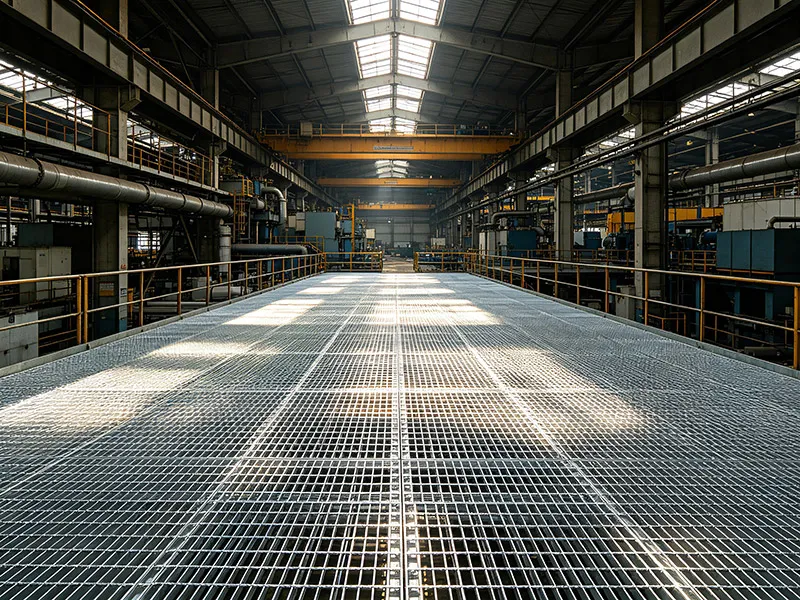
Factory and Heavy‑Industrial Sites Factory overhead operating platforms, equipment‑maintenance walkways and workshop trench covers commonly use forge welded steel grating. High load‑bearing capacity supports personnel and production equipment while retaining ventilation and drainage functions inside large manufacturing plants.
Petrochemical and Refinery Facilities Refineries, chemical plants and onshore oilfields install forge welded steel grating for overhead pipeline walkways, equipment platforms and sewage trench covers. The material adapts to hazardous, corrosive industrial atmospheres and satisfies site safety requirements.
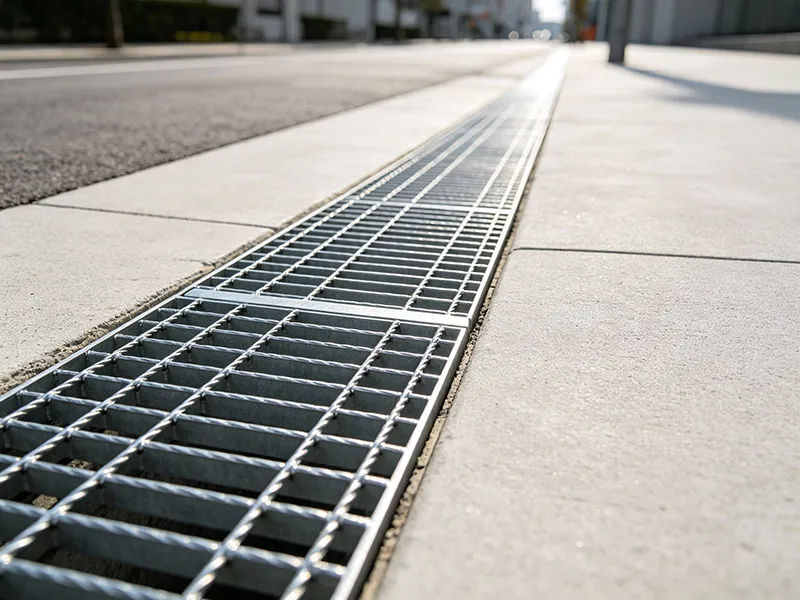
Municipal Infrastructure Galvanized forge welded steel grating acts as road‑side drainage trench covers, urban sidewalk drainage elements and landscape‑project walkways. Durable open‑grid construction handles public‑area wear and improves urban rainwater management.
Commercial‑Industrial Scenarios Serrated forge welded steel grating serves as car‑wash anti‑slip flooring, industrial‑building stair treads and warehouse ventilation passages for mixed commercial‑industrial premises.
Project evaluators frequently compare forge welded steel grating against press‑locked grating and ordinary welded bar grating.
Forge Welded Steel Grating vs Press‑Locked Grating Press‑locked grating locks bars together purely by mechanical force without welding. Under sustained vibration and heavy dynamic loads, clamping joints may slip and bars can shift position. Forge welded steel grating forms metallurgically fused joints, so bar movement cannot occur. Forge welded steel grating offers higher load capacity and better suitability for marine‑coastal and heavy‑vibration environments. For large‑volume industrial procurement, forge‑weld options also provide favourable lead‑time advantages.
Forge Welded Steel Grating vs Standard Welded Bar Grating Generic welded bar grating often uses basic spot‑welding that only bonds the outer surface of steel bars. Joint strength is lower than full electro‑forge fusion. Forge welded steel grating melts and fuses the full contact interface, yielding much stronger connections that perform better under shock and cyclic loading. For high‑risk marine and heavy‑industrial locations, forge welded steel grating represents the more robust selection.
Engineers and procurement teams can follow these criteria to select suitable forge welded steel grating for project conditions.
Forge welded steel grating stands as a premium open‑grid industrial flooring solution, distinguished by robust electro‑forge metallurgical‑fusion joints. Its impressive load capacity, vibration resistance, salt‑fog corrosion performance and self‑cleaning open‑grid structure make it ideal for marine port facilities, heavy‑industrial plants, petrochemical sites and municipal engineering projects.
With multiple material grades, surface styles and load classes available, B2B buyers can source tailored forge welded steel grating to satisfy nearly any project specification. Thoughtful selection matched to real‑world site conditions maximizes service life, improves operational safety and optimizes total‑cost‑of‑ownership for industrial and marine infrastructure.

Sino Grating은 중국 동부 지역에서 가장 큰 강철 그레이팅 생산 기지 중 하나입니다. 종합 제조 및 도매업체로서, 당사는 다양한 종류의 그레이팅, 금속 메쉬, 난간 제품과 기술 지원을 제공하고 있습니다. Sino Grating은 고객에게 항상 신속하고, 안정적이며, 정확한 서비스를 제공하기 위해 최선을 다하고 있습니다.
회사 소개저작권 © 2026. 모든 권리 보유.