Introduction
Building perimeter drainage is one of the most overlooked yet critical parts of industrial and commercial infrastructure integrity. Roof rainwater runoff, falling leaves, flying industrial dust, and scattered construction debris often accumulate in building edge gutters, causing blockages, rainwater overflow, wall erosion, and foundation damage. Clogged perimeter gutters lead to damp wall surfaces, structural aging, water seepage, and even long-term foundation settlement, seriously affecting building service life and operational safety. Traditional simple gutter covers are weak in load capacity, poor in anti-corrosion performance, and easily deformed, failing to adapt to harsh industrial environments and long-term outdoor exposure.
What Is Gutter Grating? Industrial Perimeter Drainage Definition
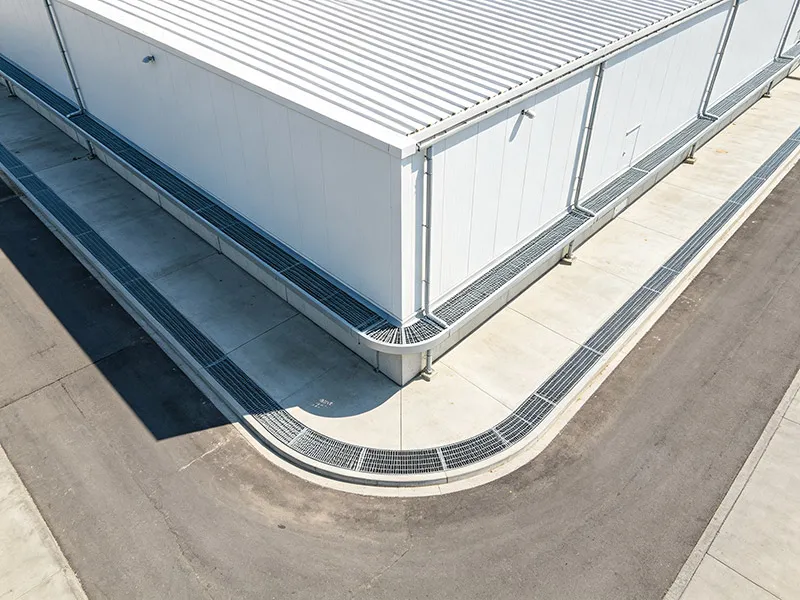
Gutter Grating refers to a standardized open-grid grille product exclusively used for building peripheral gutter systems, including exterior wall annular gutters, roof edge drainage grooves, building side ditches, and perimeter runoff collection channels. As a dedicated building drainage accessory, it is installed on the top of building gutters to form a protective and drainage integrated structure.
The core functional logic of gutter grating is blocking impurities while allowing free water flow. Its high-density grid structure intercepts leaves, dust, sand, and floating industrial debris to avoid gutter siltation and blockage, while ensuring rapid and unobstructed discharge of roof rainwater and melted water. With industrial-grade load-bearing and anti-corrosion performance, it can withstand daily maintenance walking and long-term outdoor weathering, perfectly matching the long-term operation needs of industrial buildings, logistics warehouses, and large public architecture.
Gutter Grating vs Trench Grate vs Drain Grate: Precise SEO Semantic Differentiation
To eliminate Google semantic duplication and enhance keyword ranking uniqueness, here is the clear boundary of four easily confused drainage products:
Gutter Grating (Building Perimeter Exclusive)
Specialized for building exterior wall, roof edge, and perimeter gutter drainage. It focuses on protecting building gutters and foundations, solving roof runoff and peripheral debris blockage problems, belonging to building auxiliary drainage facilities.
Trench Grate (Ground Linear Drainage)
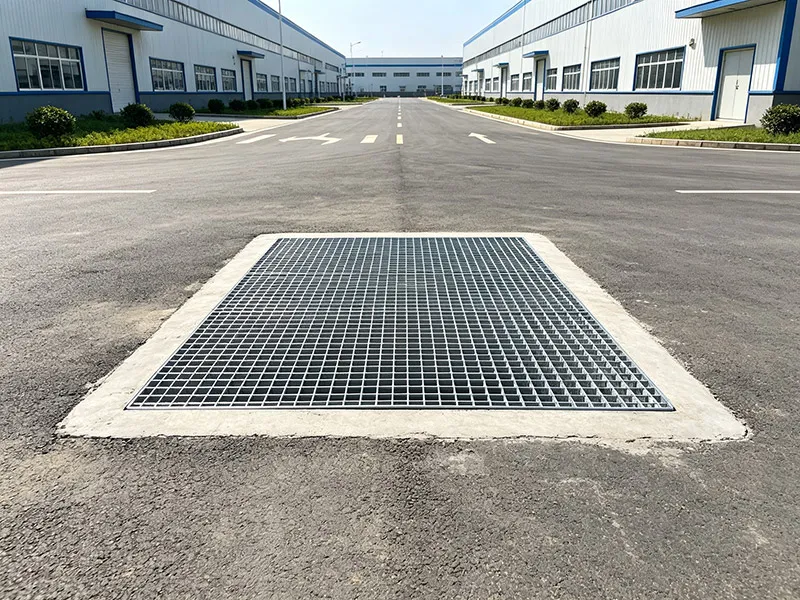
Used for long strip linear trenches on factory ground, yard roads, and platform surfaces, focusing on ground centralized linear water discharge, with no connection with building wall and roof systems.
Drain Grate (Ground Point Drainage)
Applied to independent floor drains and square catch basins, belonging to local point-type ground water collection facilities, suitable for scattered water accumulation on flat ground.
Drainage Grate (General Universal Term)
The general collective term for all drainage grates, covering all ground and building drainage scenarios, while gutter grating is its exclusive subdivision product for building perimeter scenarios.
Material Types & Surface Design of Industrial Gutter Grating
Gutter grating adopts two mainstream industrial materials and two surface processes to fully adapt to conventional and high-corrosion building peripheral environments.
Hot-Dip Galvanized Steel Gutter Grating
Galvanized gutter grating is the most cost-effective solution for ordinary industrial and municipal buildings. The overall hot-dip galvanizing process forms a dense zinc anti-corrosion layer on the steel surface, which resists outdoor wind, rain, and atmospheric oxidation effectively. It features stable structural rigidity, strong impact resistance, and uniform load-bearing capacity, suitable for daily maintenance personnel walking and long-term outdoor exposure. It is widely used in ordinary factory buildings, logistics warehouses, municipal public buildings, and inland industrial park perimeter gutters.
SS304 / SS316 Stainless Steel Gutter Grating
Stainless steel gutter grating is customized for harsh building peripheral environments. SS304 stainless steel is suitable for humid workshops, food processing factories, and general coastal buildings with mild corrosion. SS316 stainless steel has super resistance to seawater salt fog, acid-base chemical gas erosion, and high-temperature humidity, making it the best choice for fine chemical plants, port warehouse buildings, and offshore industrial facilities. It features smooth surface, no rust peeling, easy cleaning, and ultra-long service life, meeting high-standard industrial building environmental protection and safety requirements.
Flat & Serrated Anti-Slip Surface
Flat gutter grating has a smooth and neat surface, beautiful appearance, and high cost performance, suitable for building peripheral areas with low maintenance frequency and dry environment. Serrated anti-slip gutter grating forms uniform friction textures on the surface, which effectively prevents slipping during rainy days and humid weather, ensuring the safety of staff during gutter inspection and maintenance operations, and is widely used in outdoor open building peripheries.
Core Functional & Engineering Advantages of Gutter Grating
As a dedicated building perimeter drainage protection facility, gutter grating has irreplaceable professional advantages in architectural engineering.
Efficient Anti-Clog & Debris Interception
The scientific grid structure accurately filters and intercepts leaves, flying dust, sand grains, and industrial floating debris, completely solving the problem of gutter siltation and blockage. It avoids rainwater overflow caused by unsmooth drainage, prevents wall water soaking and outer wall peeling, and greatly reduces the frequency of manual gutter cleaning.
Protect Building Wall & Foundation Structure
Unobstructed gutter drainage ensures timely discharge of roof rainwater, avoiding long-term water accumulation around the building. It prevents rainwater from penetrating into the foundation along the wall gap, effectively protecting the building foundation from erosion, settlement, and cracking, and extending the overall service life of industrial buildings.
All-Weather Outdoor Corrosion Resistance
Galvanized and stainless steel materials adapt to all-weather outdoor working conditions. The anti-corrosion layer resists rain erosion, ultraviolet aging, coastal salt fog, and industrial chemical gas corrosion, maintaining stable structural performance and neat appearance for a long time, and reducing building exterior maintenance costs.
Safe Load-Bearing for Maintenance Operation
Industrial-grade integral pressure welding structure ensures stable load-bearing capacity, which can safely bear the weight of maintenance personnel and small tools. The serrated anti-slip design eliminates slipping risks in humid and rainy environments, providing safe operating conditions for building perimeter inspection and gutter maintenance.
Neat Appearance & Standardized Engineering Matching
Modular standardized production enables perfect matching with various building gutter specifications. The orderly grid structure makes the building perimeter drainage system neat and unified, meeting the construction standards and acceptance requirements of high-standard industrial parks and municipal key projects.
Large-Scale Project Application Scenarios
Gutter grating is widely used in peripheral gutter systems of various large industrial and public buildings, with prominent professional adaptability in multiple high-standard scenarios.
Cold Storage & Logistics Park Warehouse Projects
Large cold storage warehouses and logistics park buildings have huge roof areas and long peripheral gutters, with large amounts of fallen leaves and dust in outdoor environments. Galvanized serrated gutter grating is mainly adopted to prevent gutter blockage and rainwater overflow, ensuring stable and unobstructed peripheral drainage of cold storage buildings. For coastal cold chain parks, SS316 stainless steel gutter grating is matched to resist salt fog corrosion.
Fine Chemical & Petrochemical Industrial Parks
The peripheral air of chemical plants contains volatile acid-base gases and industrial dust, which are highly corrosive to building gutters. SS316 stainless steel gutter grating is used for exterior wall annular gutters and roof edge drainage grooves of acid-base workshop buildings, effectively resisting chemical corrosion, preventing gutter damage and blockage, and ensuring safe and stable operation of chemical building auxiliary systems.
Port & Marine Supporting Building Projects
Port warehouses, shipyard supporting factories, and coastal industrial buildings are eroded by seawater salt fog all year round. Stainless steel gutter grating is uniformly used for building peripheral gutters, with excellent salt corrosion resistance, solving the problem of easy rust and damage of ordinary gutter facilities in coastal environments, and maintaining long-term drainage efficiency of port building systems.
Municipal Public & Large-Scale Public Buildings
Airport terminals, high-speed railway stations, exhibition centers, and large commercial complexes have large-span roofs and long building peripheral gutters. Standardized galvanized gutter grating is adopted to realize automatic debris interception and smooth drainage, reducing later maintenance pressure and meeting the high-standard appearance and functional requirements of municipal public buildings.
New Energy & Environmental Protection Industrial Projects
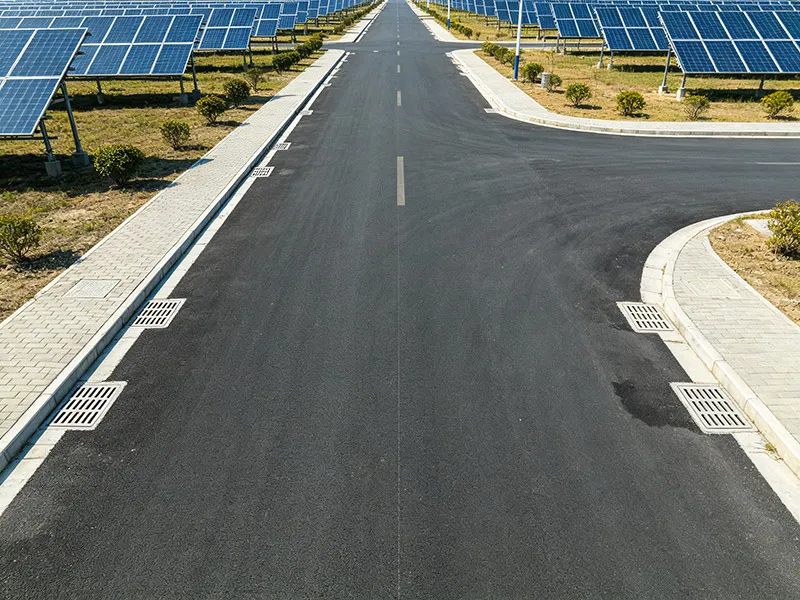
Photovoltaic power stations, wind power supporting buildings, garbage incineration plants, and sewage treatment plant buildings have complex outdoor environments with much dust and high humidity. Gutter grating effectively intercepts floating dust and sundries, avoids gutter siltation, ensures unobstructed peripheral drainage of energy and environmental protection buildings, and adapts to long-term outdoor harsh working conditions.
Food & Pharmaceutical Clean Industrial Parks
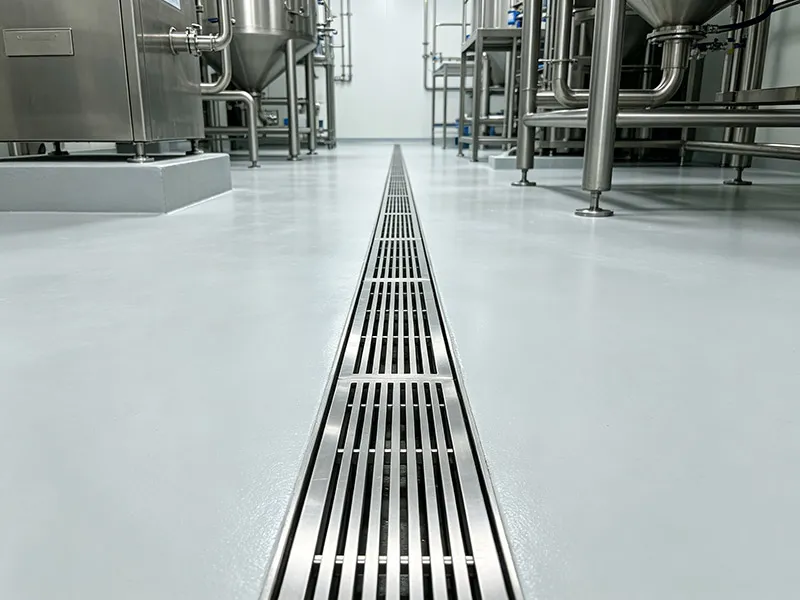
Clean workshops and pharmaceutical factory buildings have high requirements for peripheral environmental hygiene. SS304 stainless steel gutter grating is used for building gutters, which is smooth, easy to clean, no rust falling, no secondary pollution, and meets the clean production and environmental protection standards of food and pharmaceutical industries.
Scientific Working Condition Selection Guide
Targeted selection can balance project quality, safety, and cost:
Hot-Dip Galvanized Gutter Grating: Preferred for inland ordinary factories, logistics warehouses, municipal public buildings, and new energy parks without strong corrosion; serrated type for frequent maintenance areas, flat type for conventional dry areas.
SS304 Stainless Steel Gutter Grating: Suitable for food processing, pharmaceutical clean workshops, general humid environments, and mild coastal corrosion building peripheries.
SS316 Stainless Steel Gutter Grating: Exclusively used for fine chemical acid-base workshops, port coastal salt fog environments, and high-corrosion industrial building peripheral gutter systems.
Installation & Long-Term Maintenance Guidelines
Standardized installation and simple daily maintenance can maximize the service life and drainage performance of gutter grating. During installation, ensure the grating is closely matched with the gutter frame, flat laying without shaking and displacement, and reserve reasonable expansion gaps to adapt to outdoor temperature changes. In daily maintenance, regularly flush the grid surface to remove intercepted leaves and dust, keep the grid gap unobstructed, and check the anti-corrosion layer regularly. Repair local rust and damage in time to avoid accelerated corrosion and ensure long-term stable protection of building gutters.
Conclusion
Gutter Grating is a professional and exclusive drainage protection facility for modern industrial and municipal building peripheral gutter systems. Different from various ground drainage grates, it focuses on building roof runoff guidance, peripheral debris interception, and building foundation protection, solving the industry pain points of easy blockage, easy corrosion, and high maintenance cost of traditional building gutters.
With galvanized and stainless steel dual material configurations and anti-slip surface optimization, gutter grating is widely applicable to cold chain logistics warehouses, fine chemical plants, port marine buildings, municipal public facilities, and new energy industrial parks. It provides stable, low-maintenance, and high-standard peripheral drainage safety guarantees for global large-scale architectural engineering construction and building renovation projects.