Introduction
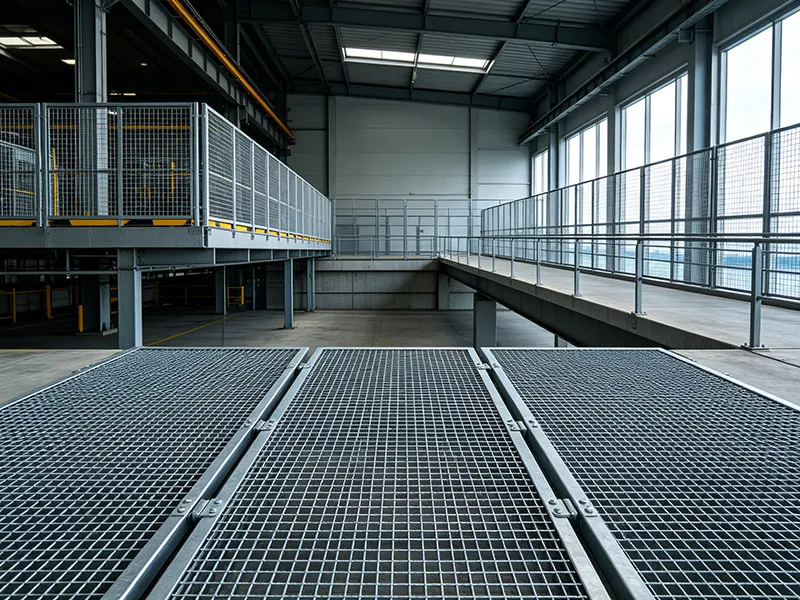
Heavy industrial environments such as metal foundries, mineral processing plants, onshore oil and gas facilities, and heavy machinery workshops face extreme operating challenges including continuous mechanical vibration, high ambient temperatures, severe abrasion, and long-term structural fatigue. Most standard steel gratings fail prematurely in these harsh conditions: welded grating develops cracked welds under high heat and vibration, swage-locked grating suffers compression deformation, and interlocked/plug grating loses structural tightness after prolonged vibration friction. Grelha de barras rebitadas stands out as a professional cold-assembly industrial grating engineered exclusively for high-temperature, high-vibration, and high-abrasion heavy industrial scenarios.
Completely different from thermally processed or compression-locked grating products, riveted bar grating adopts pure mechanical cold assembly with solid steel rivets for permanent structural locking. Without welding heat damage, hydraulic compression distortion, or assembly gap loosening, it delivers unmatched structural stability, thermal resistance, and abrasion durability. Optimized for Google E-E-A-T industrial authority and B2B engineer search intent, this long-form SEO article covers the definition, manufacturing process, product types, core competitive advantages, industry applications, detailed product comparisons, and professional procurement guidelines of riveted bar grating, providing authoritative reference for global industrial contractors, facility managers, and steel grating importers.
What Is Riveted Bar Grating?
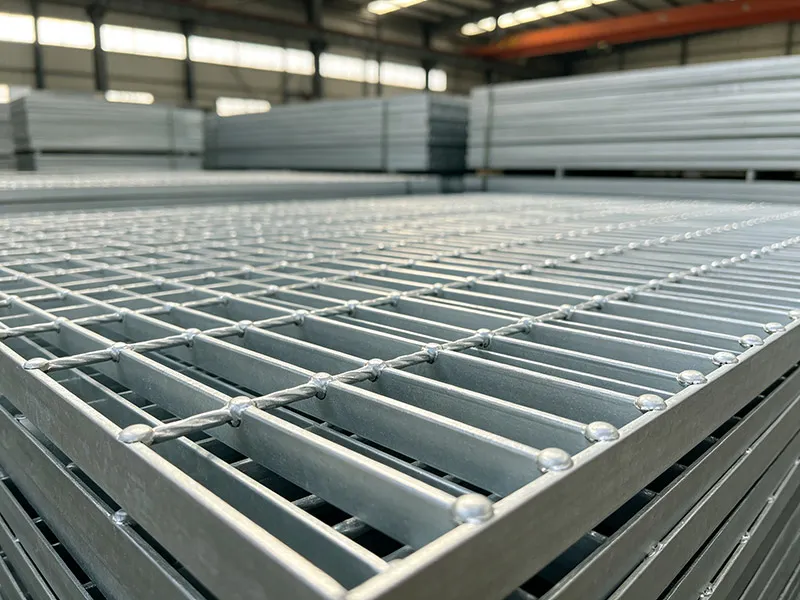
Grelha de barras rebitadas is a heavy-duty mechanical fixed steel grating that uses solid round steel rivets to permanently lock bearing bars and cross bars into an integrated rigid grid structure. As a classic high-stability industrial grating, it adopts 100% cold assembly technology, requiring no welding, heating, or hydraulic extrusion throughout the production process, fundamentally avoiding all structural defects caused by thermal processing and pressure deformation.
The core structural feature that differentiates riveted bar grating from all other grating types is its solid rivet cold-locking mechanism. Each intersection of bearing and cross bars is precisely perforated and penetrated by high-strength solid steel rivets, which are hydraulically pressed to form a permanent tight lock. The entire grid forms a unified stress-bearing system with zero loose gaps, zero thermal stress, and zero deformation risks.
In industrial engineering positioning, riveted bar grating is the preferred structural grating for harsh heavy industrial scenarios. It solves the common pain points of traditional gratings—high-temperature weld cracking, vibration-induced loosening, compression fatigue, and abrasive wear damage—and is professionally rated for foundry high-temperature platforms, mining abrasive walkways, and vibration-intensive mechanical facilities.
Manufacturing Process & Working Principle of Riveted Bar Grating
The exceptional stability, heat resistance, and vibration resistance of riveted bar grating stem from standardized precision cold-processing technology, ensuring intact original mechanical properties of steel materials and permanent structural firmness.
Precision Material Blanking & Flattening
High-strength carbon steel or stainless steel raw materials are selected for heavy industrial standards. All steel bars undergo integral flattening and precision cutting to ensure consistent thickness, flatness, and dimensional accuracy, laying a solid foundation for uniform grid stress and structural stability.
CNC Precision Positioning & Perforation
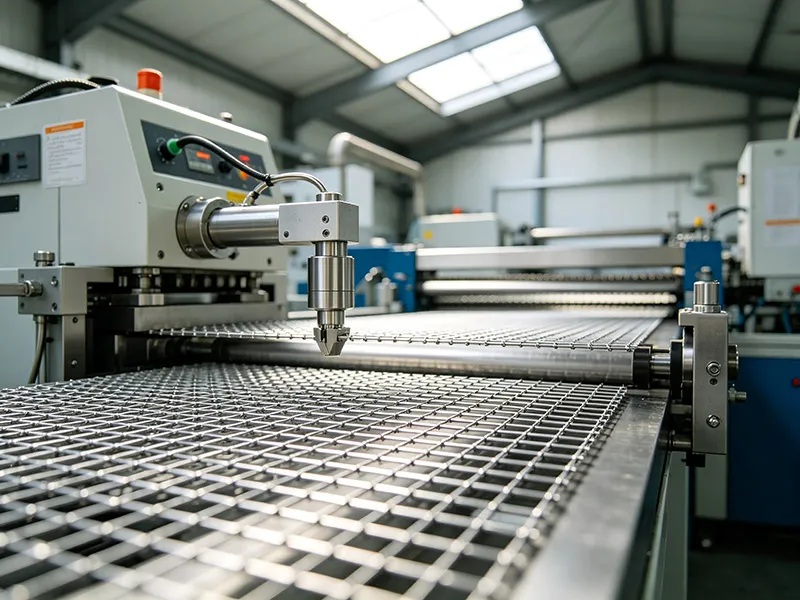
Professional CNC equipment performs precise positioning and standard perforation at every bar intersection. The hole diameter and position tolerance are strictly controlled to ensure perfect matching with solid steel rivets, avoiding assembly deviation and ensuring zero-gap tight locking.
Solid Steel Rivet Hydraulic Cold Press Locking
High-tensile solid steel rivets penetrate the reserved holes of bearing bars and cross bars, and permanent locking is completed through hydraulic cold pressing. The rivet heads fit tightly with the steel bar surface, forming an integrated rigid structure. The whole process is cold-assembled without high-temperature heating, completely retaining the original toughness, hardness, and structural strength of the steel.
Flatness Calibration & Anti-Corrosion Finishing
After overall assembly, each grating panel undergoes secondary precision flatness calibration to eliminate local stress unevenness. Deburring and edge polishing are completed to ensure a smooth and safe surface. Finally, hot-dip galvanizing or stainless steel passivation treatment is carried out to enhance environmental adaptability and corrosion resistance.
Structural Working Principle
The dense solid rivet locking points fix all grid intersections into an integral force-bearing network. When subjected to pedestrian load, equipment pressure, or mechanical vibration, the stress is evenly distributed across the entire panel through multiple rivet fixing points. No local stress concentration or structural loosening occurs, ensuring long-term stable operation in high-temperature and vibration-intensive environments.
Main Types of Riveted Bar Grating
Riveted bar grating is classified by material and surface function, covering high-temperature foundry, mining abrasion, oil & gas corrosion, and heavy-load mechanical scenarios.
Galvanized Riveted Bar Grating
This is the most widely used cost-effective type for heavy industrial facilities. The hot-dip galvanized layer provides excellent rust and oxidation resistance, while the solid rivet locking structure delivers strong vibration resistance and thermal stability. It is specially suitable for metal foundry high-temperature operation platforms, heavy machinery workshop walkways, and industrial warehouse access passages.
Stainless Steel Riveted Bar Grating
Made of 304/316 marine-grade stainless steel, this variant features superior acid-base corrosion resistance, salt spray resistance, and high-temperature oxidation resistance. The non-rusting rivet integrated structure avoids electrochemical corrosion at connection points, ideal for onshore oil and gas facilities, chemical heavy industrial platforms, and coastal vibration-intensive equipment passages.
Serrated Anti-Slip Riveted Bar Grating
Precision anti-slip serrations are pressed on the surface of bearing bars, greatly improving surface friction and anti-slip performance. Combined with the stable rivet locking structure, it effectively prevents slipping in dusty, wet, and abrasive environments, perfectly adapting to mineral processing plant screening platforms, aggregate washing workshops, and mine industrial walkways.
Heavy-Duty Riveted Bar Grating
Adopting thickened bearing bars and enlarged high-strength solid rivets, this upgraded type enhances overall load-bearing capacity and impact resistance. It can withstand long-term heavy mechanical pressure and frequent rolling loads, suitable for heavy equipment maintenance catwalks and high-load industrial operation platforms.
Exclusive Core Advantages of Riveted Bar Grating
As a professional heavy industrial grating, riveted bar grating has irreplaceable core advantages compared with welded, swage-lock, interlocked, and plug gratings, perfectly adapting to harsh heavy industrial working conditions.
Zero Thermal Stress, No High-Temperature Deformation or Cracking
Different from welded grating that relies on thermal fusion, riveted bar grating adopts full cold assembly with no welding or high-temperature processing. It has no thermal stress concentration, will not crack or deform in long-term high-temperature foundry environments, and maintains stable structural flatness and strength, solving the fatal defect of welded grating failing under high heat.
Solid Rivet Locking, Permanent Anti-Vibration & Anti-Loosening
Multiple solid steel rivets form dense locking points across the entire grid. Even under long-term mechanical equipment vibration, operation resonance, and alternating load impact, the rivet joints will not loosen or displace. It avoids the common failure problems of swage-lock and interlocked grating, such as gap expansion and joint loosening after vibration friction.
Complete Anti-Corrosion Structural Integrity
Welded grating has damaged anti-corrosion layers and porous welding joints, which are prone to priority corrosion. Riveted bar grating has no welding weak points, and the overall galvanized or stainless steel protective layer is completely continuous and intact. The rivet and steel bar fit tightly without gaps, effectively isolating humid and corrosive media, greatly extending service life.
Superior Abrasion Resistance for Mining & Aggregate Industries
The integrated rivet locking structure enhances the overall rigidity and wear resistance of the grid. It can resist long-term scouring of mineral particles, rock dust, and muddy water, and is not easy to wear or deform. It is far more durable than ordinary gratings in abrasive industrial environments.
Uniform Flat Surface & Stable Load Distribution
Cold rivet pressing molding will not produce welding bumps or compression depressions. The overall panel is flat and uniform, with balanced stress distribution. It provides stable and safe passage for pedestrians and heavy maintenance trolleys, meeting high-standard heavy industrial safety specifications.
Ultra-Low Maintenance & Long Service Life
Without welding crack repair, loose joint reinforcement, and frequent anti-rust maintenance, riveted bar grating has extremely low later operation costs. Its permanent locking structure and intact anti-corrosion layer ensure stable performance for decades in harsh heavy industrial environments.
High-Intent Industrial Applications of Riveted Bar Grating
Targeting high-value Google search intent and B2B heavy industrial procurement demands, riveted bar grating is widely used in high-temperature, vibration-intensive, and abrasive core scenarios.
Metal Foundry & High-Temperature Melting Platforms
Foundry workshops feature long-term high ambient temperature and equipment vibration. Galvanized riveted bar grating is the standard solution for foundry elevated operation platforms and melting furnace peripheral walkways. Its zero thermal deformation and anti-vibration performance completely adapt to high-temperature industrial environments, avoiding structural failure of ordinary gratings.
Mining & Mineral Processing Screening Floors
Mine and aggregate processing plants have severe particle abrasion and dusty environments. Serrated riveted bar grating delivers anti-slip, wear-resistant, and anti-vibration performance, suitable for ore screening platforms, aggregate washing operation floors, and mine maintenance passages.
Onshore Oil & Gas Industrial Platforms
Oil and gas processing facilities have corrosive oil gas media and continuous mechanical vibration. Stainless steel riveted bar grating maintains structural integrity and anti-corrosion stability, ideal for pipeline inspection walkways and equipment operation platforms in oil depots and gas processing plants.
Heavy Machinery & Equipment Maintenance Workshops
Heavy machinery workshops have frequent trolley transportation and equipment operation vibration. Heavy-duty riveted bar grating provides stable high-load support and anti-loosening performance, ensuring long-term safety and stability of overhead maintenance catwalks and ground service passages.
Industrial Warehouse & Heavy-Duty Storage Passages
Large industrial warehouses require durable load-bearing passages. Galvanized riveted bar grating features flat surface, stable structure, and low maintenance, suitable for long-term pedestrian and trolley passage in warehouse storage areas.
Riveted Bar Grating vs Other Types of Steel Grating
Accurate product differentiation helps industrial engineers select the most matching grating according to environmental characteristics and project load requirements.
Riveted Bar Grating vs Welded Bar Grating
Welded grating relies on thermal welding molding, with inevitable thermal stress and welding crack hidden dangers. It is easy to crack and loosen under high temperature and long-term vibration, leading to structural failure. Riveted bar grating adopts full cold rivet locking, with zero thermal damage, permanent anti-vibration stability, and better anti-corrosion integrity. It completely outperforms welded grating in high-temperature and vibration-intensive heavy industrial scenarios.
Riveted Bar Grating vs Swage-Lock Grating
Swage-lock grating uses hydraulic compression locking, which will produce metal fatigue and loose gaps after long-term vibration. Compression deformation also affects grid flatness. Riveted bar grating forms fixed rigid locking through solid rivets, with no metal fatigue or gap loosening, and maintains stable flatness and structural firmness for a long time, more suitable for harsh heavy industrial environments.
Riveted Bar Grating vs Interlocked & Plug Grating
Interlocked and plug gratings focus on assembly flexibility and gap-free flatness, but their mosaic and plug-in structures are prone to friction loosening under continuous vibration. They are designed for medium-duty commercial and wet industrial scenarios, lacking high-temperature resistance and heavy abrasion resistance. Riveted bar grating is specially optimized for heavy industrial harsh conditions, with stronger structural durability and environmental adaptability.
Riveted Bar Grating vs Eggbox/Eggcrate Grating
Eggbox and eggcrate cellular gratings are mainly used for building ventilation and landscape drainage, with low load-bearing and vibration resistance. They cannot adapt to heavy machinery vibration and high-temperature industrial environments. Riveted bar grating is a professional heavy-load structural grating for industrial production platforms, with completely different application positioning.
Professional Selection, Installation & Maintenance Guide
Scientific specification selection and standardized installation can maximize the service performance and service life of riveted bar grating.
Material Selection Rules: High-temperature foundry and ordinary heavy machinery workshops select economical hot-dip galvanized riveted grating; oil & gas and corrosive industrial scenarios choose 304/316 stainless steel models; mining and abrasive environments prioritize serrated anti-slip specifications.
Load Grade Selection: Conventional pedestrian maintenance passages adopt standard-duty riveted grating; heavy trolley passage and equipment operation platforms select thickened heavy-duty models to ensure sufficient load safety margin.
Installation Standards: Adopt professional supporting fixed brackets for overall flat laying, ensure close fitting of grating panels and support frames, avoid forced extrusion damaging rivet locking structure, and keep grid gaps unobstructed for dust and residue self-cleaning.
Daily Maintenance Tips: Riveted bar grating has almost zero daily maintenance requirements. Regular simple cleaning of surface dust and debris is sufficient. The permanent rivet locking structure requires no reinforcement or repair, greatly reducing project operation and maintenance costs.
Conclusion
Grelha de barras rebitadas is a high-stability heavy-duty industrial grating tailored for high-temperature, strong-vibration, and high-abrasion heavy industrial scenarios. With exclusive solid rivet cold-locking structure, zero thermal deformation, permanent anti-loosening performance, and complete anti-corrosion integrity, it solves the inherent defects of welded, swage-lock, and assembled gratings in harsh industrial environments.
Widely applicable to metal foundry high-temperature platforms, mineral processing mining walkways, onshore oil and gas facilities, and heavy machinery workshops, riveted bar grating has become the most reliable structural grating solution for global heavy industrial projects. For engineering projects pursuing long-term structural stability, low maintenance cost, and high environmental adaptability, riveted bar grating is the optimal professional choice.